
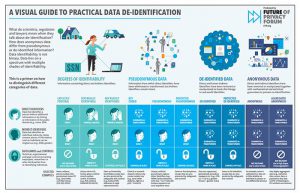
One key method for ensuring privacy while processing large amounts of data is de-identification. De-identified data refers to data through which a link to a particular individual cannot be established. This often involves “scrubbing” the identifiable elements of personal data, making it “safe” in privacy terms while attempting to retain its commercial and scientific value.
In the era of big data, the debate over the definition of personal information, de-identification and re-identification has never been more important. Privacy regimes often rely on data being considered Personal in order to require the application of privacy rights and protections. Data that is anonymous is considered free of privacy risk and available for public use.
Yet much data that is collected and used exists somewhere on a spectrum between these stages. FPF’s De-ID Project has examined practical frameworks for applying privacy restrictions to data based on the nature of data that is collected, the risks of de-identification, and the additional legal and administrative protections that may be applied.

FPF Year in Review 2025
Co-authored by FPF Communications Intern Celeste Valentino with contributions from FPF Global Communications Manager Joana Bala This year, FPF continued to broaden its footprint across priority areas of data governance, further expanding activities across a range of cross-sector topics, including AI, Youth, Conflict of Laws, AgeTech (seniors), and Cyber-Security. We have engaged extensively at the local […]

Practical Takeaways from FPF’s Privacy Enhancing Technologies Workshop
In April, the Future of Privacy Forum and the Mozilla Foundation hosted an all-day workshop with technology, legal, and policy experts to explore Privacy Enhancing Technologies (PETs). During the workshop, multiple companies presented technologies they developed and implemented to preserve individuals’ privacy. In addition, the participants discussed steps for broadening the adoption of these technologies […]

NEW FPF REPORT: Confidential Computing and Privacy: Policy Implications of Trusted Execution Environments
Written by Judy Wang, FPF Communications Intern Today, the Future of Privacy Forum (FPF) published a paper on confidential computing, a privacy-enhancing technology (PET) that marks a significant shift in the trustworthiness and verifiability of data processing for the use cases it supports, including training and use of AI models. Confidential computing leverages two key […]

New Report Explores Privacy Implications of Driver Safety Systems
Report Offers Recommendations for Organizations Developing, Implementing, and Regulating Technologies Today, the Future of Privacy Forum (FPF) is releasing a new report explaining how safeguarding driver privacy and data protection will be critical to ensuring widespread acceptance of new safety technology in vehicles. This report comes as the National Highway Traffic Safety Administration (NHTSA) is […]
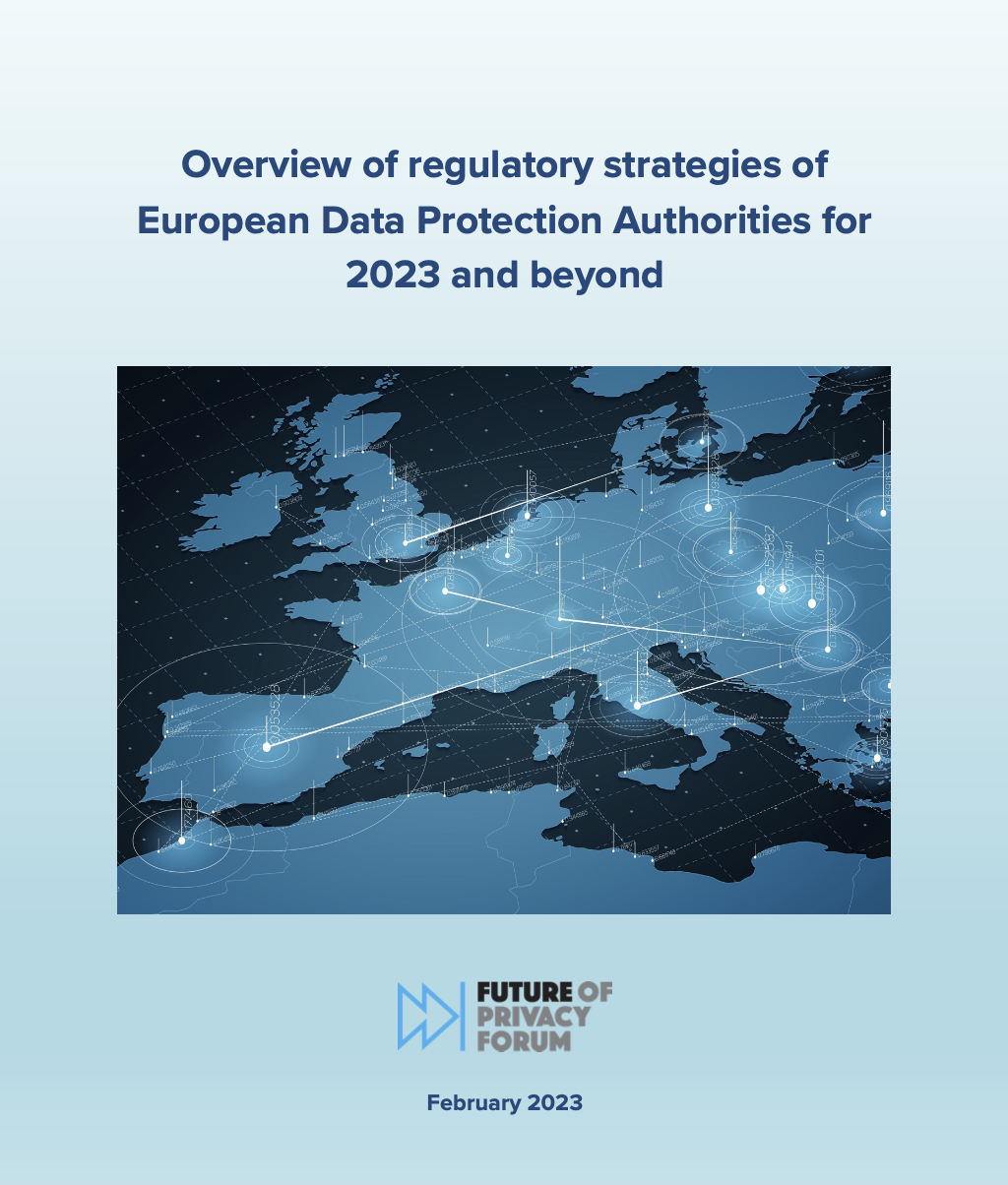
Evolving Enforcement Priorities in Times of Debate – Overview of Regulatory Strategies of European Data Protection Authorities for 2023 and Beyond
Today, the Future of Privacy Forum released a report that explores “Evolving enforcement priorities in times of debate – Overview of regulatory strategies of European Data Protection Authorities for 2023 and beyond.” It is the third in a series that explores European DPAs’ evolving regulatory priorities, following the 2021 Report “Insights into the Future of […]

Understanding Extended Reality Technology & Data Flows: Privacy and Data Protection Risks and Mitigation Strategies
This post is the second in a two-part series. Click here for FPF’s XR infographic. The first post in this series focuses on the key functions that XR devices may feature, and analyzes the kinds of sensors, data types, data processing, and transfers to other parties that power these functions. I. Introduction Today’s virtual (VR), […]

New Report on Limits of “Consent” in Vietnam’s Data Protection Law
Today, the Future of Privacy Forum (FPF) and the Asian Business Law Institute (ABLI), as part of their ongoing joint research project: “From Consent-Centric Data Protection Frameworks to Responsible Data Practices and Privacy Accountability in Asia Pacific,” are publishing the ninth in a series of detailed jurisdiction reports on the status of “consent” and alternatives […]

New Report on Limits of “Consent” in South Korea’s Data Protection Law
Today, the Future of Privacy Forum (FPF) and Asian Business Law Institute (ABLI) – as part of their ongoing joint research project: “From Consent-Centric Data Protection Frameworks to Responsible Data Practices and Privacy Accountability in Asia Pacific” – are publishing a second report in their series of detailed jurisdiction reports on the status of “consent” […]

BCI Technical and Policy Recommendations to Mitigate Privacy Risks
This is the final post of a four-part series on Brain-Computer Interfaces (BCIs), providing an overview of the technology, use cases, privacy risks, and proposed recommendations for promoting privacy and mitigating risks associated with BCIs. Click here for FPF and IBM’s full report: Privacy and the Connected Mind. In case you missed them, read the […]

FPF in 2021: Delivering Privacy Insights & Expert Analysis
With the last days of 2021 upon us, we wanted to take a moment to reflect on this exciting year that saw FPF expand its presence both domestically and around the globe, while producing engaging events, thought-provoking analysis, and insightful reports with real-world impact. Growing Global Expertise The scope of FPF’s international work continued to […]