
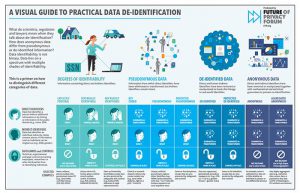
One key method for ensuring privacy while processing large amounts of data is de-identification. De-identified data refers to data through which a link to a particular individual cannot be established. This often involves “scrubbing” the identifiable elements of personal data, making it “safe” in privacy terms while attempting to retain its commercial and scientific value.
In the era of big data, the debate over the definition of personal information, de-identification and re-identification has never been more important. Privacy regimes often rely on data being considered Personal in order to require the application of privacy rights and protections. Data that is anonymous is considered free of privacy risk and available for public use.
Yet much data that is collected and used exists somewhere on a spectrum between these stages. FPF’s De-ID Project has examined practical frameworks for applying privacy restrictions to data based on the nature of data that is collected, the risks of de-identification, and the additional legal and administrative protections that may be applied.

FPF Year in Review 2025
Co-authored by FPF Communications Intern Celeste Valentino with contributions from FPF Global Communications Manager Joana Bala This year, FPF continued to broaden its footprint across priority areas of data governance, further expanding activities across a range of cross-sector topics, including AI, Youth, Conflict of Laws, AgeTech (seniors), and Cyber-Security. We have engaged extensively at the local […]
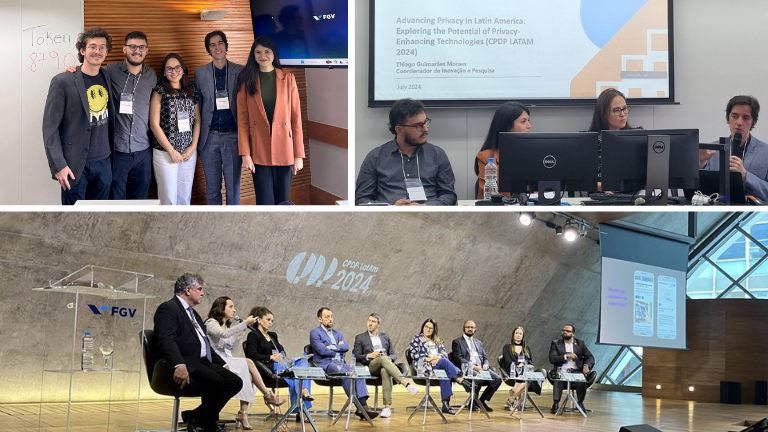
CPDP LatAm 2024: What is Top of Mind in Latin American Data Protection and Privacy? From data sovereignty, to PETs
On July 17-18, the fourth edition of the Computers, Privacy, and Data Protection Conference Latin America (CPDP LatAm) was held in Rio de Janeiro, Brazil. This year’s theme was on “Data Governance: From Latin America to the G20,” highlighting Brazil’s current presidency of the international cooperation forum. As in previous years, FPF participated on the […]

FPF at CPDP 2022: Panels and Side Events
As the annual Computers, Privacy and Data Protection (CPDP) conference took place in Brussels between May 23 and 25, several Future of Privacy Forum (FPF) staff took part in different panels and events organized by FPF or other organizations before and during the conference. In this blogpost, we provide an overview of such events, with […]

Emerging Patchwork or Laboratories of Democracy? Privacy Legislation in Virginia and Other States
Stacey Gray, Pollyanna Sanderson & Samuel Adams In the absence of federal privacy legislation, U.S. states are weighing in. In Virginia, the “Consumer Data Protection Act” (“CDPA”) (HB 2307 / SB 1392) could be signed into law within weeks, and if passed, would take effect on Jan. 1, 2023. If the law passes, it would […]
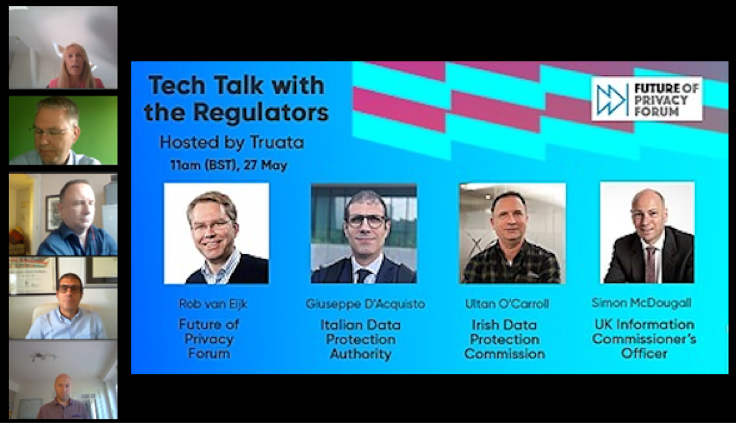
Tech Talk with the Regulators – Understanding Anonymization Under the GDPR
The General Data Protection Regulation (GDPR) has already been in existence for four years, and has been in force for two years. How can anonymization techniques under the GDPR help Data Protection Officers (DPOs) assess innovation? I hosted a webinar with Truata that featured experts from DPAs in Italy, Ireland, and the UK to find […]

FPF Honors UC-Irvine/Lumos Labs Partnership with First-Ever Award for Research Data Stewardship
Click here to view the Call for Nominations for the 2021 FPF Award for Research Data Stewardship. Click here to watch a recording of the 2020 FPF Award for Research Data Stewardship virtual awards event. University of California Irvine (UCI) Professor of Cognitive Science Mark Steyvers and Lumos Labs – the parent company behind Lumosity, […]

Navigating Privacy in a Data-Driven World
“What does it mean for people actually working with data, people monitoring data, people analyzing data, people selling data? What does it mean to actually be thinking about privacy as a human right?” Future of Privacy Forum CEO Jules Polonetsky posed these questions at the beginning of his keynote, Navigating Privacy in a Data-Driven World: […]
New Privacy Tech Alliance Promotes Innovative Privacy Technologies
TEL AVIV, ISRAEL – June 25, 2019 – The Future of Privacy Forum and the Israel Tech Policy Institute are launching the Privacy Tech Alliance during CyberWeek 2019, to promote the market for privacy-protective technologies internationally, facilitate the development of new technologies, and maximize value for innovators and investors. “As the data ecosystem and regulatory requirements […]
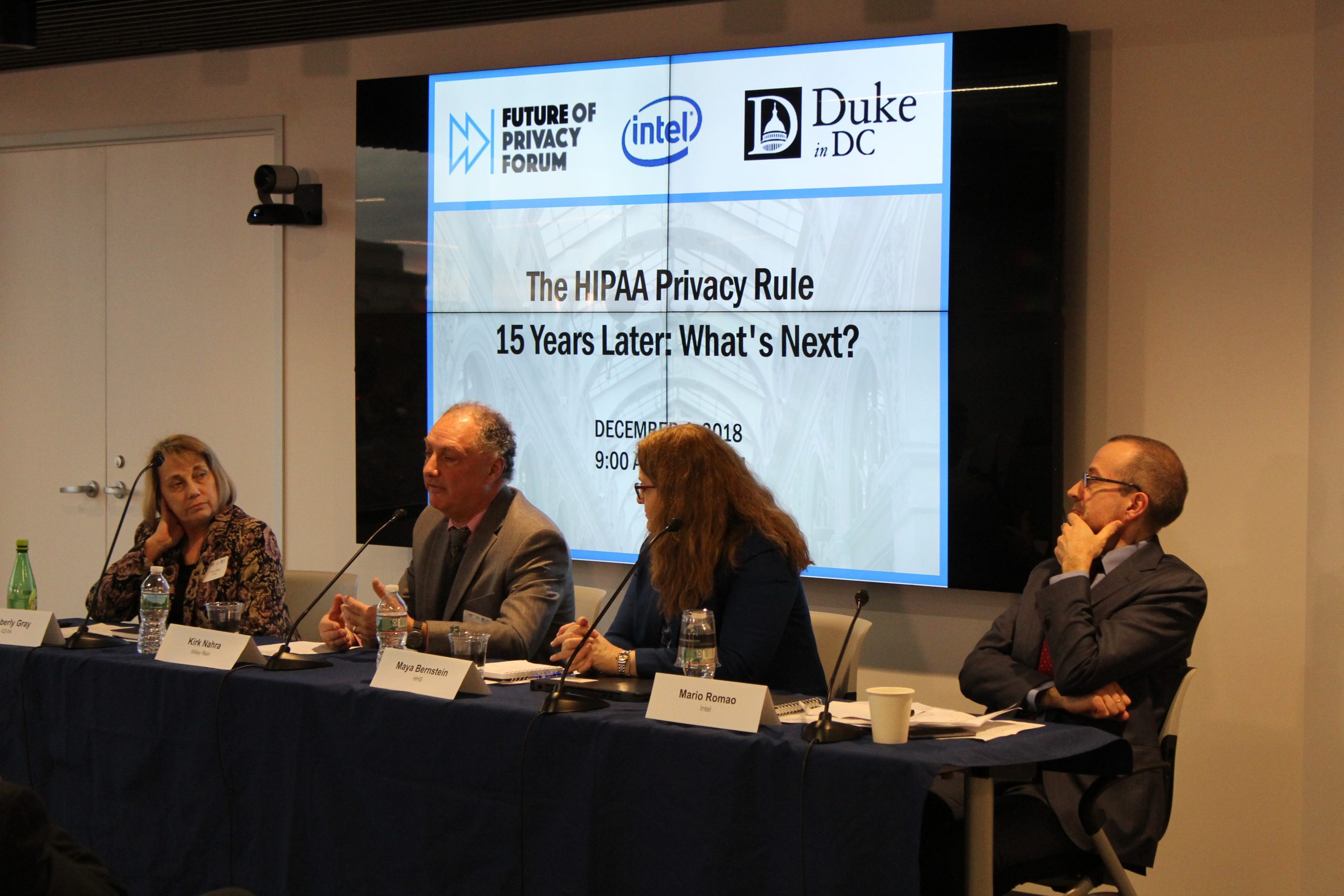
The HIPAA Privacy Rule 15 Years Later: What’s Next?
On December 4th, FPF, Intel, and Duke in DC hosted “The HIPAA Privacy Rule 15 Years Later: What’s Next?” The event brought together stakeholders across the health data ecosystem to explore the current challenges related to the Health Information Portability and Accountability Act (HIPAA) Privacy Rule. Specifically, the discussion focused on solutions to mitigate restrictions to data sharing in clinical care and research due to administrative burdens, while at the same time maintain the privacy of protected health information (PHI).
FPF in Brussels: The Law and Science of De-Identification
Last week, FPF brought together a panel of technology, legal, regulatory, and business voices to discuss “The Law and Science of De-Identification” at the 10th annual Computers, Privacy, and Data Protection conference.