
Privacy Enhancing Technologies (PETs) are crucial for safeguarding individual privacy while enabling socially beneficial research, data sharing, and advancements in sectors that collect or use sensitive data. As AI systems increasingly rely on vast amounts of data, PETs like differential privacy, homomorphic encryption, federated learning, zero-knowledge proofs, and even model contract clauses can help ensure that personal data remains confidential and secure. This is vital not only for protecting individual rights but also for earning and maintaining public trust in technologies that use data about people.
Ethically implementing PETs is also essential. PETs must be designed and deployed to protect marginalized groups and avoid practices that may appear to be privacy-preserving, but actually exploit sensitive data or undermine privacy. In addition, clear policy guidelines on the deployment of PETs are necessary to help make sound business cases for their use in industry. If PETs are ethically integrated into research and business practices, and if global regulators have an opportunity to support their appropriate deployment, there is enormous potential for increasing technological innovation and societal benefits while upholding privacy and public trust.
FPF supports the development of PETs, convenes experts from around the world to deploy best practices, and provides in-depth analysis of emerging technologies and their policy implications. FPF also leads the National Science Foundation and Department of Energy-funded Research Coordination Network for the use of PETs to advance socially beneficial data sharing and protect people’s privacy as data is increasingly used to train AI models. FPF also facilitates a Global PETs Network of regulators who are interested in the lawful and ethical implementation of these tools.






FPF’s Year in Review 2024
With contributions from Judy Wang, Communications Intern 2024 was a landmark year for the Future of Privacy Forum, as we continued to grow our privacy leadership through research and analysis, domestic and global meetings, expert testimony, and more – all while commemorating our 15th anniversary. Expanding our AI Footprint While 2023 was the year of […]

FPF Celebrates 15 Years! Spring Social Marks Board Transition as Data Protection Leaders Toast to FPF’s Success
Leaders in Data Protection Take Center Stage at FPF’s Spring Social The week started with FPF’s 15th Anniversary Spring Social, where FPF CEO Jules Polonetsky thanked FPF’s Board Chair and Founder Chris Wolf, who served for 15 years, and welcomed FPF’s new Board Chair, Alan Raul. Three leading data protection regulators lauded FPF’s effectiveness in […]
Risk Framework for Body-Related Data in Immersive Technologies
Today, the Future of Privacy Forum (FPF) released its Risk Framework for Body-Related Data in Immersive Technologies for organizations to structure the collection, use, and onward transfer of body-related data. Organizations building immersive technologies like extended reality and virtual worlds often rely on large amounts of data about individuals’ bodies and behaviors. While body-related data […]

FPF in 2022: A Year in Review
As 2022 comes to an end, we wanted to reflect on a year that saw the Future of Privacy Forum (FPF) expand its presence both domestically and around the globe, while producing engaging events, thought-provoking analysis, and insightful publications. Global Expansion In 2022, FPF closely followed and advised upon significant developments in Asia, the European […]

Understanding Extended Reality Technology & Data Flows: Privacy and Data Protection Risks and Mitigation Strategies
This post is the second in a two-part series. Click here for FPF’s XR infographic. The first post in this series focuses on the key functions that XR devices may feature, and analyzes the kinds of sensors, data types, data processing, and transfers to other parties that power these functions. I. Introduction Today’s virtual (VR), […]

12th Annual Privacy Papers for Policymakers Awardees Explore the Nature of Privacy Rights & Harms
The winners of the 12th annual Future of Privacy (FPF) Privacy Papers for Policymakers Award ask big questions about what should be the foundational elements of data privacy and protection and who will make key decisions about the application of privacy rights. Their scholarship will inform policy discussions around the world about privacy harms, corporate […]

Five Top of Mind Data Protection Recommendations for Brain-Computer Interfaces
By Jeremy Greenberg, [email protected] and Katelyn Ringrose [email protected]. Key FPF-curated background resources – policy & regulatory documents, academic papers, and technical analyses regarding brain-computer interfaces are available here. Recently, Elon Musk livestreamed an update for Neuralink—his startup centered around creating brain-computer interfaces (BCIs). BCIs are an umbrella term for devices that detect, amplify, and translate […]
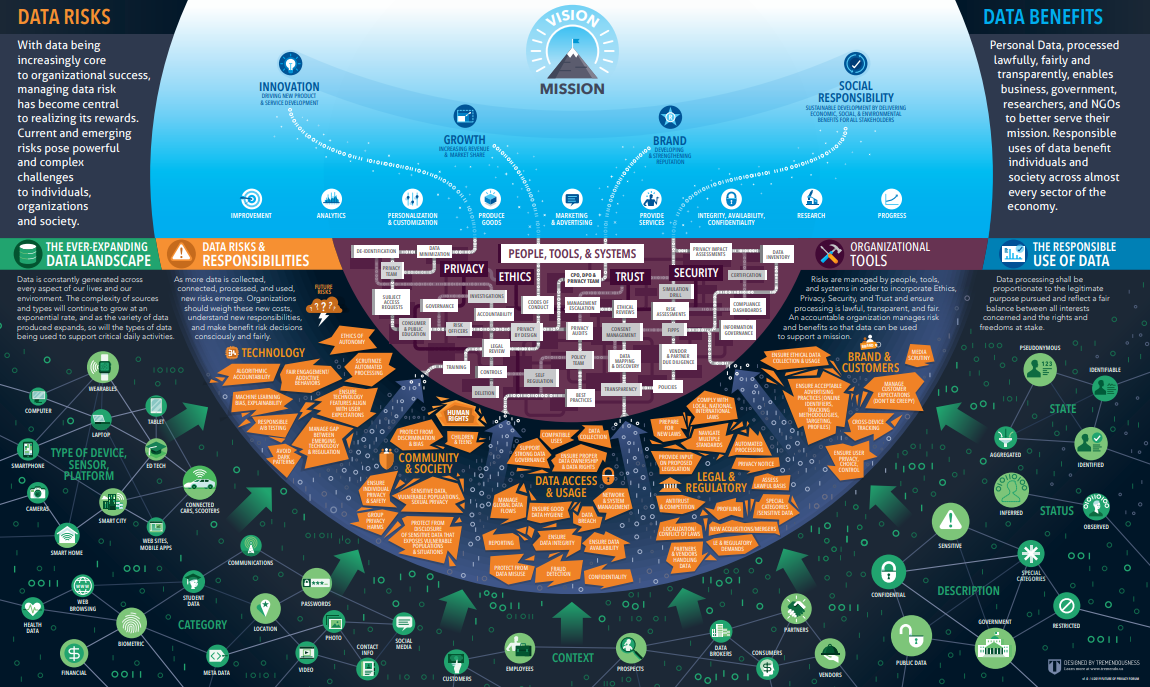
Privacy 2020: 10 Privacy Risks and 10 Privacy Enhancing Technologies to Watch in the Next Decade
Today, FPF is publishing a white paper co-authored by CEO Jules Polonetsky and hackylawyER Founder Elizabeth Renieris to help corporate officers, nonprofit leaders, and policymakers better understand privacy risks that will grow in prominence during the 2020s, as well as rising technologies that will be used to help manage privacy through the decade. Leaders must understand […]