
Celebrating Another Year of Privacy and AI Governance: FPF at the 2026 IAPP Global Summit
Authored by FPF Communications Intern Celeste Valentino
FPF experts participated in the 2026 IAPP Global Summit and hosted FPF privacy executive convenings in Washington, D.C. from March 31 to April 2. As a major gathering for privacy professionals, the event featured a heavy schedule of workshops and panels focused on the intersection of U.S. and global governance with shifting technology and policy. From exploring high-stakes AI regulation and youth-centered design to discussing the future of the privacy workforce, FPF experts joined industry pioneers and global regulators to provide expert analysis on the most pressing issues in privacy and AI governance.
Through member meet-ups, vibrant networking at our annual Spring Social, and engaging discussions at our Exhibition Hall Booth, FPF spent the week equipping practitioners with the frameworks and foresight needed to navigate a rapidly shifting digital landscape.
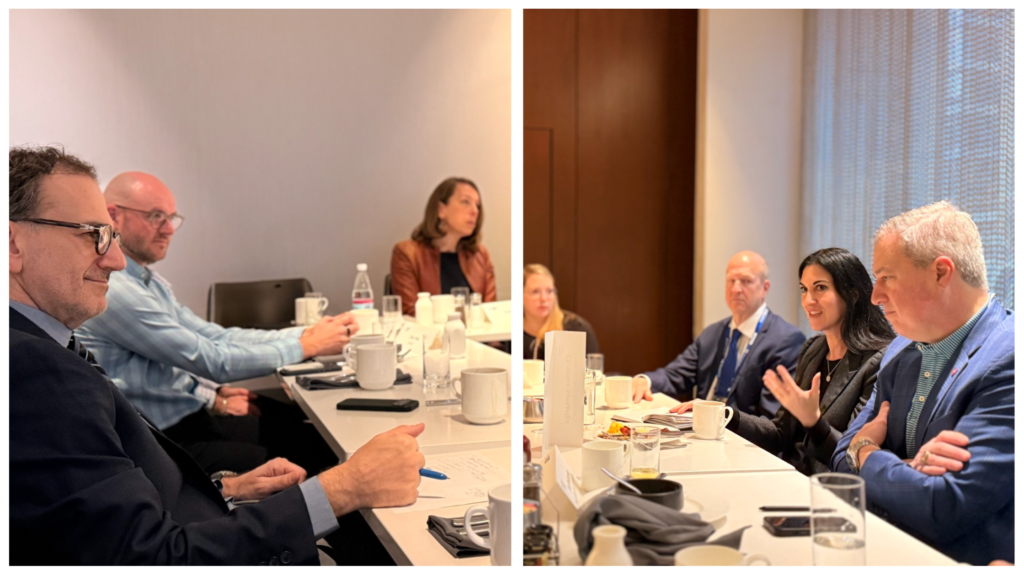
We kicked off our member convenings with a Privacy Executives Network (PEN) breakfast on March 30 at the Marriott Marquis Anthem. Attendees discussed data mapping and minimization, AI vendor deployment, agentic AI controls, and more.
Later on, FPF Senior Fellow, Tanya Richardson, spoke on a panel titled “In AI We Trust? Governing High-Stakes AI Before Regulators Step In.” Appearing alongside Hope Anderson (Partner, Data, Privacy and Cybersecurity, White & Case), Taylor Galusha, (Lead Privacy and AI Counsel, Chime), and Marisha Pareek (Senior Privacy Counsel, DoorDash), the panel provided a comprehensive toolkit and actionable framework designed to help organizations navigate the rapidly tightening landscape of AI regulation and enforcement.
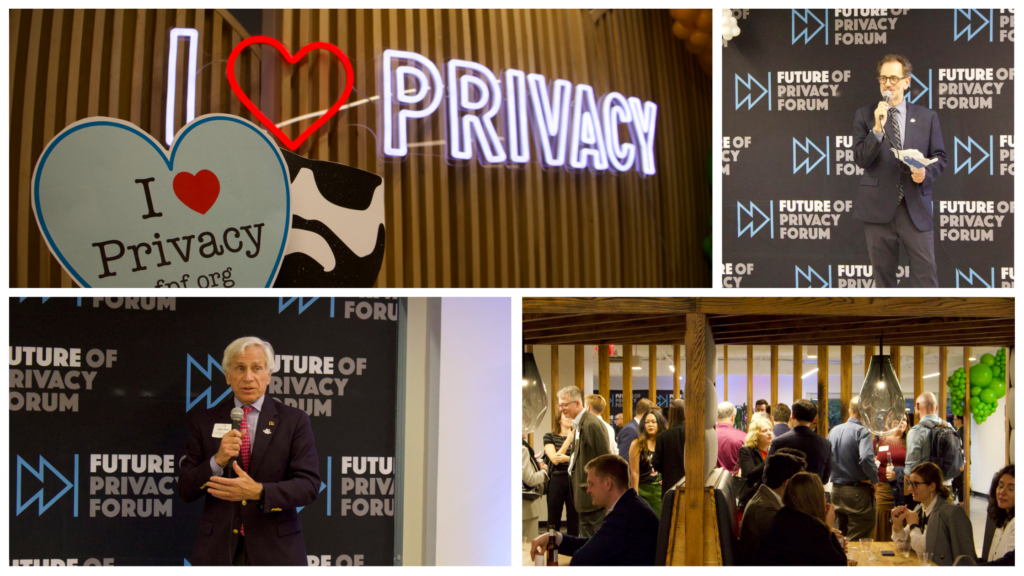
As the first day of the conference came to a close, FPF welcomed visiting DPAs, VIPs, and industry leaders into our Washington, D.C. office for our annual Spring Social. The evening featured fantastic networking, stimulating conversation, and fresh introductions as we toasted to another exciting year in privacy and data protection. A special thank you to our sponsors FTI Consulting, RadarFirst, and TrustArc!
The next morning, FPF held a Global PEN breakfast roundtable. CEO Jules Polonetsky and V.P. of Global Policy, Gabriela Zanfir-Fortuna facilitated a conversation centered around global privacy and AI regulation. Members and special guests discussed global anonymization frameworks, synthetic data, digital sovereignty, and tools to help scale AI and privacy governance.
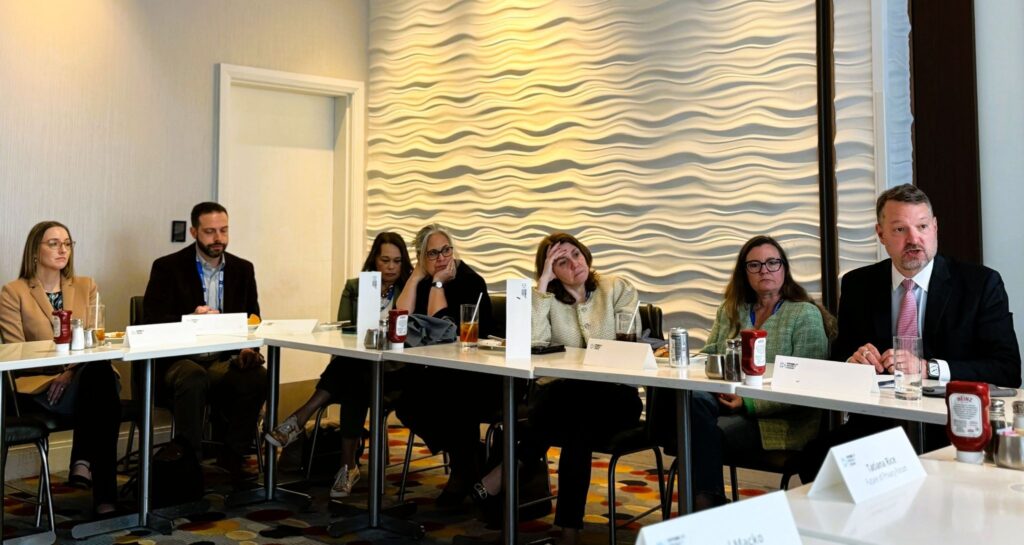
In the afternoon, FPF hosted a PEN lunch with Mike Macko, Deputy Director of Enforcement at the California Privacy Protection Agency. Macko discussed the CPPA’s enforcement strategy and 2026 priorities, including the critical role of internal privacy teams for organizational risk management, the agency’s interpretation of data minimization in enforcement actions, expectations for user interfaces handling consumer preferences, and coordination with state Attorneys General on cross-jurisdictional enforcement.
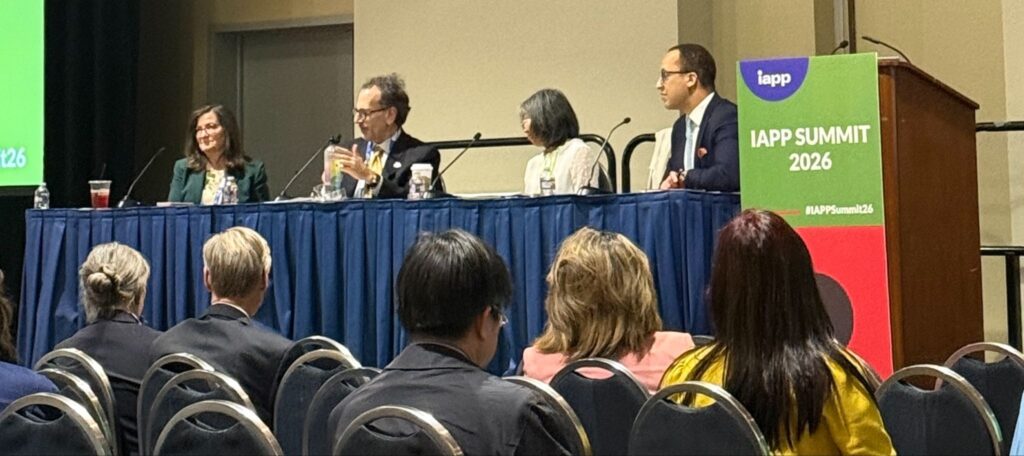
FPF CEO Jules Polonetsky joined Joe Jones (IAPP), Julie Brill (Harvard Law School and Innovation Labs), and Nicole Wong (NWong Strategies) at “(De)coding for (de)regulation”. The group examined how the global push for technological sovereignty and data-driven growth is fundamentally transforming traditional regulatory compliance into a strategic driver for innovation.
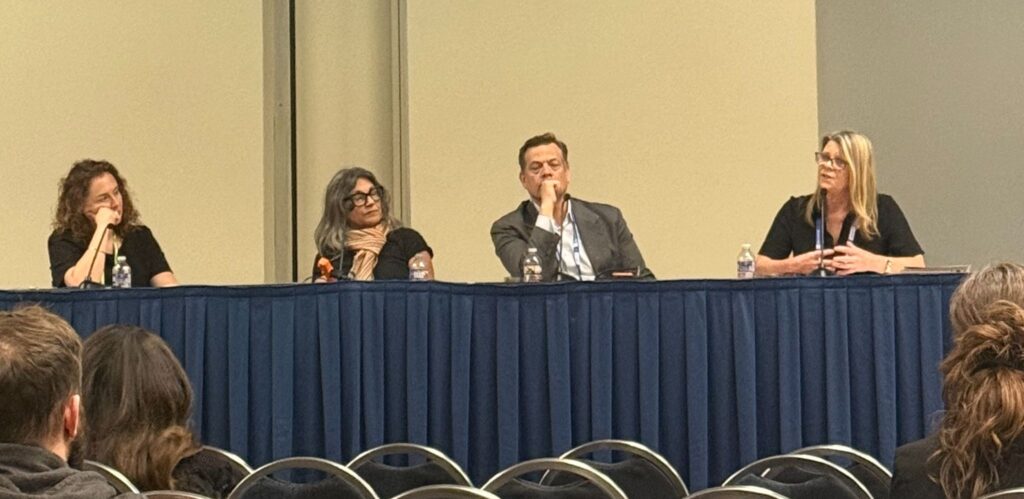
At the same time, FPF Director for Youth Policy, Holly Hawkins, spoke on the panel “Personal, Private, Protected: The Future of Youth Personalization.” This discussion featured Emily Kirstein (Google), Morgan Reed (ACT | The App Association), and Yalda Uhls (Center for Scholars & Storytellers, University of California, Los Angeles); where they challenged the idea that AI-driven personalization must come at the expense of youth safety, arguing instead for a “youth-centered by design” framework.
Next door, FPF Senior Fellow Doug Miller was part of the panel “Beyond Automation: Growing the Next Generation of AI-ready Professionals,” with industry leaders including, Noga Rosenthal (Ampersand), Andrew Dale (OpenAP), and Katherine Fick (IBM), where Doug shared practical strategies for mentoring the next generation, focusing on fostering human judgment and evolving skillsets to ensure leadership remains resilient in an AI-augmented workplace.
Closing out the conference, two FPF experts led immersive training sessions, sharing their deep expertise and insights with fellow practitioners.
In the morning, FPF Senior Director for U.S. Legislation, Tatiana Rice helped lead “U.S. State Privacy Crash Course — What is New and What is Next?”, guiding participants to understand the commonalities in U.S. legal requirements. In the afternoon, Tanya Richardson took over to co-lead “Adtech, Marketing and the Future of Consent in the Era of AI”, a workshop intended to examine how shifting AI regulations are reshaping legal and technical decision-making in adtech.
Throughout the week, the FPF booth served as a central hub for IAPP GS attendees, attracting a diverse crowd of policymakers, industry executives, and privacy scholars. Visitors engaged with our staff to explore FPF membership and discuss pressing initiatives such as the regulation of AI agents and the everchanging landscape of U.S. privacy regulation while picking up infographics, and other resources.
We hope you enjoyed this year’s IAPP Global Summit as much as we did! If you missed us at our booth, visit FPF.org for all our reports, publications, and infographics. Follow us on X, LinkedIn, Instagram, and YouTube, and subscribe to our newsletter for the latest.