FPF Holiday Gift Guide for AI-Enabled, Privacy-Forward AgeTech
On Cyber Monday, giving supportive technology to an older loved one or caregiver is a great option. Finding the perfect holiday gift for an older adult who values their independence can be a challenge. This year, it might be worth exploring the exciting world of AI-enabled AgeTech. It’s not only gadgets; it’s also about giving the gift of autonomy, safety, and a little bit of futuristic fun. Here are three types of AI-enabled AgeTech to consider and information help pick the right privacy fit for the older adult and/or caregiver in your like this holiday season.
Mobility and Movement AgeTech
This category is all about keeping the adventure going, whether it’s a trip across town or safely navigating the living room. These gifts use AI-driven features to support physical activity and reduce the worry of falls or isolation. Think of them as the ultimate support tech for staying active.
For those who need a little help around the house, AI-powered home assistant robots can fetch items on command. For AI-driven transportation, AI is used to find the best route to a place, match riders with the best-suited drivers, and interpret voice commands. In wearables, AI continuously analyzes data like gait and heart rate to learn baseline health patterns, allowing it to detect a potential fall or an abnormal health trend and generate emergency alerts. In future AI-powered home assistant robots, AI might be the brain behind the natural language processing that understands commands and the mapping needed to safely find its way around and pick up tissues, medication bottles, or other small items.
Gift Guide: Mobility and Movement AgeTech
These capabilities rely on personal data to understand where a person is on a map or in their house. These devices collect location or spatial data to help individuals know where they are or let others know where they are. Sometimes these data are collected at the same time as when the person moves for features like “trip share” to help others know where they are. Many mobility AgeTech gifts may also collect body movement data, such as steps, balance, gait patterns, and alerts for inactivity or potential falls.
For any AgeTech gift receiver, be clear that, in some cases, AI may need to continuously analyze personal habit and location data to learn baseline patterns and be useful and even to reduce bias. They must consent to this ongoing collection and processing of data if they or their caregivers want to use certain features. Given sensitive data, how private information might be shared with others or how the company might share the data based on their policies, especially if the AI integrates with other services should be transparent and easy to understand.
State Consumer AI and Data Privacy Laws Location data is protected under several state privacy laws, including when it is collected by AI. In states that have enacted privacy laws, special consent to collect or process “sensitive” data including location data may be requested by AgeTech devices or apps for certain features or functions. Currently, 20 states in the U.S. have enacted a consumer data privacy law. These laws generally provide consumers with rights to access, delete, and correct their personal data; and provide special protections for sensitive data, such as biometric identifiers, precise geolocation, and certain financial identifiers. In 2025, state legislatures passed a number of AI-focused bills that covered issues such as chatbots, deepfakes, and more. These existing and proposed regulations may have impacts on AgeTech design and practices, as they determine safeguards and accountability mechanisms that developers must incorporate to ensure AgeTech tools remain compliant and safe for older adults. |
Connection and Companionship AgeTech
These gifts leverage AI to offer sympathetic companionship, reduce the complexities of care coordination, and foster connection between individuals and their communities of care. They are specifically engineered to bridge the distance in modern caregiving, providing an essential safeguard against social isolation and loneliness.
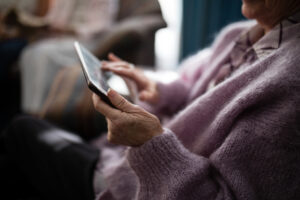
Gift givers will find a mix of helpful tools here, like typical AI-driven calendar apps repurposed as digital care hubs for all family members to coordinate; simplified communication devices (tablets with custom, easy interfaces) paired with a friendly AI helper for calls and reminders; and even AI animatronic pets that respond to touch and voice, offering therapeutic benefits without the chores associated with a real pet.
Gift Guide: Connection and Companionship AgeTech
These devices may log personal routines, capturing medication times, appointments, and daily habits. They may also collect voice interactions with AI helpers and may collect data related to mood, emotions, pain, or cognition through check-ins or certain body-related data (including neural data) during check-ins.
Gift-givers should discuss potential gifts with older adults and consider the privacy of others who might be unintentionally surveilled, such as friends, workers, or bystanders. Since caregivers often view shared calendars and activity logs, ensure access controls are distinct, role-based, and align with the older adult’s preferences. The older adult should control data access (e.g., medical routines vs. social events). Be transparent about whether AI companions record conversations or check-in responses, and how that sensitive personal data is stored and analyzed.
Health and Wellness Data Protections The Health Insurance Portability and Accountability Act (HIPAA), does not protect all health data. HIPAA very generally applies to health care professionals and plans providing payment and insurance for health care services. So an AI companion health device provided as part of treatment by your doctor will be covered by HIPAA, but one sold directly to a consumer is less likely to be protected by HIPAA. However, some states have recently passed laws providing certain rights to consumers for general health information that is not protected by HIPAA. |
Daily Life and Task Support AgeTech
This tech category covers life’s essentials through AI-driven automation, focusing on managing finances, medication, and overall health with intelligent, passive monitoring. It’s about creating powerful, often invisible, digital safeguards, ranging from financial safeguard tools to connected health devices integrated into AI-based AI-driven homes, that offer profound peace of mind by anticipating and flagging risks.
This is where gift givers can find presents to help protect older adults and caregivers from increasingly common AI-driven leveraging machine learning to identify and flag suspicious activity targeting older populations. Look for AI financial tools that watch bank accounts for potential fraud or unusual activity, connected home devices that passively check for health changes, and AI-driven pill dispensers that light up and accurately sort medication.
Gift Guide: Daily Life and Task Support AgeTech
The sensitive data collected by these devices can be a major target of scammers and other bad actors. Some tools may collect transaction history and alerts for “unusual” spending to help reduce scam risks. Other AgeTech may log medication “adherence” (timestamps of dispensed doses) or need an older adult’s medical history to work well. In newer systems with advanced identification technologies, it could also include biometric data such as fingerprints or face scans used to ensure safe access to individual accounts.
Gift-givers need to consider how the AI determines something is “unusual” to avoid unnecessary worry from false alarms in banking or health. For devices like AI-driven pill dispensers, also ask what happens to the device’s functionality if the subscription is canceled. For passive monitoring devices, ensure meaningful consent; the older adult must have explicit, ongoing understanding and consent for continuous collection of highly sensitive data that happens while living their daily life from bathroom trips to spending habits.
Financial Data Protections Those giving gifts of this kind may want to consult with a trusted financial institution or professional before purchasing. If a financial-monitoring tool is instead provided by a non-bank (such as a consumer-facing fintech app), consumer financial protections may not apply, even if the data is still highly sensitive. State privacy laws and FTC authority may offer protections that can vary in scope. |
AI-enabled AgeTech Gift Checklist
We suggest evaluating AgeTech products through a practical lens:
- What data is collected and how? For example: voice recordings via microphone in an AI-enabled companion bot.
- Who will manage access data privacy, and consents for the device or account? The older adult? Caregivers? Both?
- What protections apply? HIPAA, state AI or privacy laws.?
- How does the AI ensure safety and reliability? For example: fall detection accuracy, avoiding false alarms for “unusual” activity.
Since multiple state and federal laws create a mix of protections, gift givers need to take an extra step to understand the protections and choose the best balance of safety, privacy, and support to go with their AgeTech present. A national privacy law could simplify the inconsistency and gaps, but does not seem to be on the agenda in Congress.
The United States population demographics point to an increasingly aged population, and AI-enabled AgeTech has shown promise in supporting the independence of older adults. Gift-givers have an opportunity to offer tools that support independence and strengthen autonomy, especially as AI continues to be adapted to older adults’ specific needs and preferences. In a recent national poll by the University of Michigan, 96% of older adults who used AI-powered home security devices and systems and 80% who used AI-powered voice assistants in the past year said these devices help them live independently and safely in their home.
Whether the device helps someone move confidently, stay socially engaged, or manage essential tasks, each category relies on sensitive personal data that must be handled thoughtfully. By thinking through how these technologies work, what information they collect, and the rights and safeguards that protect that data, you can ensure your presents are empowering and future-thinking.
Happy Holidays from the Future of Privacy Forum!