
When handling personal data, organizations must utilize both best practices for privacy and cybersecurity to ensure that it is protected, sound, and treated in line with individual and societal expectations.
FPF’s work on privacy and cybersecurity focuses on the overlap between the two areas, including how different global laws and policy regimes tackle that overlap. Through FPF’s Privacy and Cybersecurity Expert Group, FPF facilitates the coordination and collaboration of privacy and cybersecurity experts to promote common goals, strategies, and understanding.
FPF’s Cybersecurity Advisory Committee comprises top cyber and privacy executives at industry-leading companies and civil society and academia representatives.
Advisory committee members include:
- Emily Hancock, Cloudflare
- Stephenie Handler, Gibson Dunn (Chair)
- David Hoffman, Duke University, Sanford School of Public Policy
- Anitha Ibrahim, Amazon Web Services
- Andy Serwin, DLA Piper
- Chad Sniffen, National Network to End Domestic Violence
- Melanie Tiano, T-Mobile
- Heng Xu, American University




FPF Senior Fellow Peter Swire Provide Comments to the FCC on Broadband Consumer Privacy
Later today, Peter Swire, FPF Senior Fellow, will participate at the FCC’s public workshop on broadband consumer privacy. He also prepared written comments expanding on his thoughts. Professor Swire summarizes his research as follows: First, I examine the effect of the Section 222(a) definition of “proprietary information” as compared with the Section 222(c) definition of […]
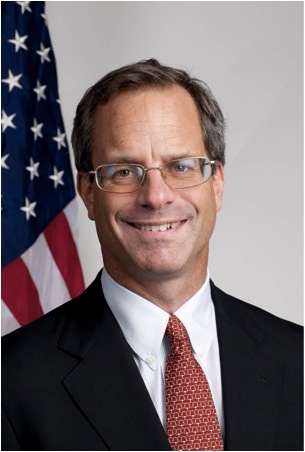
FPF Senior Fellow Peter Swire Receives Privacy Leadership Award
The Future of Privacy Forum congratulates our Senior Fellow, Peter Swire, on receiving the 2015 Privacy Leadership Award from the International Association of Privacy Professionals. Peter has worked with FPF since 2010 on a wide range of privacy and cyber-security issues, such as encryption, Big Data, and many more. His current work with FPF includes […]
The Student Privacy Pledge and Security
We know it is critical for ed tech companies to get security right. The Student Privacy Pledge developed by FPF and SIIA requires signatories to maintain “a comprehensive security program that is reasonably designed to protect the security . . . of personal student information . . . appropriate to the sensitivity of the information.” […]
Moving the Internet of Things Forward Without Hard Numbers on Risks
Today’s release of the FTC’s long-awaited report on the Internet of Things concludes that connected devices are “likely to meld the virtual and physical worlds together in ways that are currently difficult to comprehend.” It’s this great unknown where it seems many of the revolutionary benefits and more abstract risks from connectivity lie. While the […]
A Practical Privacy Paradigm for Wearables
A Practical Privacy Paradigm for Wearables is available to read here. * * * * * * Only a week into 2015, and already it looks to be the year of wearable technologies. At this year’s International Consumer Electronics Show (CES), wearables and the Internet of Things have dominated the conversations and the exhibition halls. […]
What consumers and companies can learn from 2014’s privacy breaches
Earlier this week, FPF’s Kelsey Finch spoke to Red Herring about 2015’s biggest challenges, and how enterprise and consumer technology can come together to combat privacy issues. Q: What have been 2014’s biggest privacy problems, in your opinion? Do you see them being fixed any time soon? A: Throughout 2014, we learned how vulnerable our personal […]

Travis LeBlanc on the FCC's New Privacy Role
At today’s FCBA brown bag lunch, FCC Enforcement Bureau Chief Travis LeBlanc discussed the Commission’s recent entrance into privacy enforcement and fielded questions as to what companies might do to avoid running afoul of the Enforcement Bureau. LeBlanc emphasized the innovation continues to outpace regulators, noting that much of the Commission’s investigative and enforcement work […]
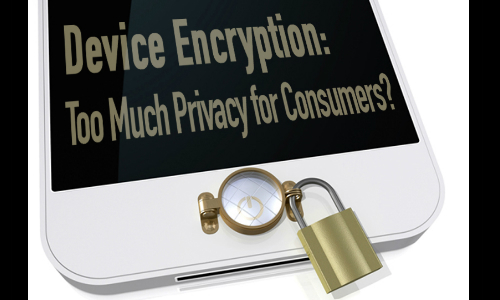
Discussing the Merits of Device Encryption
In the wake of Apple and Google’s recent decision to implement “whole device encryption” on their latest mobile operating systems, the FBI has warned that the tech giants’ actions will force law enforcement to “go dark” when it comes to keeping tabs of criminals. FPF has previously explored the question of encryption and law enforcement access, […]
Device Encryption: Too Much Privacy for Consumers?
On December 3rd, FPF and IAPP will be hosting a conversation on device encryption in the wake of Apple and Google’s recent application of “whole device encryption” to their newest devices.What does this mean for consumers? What new protections are added? What impact does this have on hackers or others who may see to access […]
Public Perceptions on Privacy
Today’s new report by the Pew Research Center gives the lie to the notion that privacy is unimportant to the average American. Instead, the big take away is that individuals feel like they lack any control over their personal information. These feelings are directed at the public and private sector alike, and suggest a profound […]