
One key method for ensuring privacy while processing large amounts of data is de-identification. De-identified data refers to data through which a link to a particular individual cannot be established. This often involves “scrubbing” the identifiable elements of personal data, making it “safe” in privacy terms while attempting to retain its commercial and scientific value.
In the era of big data, the debate over the definition of personal information, de-identification and re-identification has never been more important. Privacy regimes often rely on data being considered Personal in order to require the application of privacy rights and protections. Data that is anonymous is considered free of privacy risk and available for public use.
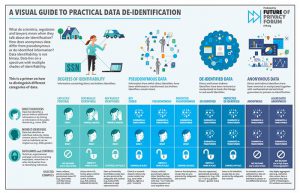
Yet much data that is collected and used exists somewhere on a spectrum between these stages. FPF’s De-ID Project has examined practical frameworks for applying privacy restrictions to data based on the nature of data that is collected, the risks of de-identification, and the additional legal and administrative protections that may be applied.

UK ICO Releases Draft Anonymisation Code of Practice
The UK’s Information Commissioner’s Office (ICO) released a Draft Anonymisation Code of Practice yesterday. The draft is open for consultation until August 23 2012. The document, which considers both legal and technical aspects of anonymisation, “is intended to demonstrate that the effective anonymisation of personal data is possible, desirable and can help society to ensure […]
Big Data Research
TechAmerica hosted a Congressional Briefing, Big Data: What it Means and How it Drives Innovation, this week. The event’s distinguished panel included a variety of industry experts and focused on the meaning of “Big Data”, how data is being used in the market-place, government uses of “Big Data”, and the future of “Big Data”. The panel […]
Tracking Progress on Do Not Track
The Tracking Protection Working Group of the World Wide Web Consortium (W3C) met last week in Washington, D.C. to further its efforts in developing industry standards for Do Not Track (DNT) measures. As deadlines for public release of the specifications near, the pressure is on for the group to come to agreement on critical policy […]
FPF Senior Fellow Peter Swire: FTC Deserves Praise for Its De-Identification “Safe Harbor”
Surprisingly to most observers, one of the biggest effects of the new FTC report will be in the area of de-identified data. The FTC’s new approach, highlighted by them as the top issue of interest to techies, provides a major incentive for companies to improve their data processes. The earlier report would have applied to […]
FPF Responds to FTC Release of Final Privacy Framework Report
Please see below for FPF’s comments on today’s release of the FTC Final Privacy Framework Report. Today’s report follows a preliminary staff report that the FTC issued in December 2010. Jules Polonetsky, Director and Co-Chair of the Future of Privacy Forum: “Although the FTC calls for legislation, the focus of the report is a strong […]
12 pm Webinar: Recapping FPF's "Personal Information: The Benefits and Risks of De-Identification" Event
Please join Jules Polonetsky and Professor Khaled El Emam, Associate Professor, Faculty of Medicine and Canada Research Chair in Electronic Health Information, University of Ottawa, for a 12 pm Eastern webinar. Polonetsky and Professor El Emam will discuss highlights from FPF’s December 5, 2011 event on personal information and provide an analysis of the conference. […]
De-identification Workshop Videos
Opening Presentation: Special Message from Dr. Ann Cavoukian Panel 1: Panel 2: Panel 3: Keynote Luncheon: Panel 4: Panel 5:
Omer Tene
Omer Tene Omer Tene is an Associate Professor at the College of Management School of Law, Rishon Le Zion, Israel; Affiliate Scholar at the Stanford Center for Internet and Society; and Visiting Fellow at the Berkeley Center for Law and Technology and the Institute for Jewish Law and Israeli Law, Economy and Society. He is Managing […]
December 5th Privacy Conference
The Future of Privacy Forum Presents Personal Information: The Benefits and Risks of De-Identification On December 5, 2011, leading academics, advocates, Chief Privacy Officers, legal experts and policymakers will gather to discuss and debate the benefits and risks of de-identification and the definition of personal information. Please join us for this discussion of one of […]
FPF Event: Save the Date! The Risks and Benefits of De-Identification
Dec. 5 -Save the date! When is information personal? Does anonymization still matter? How is de-identified data being used and what are the benefits or risks? Please save Dec 5 for a series of panels and discussions about the “PII to Non-PII Spectrum” with leading experts at the National Press Club in Washington, DC. Program […]