
Research often requires using sensitive data to answer important questions. The ethical collection and analysis of personal information can be challenging to do while still protecting the privacy of the implicated individuals, honoring informed consent, and complying with other legal obligations. The technology, policies, and ethical considerations for researchers are constantly shifting, sometimes making it difficult to keep up. That’s why FPF engages stakeholders across academia and industry to produce recommendations, best practices, and ethical review structures that promote responsible research. Our work is centered around streamlining, encouraging, and promoting responsible research that respects essential privacy and ethical considerations throughout the research lifecycle. FPF works with policymakers to develop legislative protections that support effective, responsible research with strong privacy safeguards, including hosting events that allow policymakers and regulators to engage directly with practitioners from academia, advocacy, and industry.



Unfairness By Algorithm: Distilling the Harms of Automated Decision-Making
Analysis of personal data can be used to improve services, advance research, and combat discrimination. However, such analysis can also create valid concerns about differential treatment of individuals or harmful impacts on vulnerable communities. These concerns can be amplified when automated decision-making uses sensitive data (such as race, gender, or familial status), impacts protected classes, or affects individuals’ eligibility for housing, employment, or other core services. When seeking to identify harms, it is important to appreciate the context of interactions between individuals, companies, and governments—including the benefits provided by automated decision-making frameworks, and the fallibility of human decision-making.
Responsible Research and Privacy Practices Workshop generates new research opportunities
On November 2-3, 2017, the Future of Privacy Forum’s Research Coordination Network partnered with Facebook, Bentley University and University of Central Florida to host a workshop titled “Bridging Industry and Academia to Tackle Responsible Research and Privacy Practices”. As the title infers, the purpose of the workshop was to bring together key stakeholders from across industry, civil society, and academia to advance the privacy research agenda, focusing on topics including data analytics and privacy-preserving technologies, privacy and ethics in user research and people-centered privacy design.
EDPS Highlights EU-US Privacy Engineering Workshop
Details on the EU-US privacy engineering workshop were published in European Data Protection Supervisor’s latest newsletter. This workshop was organized by the Internet Privacy Engineering Network (IPEN), Future of Privacy Forum, KU Leuven and Carnegie Mellon University, on November 10, in Leuven.

A Conversation with Giovanni Buttarelli about The Future of Data Protection: setting the stage for an EU Digital Regulator
The nature of the digital economy is as such that it will force the creation of multi-competent supervisory authorities sooner rather than later. What if the European Data Protection Board would become in the next 10 to 15 years an EU Digital Regulator, looking at matters concerning data protection, consumer protection and competition law, having “personal data” as common thread? This is the vision Giovanni Buttarelli, the European Data Protection Supervisor, laid out last week in a conversation we had at the IAPP Data Protection Congress in Brussels.

The Top 10: Student Privacy News (October-November 2017)
The Future of Privacy Forum tracks student privacy news very closely, and shares relevant news stories with our newsletter subscribers. Approximately every month, we post “The Top 10,” a blog with our top student privacy stories.
Understanding Corporate Data Sharing Decisions: Practices, Challenges, and Opportunities for Sharing Corporate Data with Researchers
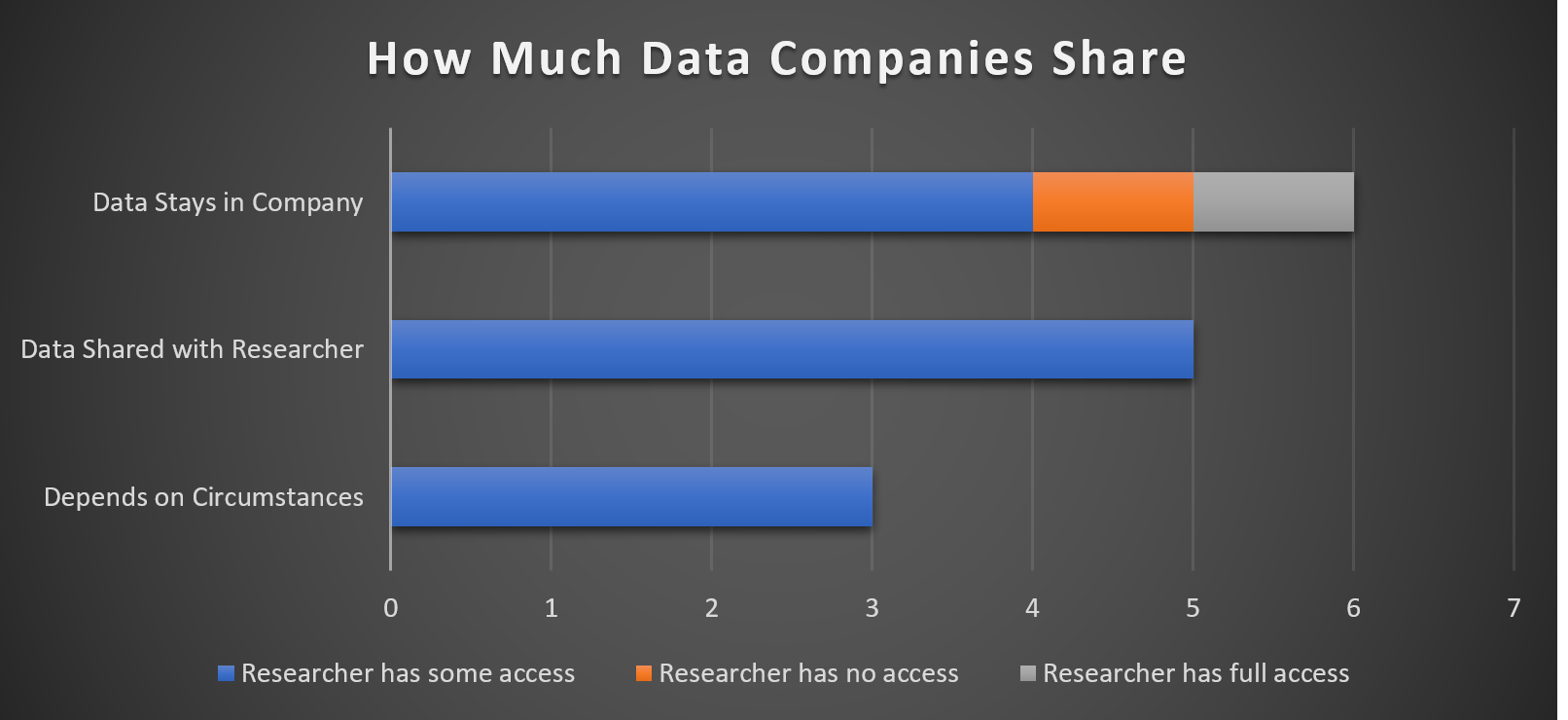
Today, the Future of Privacy Forum released a new study, Understanding Corporate Data Sharing Decisions: Practices, Challenges, and Opportunities for Sharing Corporate Data with Researchers. In this report, we aim to contribute to the literature by seeking the “ground truth” from the corporate sector about the challenges they encounter when they consider making data available for academic research. We hope that the impressions and insights gained from this first look at the issue will help formulate further research questions, inform the dialogue between key stakeholders, and identify constructive next steps and areas for further action and investment.
New Study: Companies are Increasingly Making Data Accessible to Academic Researchers, but Opportunities Exist for Greater Collaboration
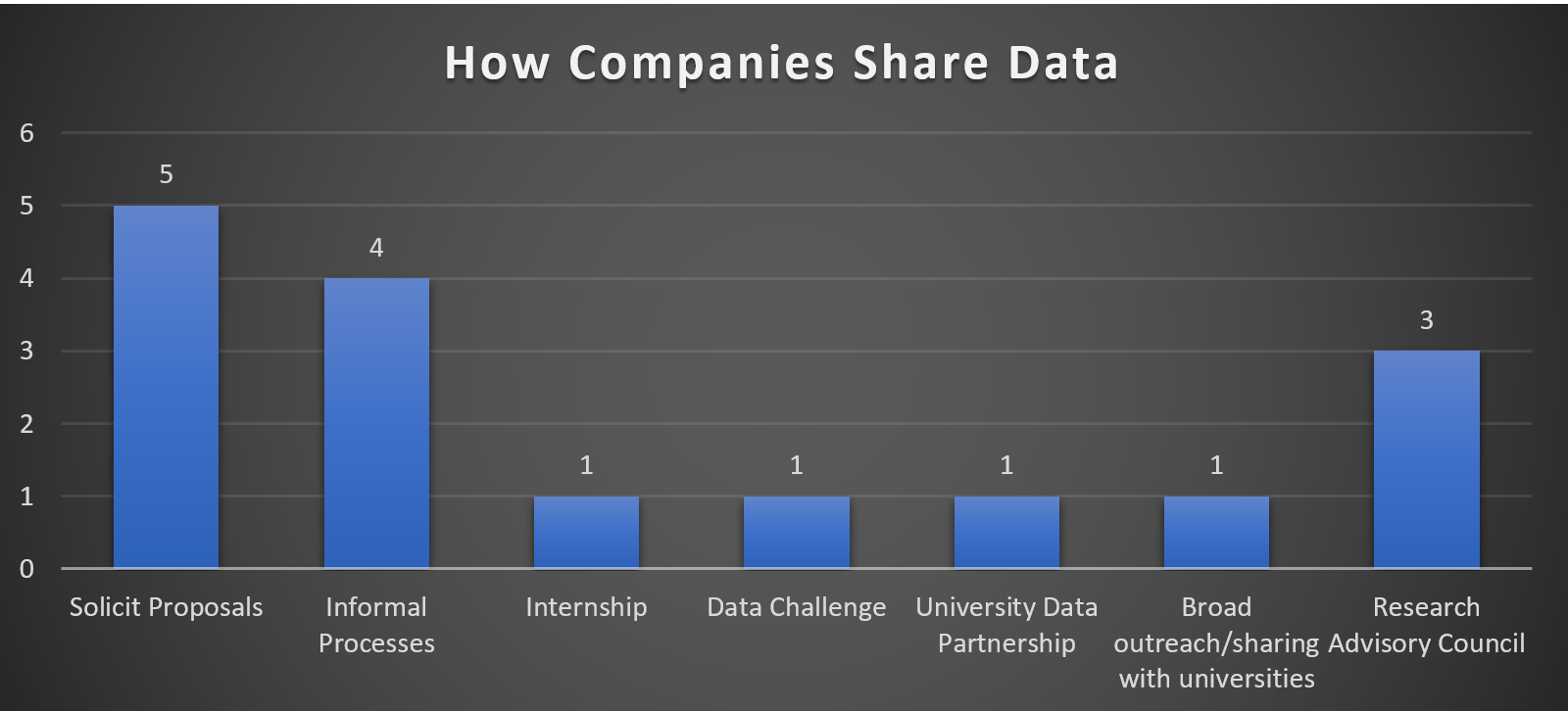
Washington, DC – Today, the Future of Privacy Forum released a new study, Understanding Corporate Data Sharing Decisions: Practices, Challenges, and Opportunities for Sharing Corporate Data with Researchers. In this report, FPF reveals findings from research and interviews with experts in the academic and industry communities. Three main areas are discussed: 1) The extent to which leading companies make data available to support published research that contributes to public knowledge; 2) Why and how companies share data for academic research; and 3) The risks companies perceive to be associated with such sharing, as well as their strategies for mitigating those risks.

2nd Annual McGowan Forum on Ethics: The Challenge of Big Data
On October 26, 2017, John Verdi, FPF’s Vice President of Policy, was a panelist for the National Archives Foundation’s 2nd Annual McGowan Forum on Ethics: The Challenge of Big Data. The panel discussed the ethical responsibility of those who compile and track citizens’ personal data. The conversation focused around what responsibility corporations and governments have to protect their customers and be transparent in regard to possible data hacks.

DQC Report: Effective Data Use and Research Partnerships between SEAs and Education Researchers
Today, the Data Quality Campaign (DQC) released a new infographic and resource on education research, Roadmap for Effective Data Use and Research Partnerships between State Education Agencies and Education Researchers. DQC brought together education researchers and policy experts, including FPF’s Education Policy Counsel Amelia Vance, to create these new resources.
FPF-CAN Speaker Series featuring Mary Madden and Michele Gilman
The FPF-Capital Area Academic Network invites you to join us for a roundtable discussion featuring Mary Madden (Researcher, Data & Society Institute) and Michele Gilman (Venable Professor of Law and Director of Clinical Education, University of Baltimore School of Law). Mary and Michele will discuss their latest research: “Privacy, Poverty and Big Data: A Matrix of Vulnerabilities for Poor Americans.”