A new study about consumer use of Limit Ad Tracking indicates that the rate rose to 20% in the US. According to adjust, the previous rate of iOS users who opted out of ad tracking was 16-18%. This data seems to be in sync with TUNE’s reporting which found that 17% of users enabled the Limit Ad Tracking setting.
However, globally, rates remain the same around 18%. Adjust points to the release of Apple’s iOS 10 as contributing to the spike of 2 million US users activating the Limit Ad Tracking feature for the first time. Learn more about the Limit Ad Tracking feature in our blog post.
A Discussion of "Owned: How the Internet of Things Took Our Property and Privacy"
On October 6, 2016, Professor Joshua Fairfield from the Washington and Lee University School of Law joined us to discuss a chapter from his upcoming book, “Owned: How the Internet of Things Took Our Property and Privacy.” The chapter highlights the importance of ownership in preserving privacy – and what society may lose with the erosion of ownership in the digital age. The chapter focuses on how more “concrete” property rights can serve as a backstop for buttressing harder-to-define privacy rights. A diverse group of attendees from business, government, advocacy, and academia joined to debate and discuss the chapter.
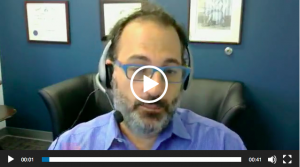
On October 11, 2016, FPF’s CEO, Jules Polonetsky, was featured on Modern Workplace for “The Privacy Balance: Staying secure and ethical with your data.” The webinar focused on how to navigate common blind spots in data security and avoid privacy pitfalls. Jules discussed tips for creating an organization that is profitable and ethical. Watch a clip below.
Source: Modern Workplace. To see the full episode, register at modernworkplace.com.
October 27th Event: EU Law, Institutions and Policymaking
FPF and Goethe-Institut are pleased to present an intensive education program titled:
Understanding EU Law, Institutions and Policymaking:
An Advanced Legal Colloquium for Privacy Leaders
Special Focus: Germany, France and Benelux
The goal of this program is to provide privacy experts with a deeper understanding of the broader legal environment in Europe. Who can bring an action, which courts are involved, how do the various national and Europe wide systems interact? We will seek to understand the issues and challenges of privacy law in the EU context. The program will not focus on the specifics of the GDPR, but rather the broader context of EU law, politics and policy that will help privacy and policy leaders of US multi-nationals better understand our partners across the Atlantic.
To view written materials for each session, click here: Materials
Agenda
8:30 – 9:00 a.m.
Registration and Continental Breakfast
9:00 – 9:05 a.m.
Welcome
Sylvia Blume, Cultural Programs Curator, Goethe-Institut Washington
Jules Polonetsky, CEO, Future of Privacy Forum
9:05 – 10:00 a.m.
Session 1: European Law and Institutions
The structure, relationships, jurisprudence, role and jurisdiction of European institutions vs member states.
Professor Nico van Eijk, University of Amsterdam
10:00 – 11:00 a.m.
Session 2: Political Decision Making
The role of civil society, political parties and civil movements, lobbying and issue advocacy in the political decision making process.
Andrea Glorioso, Counselor (ICT & Digital Economy), Delegation of the European Union to the USA
11:00 – 11:15 a.m.
Coffee Break
11:15 – 12:00 p.m.
Session 3: The Benelux Region
A discussion on legal institutions and political culture
Professor Nico van Eijk, University of Amsterdam
12:00 – 12:10 p.m.
Highlight: Focus on Spain, Catalonia and Basque Country
Understanding Courts and Data protection enforcement within Spain
Laura Vivet, Collaborator Professor, Autonomous University of Barcelona
12:10 – 1:00 p.m.
Networking Lunch
1:00 – 2:00 p.m.
Session 4: Focus on Franceand Germany
Understanding Courts, Policy and Legal Culture
Professor Vivian Grosswald Curran, University of Pittsburgh School of Law
Professor Russell Miller, Washington and Lee University School of Law
2:00 – 3:00 p.m.
Session 5: Focus on Germany
Data Protection Enforcement within the German Legal System
Felix Wittern, Fieldfisher, Silicon Valley Office
3:00 – 4:00 p.m.
Session 6: Path to the Future
Recent cases in the European Courts and liability and appeals under the GDPR
Moderator: Omer Tene, Senior Fellow, Future of Privacy Forum
Gabriela Zanfir, PhD, EU Data Protection Supervisor 2014-2016
Bilyana Petkova, Postdoctoral Research Fellow, Information Law Institute, New York University
Looking Back at Smart Cities Week at FPF
If you’ve been in Washington, DC this week, you may have noticed a certain buzz in the air – and not just from the wifi-connected streetlights on Pennsylvania Avenue. It’s Smart Cities Week, and D.C. has been humming all week with urban leaders, leading companies, tech and civic innovators, open data gurus, and advocates and academics from all around the globe. Throughout the week, these diverse stakeholders have come together to ensure we realize the full potential of smart cities.
Here at FPF, we kicked off the week by convening a roundtable addressing “Privacy in the Smart City: Searching for a Middle Ground.” In a room filled with urban and industry thought leaders, academics, and consumer advocates, we worked to tackle difficult questions about how we can secure the social benefits of connected, data-driven technologies in cities while also protecting individual privacy and autonomy.
Featuring speakers such as Claire Barrett, the Chief Privacy Officer of the U.S. Department of Transportation, Barney Krucoff, the Chief Data Officer for the District of Columbia, and Michael Mattmiller, the Chief Technology Officer for the City of Seattle, the roundtable strove to identify and advance responsible data practices in a hyperconnected world.
That same day, the City of New York and more than 20 partner cities around the U.S. announced a new Guideline for the Internet of Things (IoT) which will provide a framework “to help government and our partners responsibly deploy connected devices and IoT technologies in a coordinated and consistent manner.” The first guideline stresses Privacy + Transparency and calls on cities to “protect and respect the privacy of residents and visitors” and to be “open and transparent about the ‘who, what, where, when, why and how’ of data collection, transmission, processing and use.” Other key commitments focus on Data Management, to ensure data quality and accessibility; Infrastructure, to deploy and use IoT in ways that maximize public benefit; Security, to ensure public IoT systems are protected and resilient; and Operations + Sustainability, to deploy IoT in ways that ensure their financial, operational, and environmental sustainability.
Smart Cities were also the focus of key federal initiatives this week. First, the White House announced over $80 million in new federal investments in the Smart Cities Initiative. This also doubled the number of participating cities and communities, now rising to over 70. The goal of the Smart Cities Initiative is “to make it easier for cities, Federal agencies, universities, and the private sector to work together to research, develop, deploy, and testbed new technologies that can help make our cities more inhabitable, cleaner, and more equitable.”
Later in the week, the White House also hosted its inaugural “Open Data Innovation Summit,” which sought celebrate the growing number of data-sharing initiatives and to ensure that the momentum for open data will continue. With federal databases leading the way, the day highlighted how open government data can spark innovation, drive inclusivity, and improve communities globally.
Of course, one of the greatest risks of opening government datasets to the public is the possibility that individuals may be re-identified from those datasets, compromising citizens’ privacy. Given this key concern, it is especially timely that the National Institute of Science and Technology (NIST) has released a draft of its special publication on “De-Identifying Government Datasets” for comment (to comment, see here). This guidance, by Simson Garfinkel, should be a valuable tool for every government agency.
Throughout the week, these new frameworks and conversations have shined light on several important aspects of the smart city landscape. And while it may not always be easy to balance the risks and opportunities of new civic technologies, or the competing goals of open government and individual privacy, this week proves that we’re off to a good start.
For more information on FPF’s Smart Cities working group, contact Kelsey Finch at [email protected].
October 6th Event: "Owned: How the Internet of Things Took Our Property and Privacy"
FPF’s Capital-Area Academic Network invites you to join us for a discussion of:
“Owned: How the Internet of Things Took Our
Property and Privacy”
Chapter 5: Private Property
with Author Joshua Fairfield
Professor of Law, Washington and Lee University School of Law
This chapter examines the constantly shifting relationship between property and privacy. It suggests that property can be used as a bulwark, a shield, a floor, and a foundation for privacy. Property law’s characteristics of clarity, robustness, and default exclusion help to fortify privacy rights that are fuzzy and fragile, rights that too often operate only when the consumer has taken costly steps to protect her interests. Property law serves to shore up privacy’s weakest points.
Joshua Fairfield
is an internationally recognized law and technology scholar, specializing in digital property, electronic contract, big data privacy, and virtual communities. He has written on the law and regulation of e-commerce and online contracts and on the application of standard economic models to virtual environments. Professor Fairfield’s current research focuses on big data privacy models and the next generation of legal applications for cryptocurrencies. His articles on protecting consumer interests in an age of mass-market consumer contracting regularly appear in top law and law-and-technology journals, and policy pieces on consumer protection and technology have appeared in the New York Times, Forbes, and the Financial Times, among other outlets. Before entering the law, Professor Fairfield was a technology entrepreneur, serving as the director of research and development for language-learning software company Rosetta Stone.
Professor Fairfield consults with U.S. government agencies, including the White House Office of Technology and the Homeland Security Privacy Office, on national security, privacy, and law enforcement within online communities and as well as on strategies for protecting children online. From 2009 to 2012, he provided privacy and civil liberties oversight for Intelligence Advance Research Project Activity (IARPA) research programs in virtual worlds. In 2012-13 he was awarded a Fulbright Grant to study trans-Atlantic privacy law at the Max Planck Institute for Research on Collective Goods in Bonn, Germany. He was elected a member of the American Law Institute in 2013.
* * * *
Lunch will be served
* * * *
Feel free to share this invitation with any of your colleagues who may be interested in attending. This workshop is sponsored by the FPF Capital-Area Academic Network (FPF-CAN) which was created to support networking opportunities for academics and other researchers interested in privacy broadly defined. If you would like to be added to the FPF-CAN mailing list, please email Lauren Smith ([email protected]).
Future of Privacy Forum Awarded National Science Foundation Grant to Support Industry-Academic Collaboration on National Privacy Research Priorities
The Future of Privacy Forum (FPF) has received a $300,000, two-year grant from the National Science Foundation (NSF) to establish a Privacy Research and Data Responsibility Research Coordination Network (RCN). The RCN will produce a community of academic researchers and industry practitioners to support industry-academic cooperation to address research priorities identified in the Administration’s recently released National Privacy Research Strategy (NPRS). The NPRS identifies several priorities for privacy research including increasing transparency of data collection, sharing, use and retention; ensuring that information flows and use are consistent with privacy rules; and reducing privacy risks of analytical algorithms.
The NSF grant will provide FPF with the necessary support to launch and regularly convene the RCN, drawing on its relationships with industry chief privacy officers, academic researchers, regulators, lawyers, social scientists, civil rights advocates, social philanthropists, and government actors, to facilitate communication and sharing of information and ideas. The RCN will prompt industry action and advocate for privacy-aware approaches to collecting and processing personal information in a manner that respects individual privacy, equality and fairness.
a series of academic workshops and convening opportunities, incorporating both new and established academic programs; and
network communications, including the introduction of a Privacy Scholarship Reporter.
“The overarching goal of the National Privacy Research Strategy is to produce knowledge and technology that will enable individuals, commercial entities, and the government to benefit from transformative technological advancements, enhance opportunities for innovation, and provide meaningful protections for personal information and individual privacy,” said Jules Polonetsky, FPF’s CEO. “At a time when industry actors are the custodians of a wide range of consumer data, bringing together corporate, academic, and advocacy constituents is critical to making practical privacy progress.”
The RCN will inform the public debate on privacy, provide useful information to policymakers, and contribute to the development of systems and products used to help society realize the benefits of networked information technology without sacrificing privacy and individual rights.
For more information, and to learn how to become involved with the efforts of the RCN, click here or visit fpf.org/rcn.
First Take: Privacy in the Federal Automated Vehicles Policy
In the federal guidance for autonomous vehicles issued yesterday, the Department of Transportation and the National Highway Traffic Safety Administration have wisely recognized that privacy will play a key role in promoting trust in connected vehicles. This guidance and its emphasis on privacy is an important first step in building that trust.
The highly-anticipated federal guidance calls for companies to complete annual 15-point safety assessments, and outlines model state policies and regulatory tools that will enable adoption of autonomous vehicles on U.S. roads. As FPF has highlighted previously, new vehicle technologies have the potential to greatly reduce motor vehicle deaths while increasing overall safety and convenience—94% of the 35,000 motor vehicles deaths annually are caused by human error, many of which could be prevented by new accident-avoidance technologies. These life-saving technologies increasingly rely on the new types of data and sensors built into connected cars.
The DOT guidance calls for entities involved in manufacture, design, testing or sale of highly automated vehicle systems in the United States to submit a safety assessment letter that outlines their adherence to the guidelines on 15 specific topics, including privacy and cybersecurity. The letters should be issued at least four months before active public road testing begins on a new automated feature, and again after significant updates. The assessments will initially serve as an optional exercise, but the agencies indicated that they may become mandatory after a public comment period kicked off by yesterday’s guidance and a potential future rulemaking.
The core privacy component of the guidance highlights privacy principles set forward in the White House Consumer Privacy Bill of Rights (CPBR) and the Alliance of Automobile Manufacturers and Global Automakers’ Privacy Principles. It calls for manufacturers, as well as other entities, to take steps to protect consumer privacy by focusing on the Fair Information Privacy Principles of transparency; choice; respect for context; data minimization, de-identification and retention; security; integrity and access; and accountability. The specific application of these concepts for satisfactory completion of the safety assessments will be negotiated in the public comment and review periods to come.
Unlike other aspects of the assessment, privacy is a focus for vehicles operating with lower levels of automation; not just for Highly Automated Vehicles. Much of the document only applies to levels 3-5 of autonomy, but the “Cross-Cutting Areas of Guidance” under which the core privacy sections of the document fall apply to all connected vehicles. While more highly automated vehicles must rely more on data than others, cars of all automation levels increasingly incorporate new data-reliant technologies.
Data sharing is also a core component of the guidance, based on the understanding that safety and product improvements may be best achieved through sharing de-identified vehicle data among industry and regulators. The document also makes clear that NHTSA and the DOT increasingly see themselves relying on new vehicle data to implement their safety and oversight missions, through either special or general authority, and potentially by calling for enhanced data collection tools such as enhanced data recorders (EDRs).
The call for de-identification in data sharing leads the DOT to articulate its reliance on the definition of “personal data” in the Consumer Privacy Bill of Rights, as “data that are under the control of a covered entity, not otherwise generally available to the public through lawful means, and are linked, or as a practicable matter linkable by the covered entity, to a specific individual, or linked to a device that is associated with or routinely used by an individual” (emphasis added). Linkability to an individual is considered key, as the guidance cites both the “as a practical matter linkable” standard from the CPBR and the “reasonably linkable” standard set forth by the FTC. This definition is discussed in a footnote under the “Data Recording and Sharing Section.” Although the definition does not appear in the privacy section, this standard may represent the DOT’s current operational definition of “personal data.”
A future in which new kinds of mobility will expand transportation opportunities for all segments of society will depend on broad collection and use of data to ensure maximum safety and convenience for consumers. This framework certainly allows that use, and creates accountability guidelines that ensure data drives benefits for consumers and society. We look forward to being engaged in the comment and expert-driven processes to refine and implement this guidance.
Supporting Parental Choice for Student Data
Today, the Future of Privacy Forum (FPF) released Supporting Parental Choice for Student Data. The paper discusses the importance of trusting parents to make the final decision on when and where to share their child’s educational information outside of the school environment.
The paper acknowledges valid concerns – that parents may not realize or understand everything they’ve been asked to share, to whom the data will be sent, or all the purposes the data can be used for. However, it asserts that the right solution is not to completely prohibit parental consent and make it illegal, but simply to make it rigorous and informed, and to ensure any data shared will only be used for expressly authorized purposes.
Parents, as those most in-tune with their individual child’s needs, have the right to be an active partner and make the final decision about additional sharing and use of their child’s information.
Today, the Department of Transportation released, Federal Automated Vehicles Policy, which provides guidelines for the safe deployment of automated safety technology. Lauren Smith, FPF Policy Counsel, made the following statement:
“NHTSA has wisely recognized that privacy will play a key role in promoting trust in connected vehicles. Today’s guidance is an important first step in building that trust.
A future in which new kinds of mobility will expand transportation opportunities for all segments of society will depend on broad collection and use of data to ensure maximum safety and convenience for consumers. Today’s framework certainly allows that use, and creates accountability guidelines that ensure data drives benefits for consumers and society.”