
Showing results for 21mar2024 221the 221the mirror link today 21mar2024 221the

Red Lines under the EU AI Act: Unpacking the Prohibition of Individual Risk Assessment for the Prediction of Criminal Offences
[…] legal certainty as enshrined in EU law. Indeed, in their final section analyzing the interplay of this prohibition with other Union law, the Guidelines acknowledge the indirect link between the prohibition and Directive (EU) 2016/343 on the presumption of innocence. 4. The prohibition relies on the GDPR’s definition of ‘profiling’, and takes a broad […]

Red Lines under the EU AI Act: Unpacking Social Scoring as a Prohibited AI Practice
[…] as defined in Article 4(4), the act of profiling may still fall under the prohibition when AI systems process personal data to assess individuals. To illustrate the link between profiling and social scoring, the Guidelines refer to the SCHUFA I judgment (Case C-634/21), in which the CJEU examined a creditworthiness scoring system used in […]

Digital Digest: FPF’s Annual Privacy Papers for Policymakers
[…] responsible use of data for public good, by balancing data utility with data privacy. Focusing on structured data, identity disclosure, and model-based re-identification risk assessment, the Guidelines respond to today’s privacy challenges and international regulatory developments, building on contemporary best practices and real-world experiences of de-identifying structured data. Developed through extensive consultations with interested parties, the Guidelines fill […]

FPF-Age-Assurance-v2.0
[…] such as under 13 or 21+. Estimation is less effective for discerning age in a narrow range like 17 vs 18. DECLARATION INFERENCE BEHAVIORAL / ACCOUNT Email linked to workplace apps, mortgage lender, 401k provider. Login patterns show weekday activity during business hours. Usage profile— professional services, financial products—infers adult user. Determining age by […]
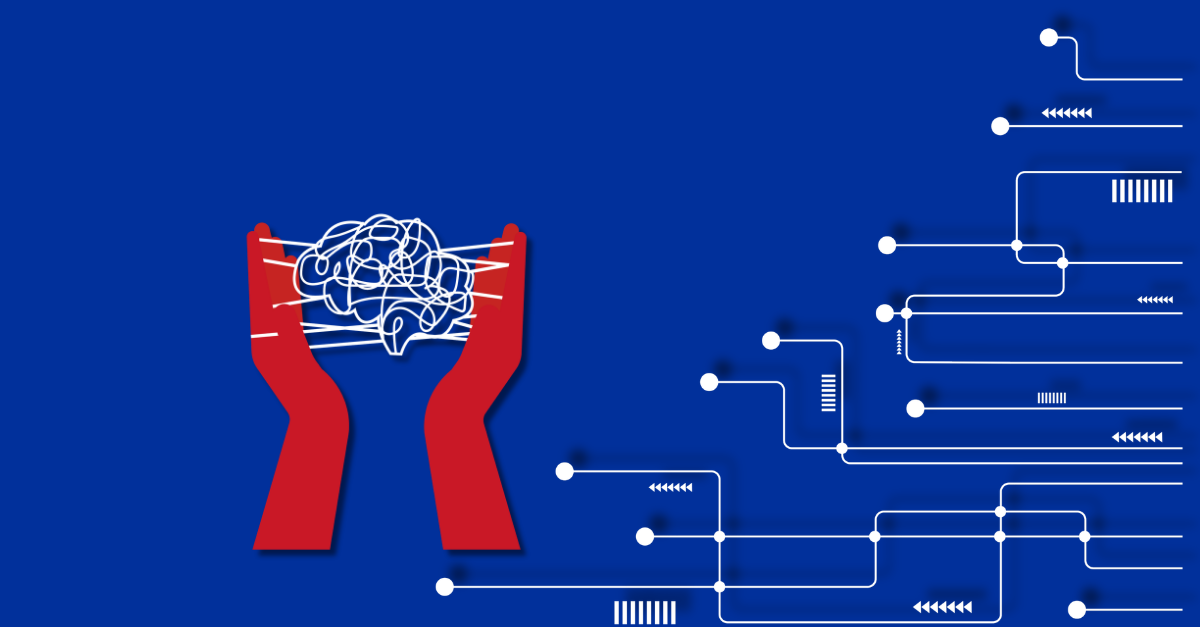
Red Lines under the EU AI Act: Understanding Manipulative Techniques and the Exploitation of Vulnerabilities
[…] group of persons. The four conditions must be met cumulatively for the prohibition to be applicable. Additionally, according to the Guidelines, there must be a plausible causal link between the techniques used, the significant change in the person’s behavior, and the significant harm that resulted or is likely to result from that behavior. While […]

Q&A With FPF Vice President for U.S. Policy, Matthew Reisman
[…] and the ways it was transforming our lives–and yet so many of the principles to guide its development and use remained nascent. I think that remains true today. All of us who care about building responsible public policy and governance for technology have the opportunity to create the path forward together, and I find […]
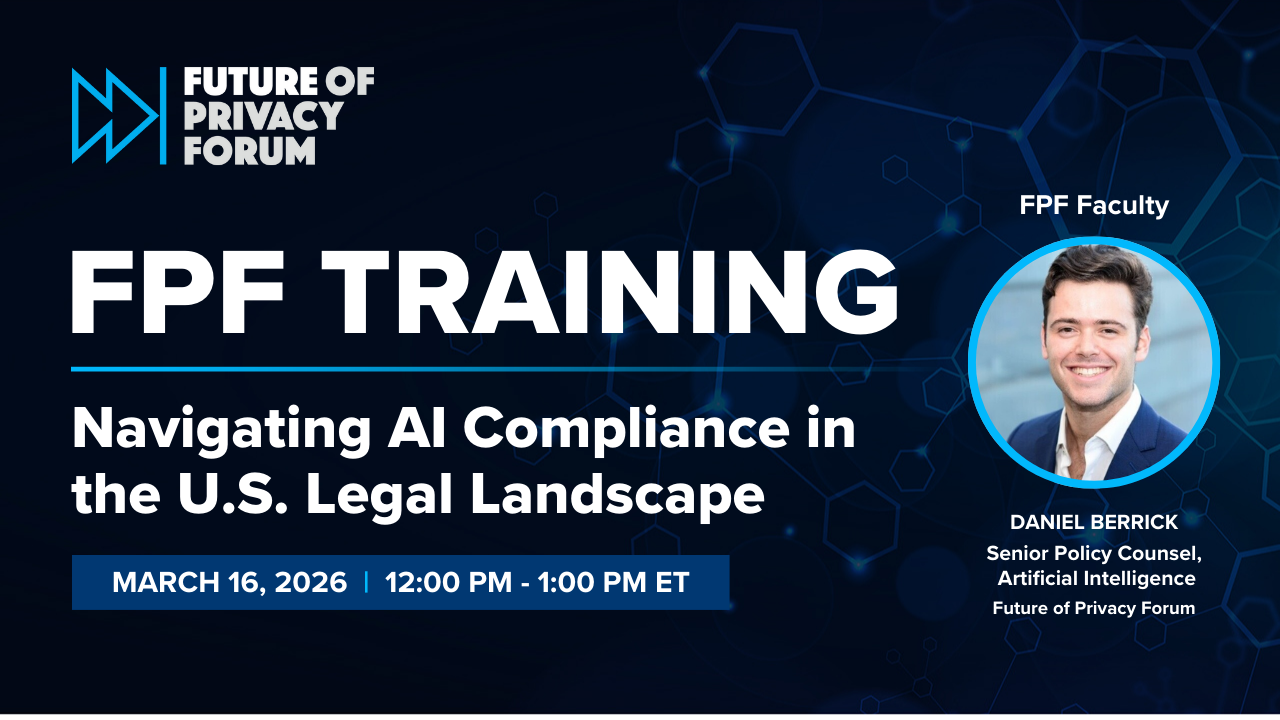
FPF Member Training: Navigating AI Compliance in the U.S. Legal Landscape
[…] and longstanding consumer protection and civil rights protections. The challenge for practitioners is not just tracking new proposals, but understanding how existing laws apply to AI systems today and how to operationalize compliance across multiple, often overlapping, regulatory regimes. In FPF’s training on Navigating AI Compliance in the U.S. Legal Landscape, participants will: Anticipate […]

Paradigm Shift in the Palmetto State: A New Approach to Online Protection-by-Design
[…] by minors. Whereas prior comparable state laws typically limited the scope to for-profit entities, South Carolina seemingly extends application to non-profit and other non-commercial entities. This approach mirrors the legal entity framing adopted in Vermont’s and Nebraska’s AADCs, though those laws include narrower applicability thresholds. With respect to applicability threshold criteria, South Carolina aligns […]
Operations Internships
[…] considered. Please submit each document separately in the field provided. Applications are reviewed throughout the year to fill positions on a rolling basis (so we encourage applying early). A link to apply for each semester is typically provided 3-6 months before the deadline for each semester. Top candidates will be contacted with an invitation to join […]

6 Privacy Tips for the Generative AI Era
[…] features may introduce new data uses, defaults, or controls. Periodically revisiting privacy and safety settings can help ensure your preferences continue to reflect how the product works today, rather than how it worked when you first configured it. Explore and Have Fun! LLMs can often provide useful data protection advice, so ask them questions […]