
Biometric technology has long been used for security and law enforcement purposes such as national security watch lists, passport controls, criminal fingerprint databases, and immigration processing. Now, however, the private sector increasingly uses these systems as a verification method for authentication that previously required a PIN or password. Apple’s decision to include a fingerprint scanner in the iPhone in 2013 brought new public awareness to possible non-law-enforcement applications of biometric technologies, and the company’s shift to facial recognition access in the most recent models further normalized the concept. Biometric technology continues to be adopted in many sectors, including financial services, transportation, health care, computer systems and facility access, and voting. In many cases, this technology is more efficient, less expensive, and easier to use than traditional alternatives, while also eliminating the need for passwords, which are broadly recognized as an insufficiently secure safeguard for user data. However, as with any digital system, there are privacy concerns around the collection, use, storage, sharing, and analysis of the data that are generated by these systems.


A Conversation with FPF's Gabriela Zanfir-Fortuna
In Europe, FPF helps regulators, policymakers, and staff at data protection authorities better understand the technologies at the forefront of data protection law. FPF works with the Brussels Privacy Hub of Vrije Universiteit Brussel to provide an annual program to support practical data protection scholarship. FPF also offers the Digital Data Flows Masterclass, a year-long educational […]

FPF Comments on the Washington Privacy Act, SB 5376
Today, the Future of Privacy Forum submitted comments to the Washington State Senate Ways & Means Committee on the proposed Washington Privacy Act, Senate Bill 5376. FPF takes a “neutral” position regarding the Bill, and makes a few important points. FPF commends the Bill’s sponsors for addressing a broad set of individual data protection rights. […]

Artificial Intelligence: Privacy Promise or Peril?
Understanding AI and its underlying algorithmic processes presents new challenges for privacy officers and others responsible for data governance in companies ranging from retailers to cloud service providers. In the absence of targeted legal or regulatory obligations, AI poses new ethical and practical challenges for companies that strive to maximize consumer benefits while preventing potential harms.

AI and Machine Learning: Perspectives with FPF’s Brenda Leong
As we prepare to toast our 10th anniversary, we’re hearing from FPF policy experts about important privacy issues. Today, Brenda Leong, FPF Senior Counsel and Director of Strategy, is sharing her perspective on AI and machine learning. Brenda also manages the FPF portfolio on biometrics, particularly facial recognition, and oversees strategic planning for the organization.Tell […]

Digital Data Flows Masterclass: Emerging Technologies
Digital Data Flows Masterclass is a year-long educational program designed for regulators, policymakers, and staff seeking to better understand the data-driven technologies at the forefront of data protection law & policy. The program will feature experts on machine learning, biometrics, connected cars, facial recognition, online advertising, encryption, and other emerging technologies. Sign up to receive email […]
Calls for Regulation on Facial Recognition Technology
We look forward to working with Microsoft, others in industry, and policymakers to “create policies, processes, and tools” to make responsible use of Facial Recognition technology a reality.
Limor Shmerling Magazanik Joins Israel Tech Policy Institute as Managing Director and Future of Privacy Forum as Senior Fellow
Washington, DC – November 20, 2018 – The Israel Tech Policy Institute and Future of Privacy Forum today announced Limor Shmerling Magazanik as ITPI Managing Director and FPF Senior Fellow. In this role, Magazanik will provide leadership on day-to-day operational matters of ITPI, including directing ITPI’s policy agenda; engaging policymakers, regulators, academics, and business leaders; convening multi stakeholder groups for discussion; and overseeing communications with the public and the advisory board.
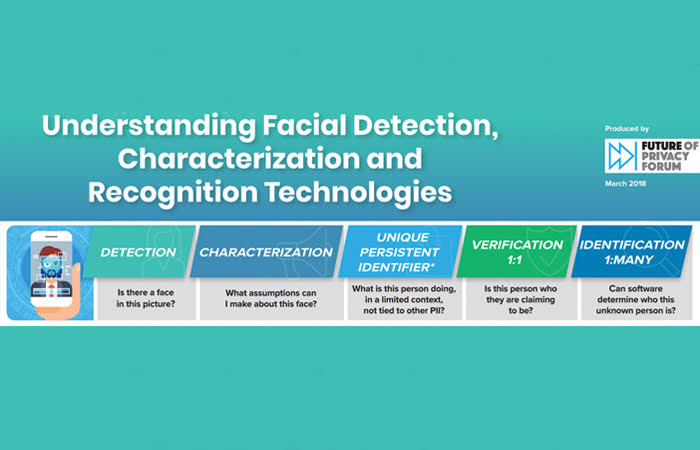
FPF Releases Understanding Facial Detection, Characterization, and Recognition Technologies and Privacy Principles for Facial Recognition Technology in Commercial Applications
These resources will help businesses and policymakers better understand and evaluate the growing use of face-based biometric technology systems when used for consumer applications. Facial recognition technology can help users organize and label photos, improve online services for visually impaired users, and help stores and stadiums better serve customers. At the same time, the technology often involves the collection and use of sensitive biometric data, requiring careful assessment of the data protection issues raised. Understanding the technology and building trust are necessary to maximize the benefits and minimize the risks.
PrivacyNews.TV
FPF uses Facebook Live to discuss timely topics. Watch some of our previous videos here and be sure to tune in live for our next discussion!
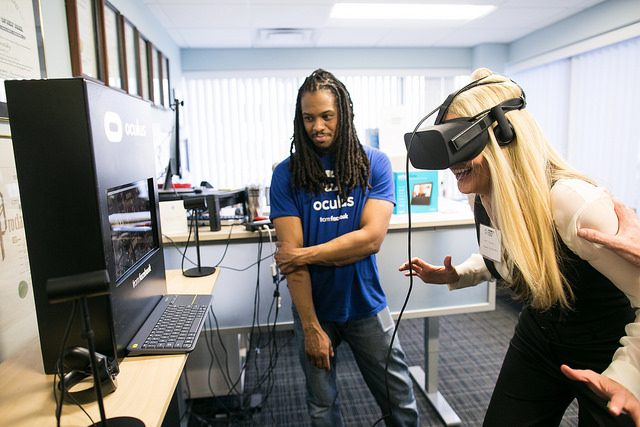
Policymakers, regulators, and privacy executives interact with latest connected tech at FPF’s Third Annual Tech Lab
FPF held the Third Annual Tech Lab Open House Monday, March 26, 2018, at our offices in Washington, D.C. The Tech Lab Open House provided an opportunity for us to host Privacy Commissioners and FPF members who were in town for the International Association of Privacy Professional’s Global Privacy Summit. The event also provided a rare occasion for policy makers, regulators, and thought leaders to interact with the latest in privacy-impacting gadgets and new technologies.