
When handling personal data, organizations must utilize both best practices for privacy and cybersecurity to ensure that it is protected, sound, and treated in line with individual and societal expectations.
FPF’s work on privacy and cybersecurity focuses on the overlap between the two areas, including how different global laws and policy regimes tackle that overlap. Through FPF’s Privacy and Cybersecurity Expert Group, FPF facilitates the coordination and collaboration of privacy and cybersecurity experts to promote common goals, strategies, and understanding.
FPF’s Cybersecurity Advisory Committee comprises top cyber and privacy executives at industry-leading companies and civil society and academia representatives.
Advisory committee members include:
- Emily Hancock, Cloudflare
- Stephenie Handler, Gibson Dunn (Chair)
- David Hoffman, Duke University, Sanford School of Public Policy
- Anitha Ibrahim, Amazon Web Services
- Andy Serwin, DLA Piper
- Chad Sniffen, National Network to End Domestic Violence
- Melanie Tiano, T-Mobile
- Heng Xu, American University





A New Era for Japanese Data Protection: 2020 Amendments to the APPI
The recent amendments to Japan’s data protection law contain a number of new provisions certain to alter – and for many foreign businesses, transform – the ways in which companies conduct business in or with Japan.
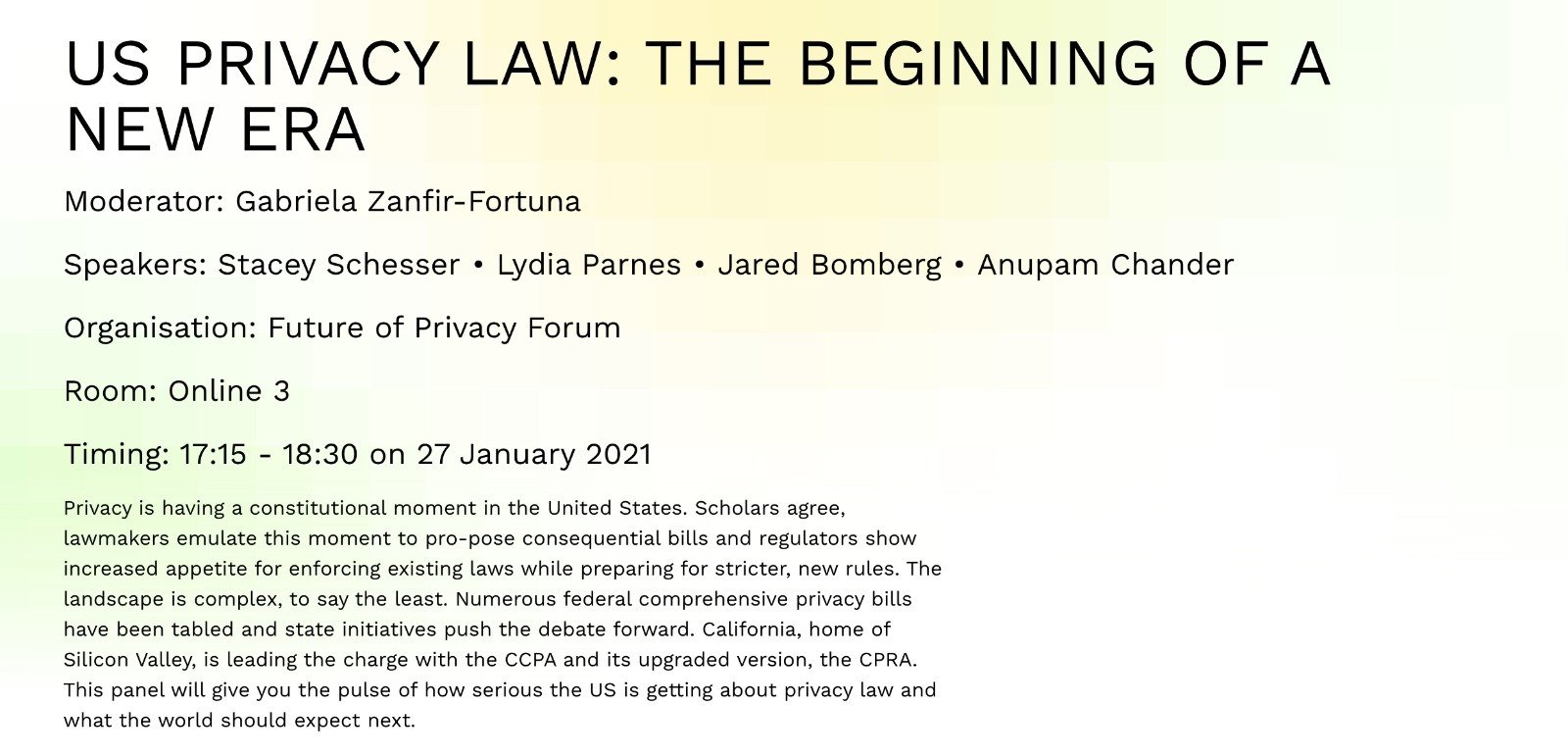
FPF Hosted a CPDP 2021 Panel on US Privacy Law: The Beginning of a New Era
By Srivats Shankar, FPF Legal Intern For the 14th annual Computers, Privacy and Data Protection conference, which took place between 27 and 29 January, 2021, FPF hosted a panel of experts to discuss “US Privacy Law: The Beginning of a New Era”, whose recording has just been published. The panel was moderated by Dr. Gabriela […]

India: Massive overhaul of digital regulation, with strict rules for take-down of illegal content and Automated scanning of online content
On February 25, the Indian Government notified and published Information Technology (Guidelines for Intermediaries and Digital media Ethics Code) Rules 2021. These rules mirror the Digital Services Act (DSA) proposal of the EU to some extent, since they propose a tiered approach based on the scale of the platform, they touch on intermediary liability, content moderation, take-down of […]
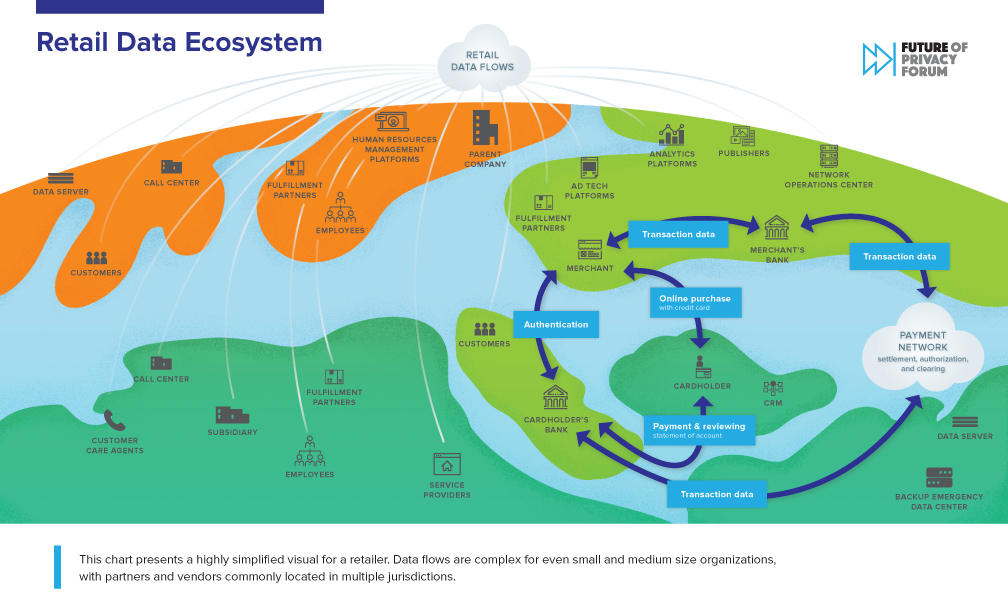
Understanding Interconnected Local and Global Data Flows
International data flows have been top of mind in the past year for digital rights advocates, companies and regulators, particularly international transfers following the Schrems II judgment of the Court of Justice of the EU from last July. As data protection authorities assess how to use technical safeguards and contractual measures to support data flows […]

FPF Health and AI & Ethics Policy Counsels Present a Scientific Position at ICML 2020 and at 2020 CCSQ World Usability Day
On November 12, 2020, FPF Policy Counsels Drs. Rachele Hendricks-Sturrup and Sara Jordan presented privacy-by-design alongside human-centered design concepts during the 2020 CCSQ World Usability Day virtual conference. This presentation followed Drs. Hendricks-Sturrup’s and Jordan’s July 2020 scientific position paper presented at the International Conference on Machine Learning (ICML) 2020, entitled “Patient- Reported Outcomes: A Privacy-Centric and Federated Approach […]
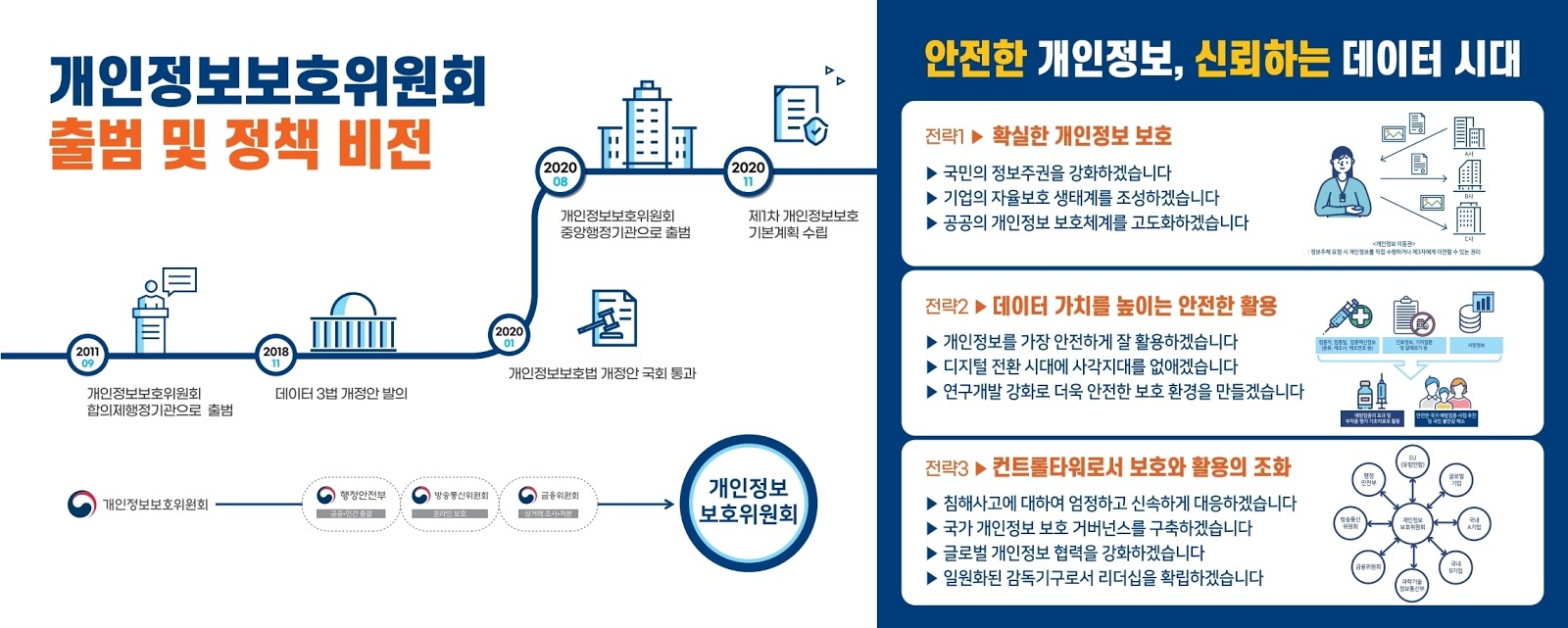
South Korean Personal Information Protection Commission Announces Three-Year Data Protection Policy Plan
by Jasmine Park On November 24, 2020, the South Korean Personal Information Protection Commission (PIPC), the nation’s central administrative agency tasked with protecting the privacy rights of individuals by enforcing the country’s privacy laws, released its revised three-year “Personal Information Protection Master Plan” (‘21-‘23). A wide range of policies that balance both the protection and […]

A Deep Dive into New Zealand’s New Privacy Law: Extraterritorial Effect, Cross-Border Data Transfers Restrictions and New Powers of the Privacy Commissioner
By Caroline Hopland, Hunter Dorwart and Gabriela Zanfir-Fortuna Last week, on December 1st, the newly amended Privacy Act 2020 (Act) of New Zealand came into force. The act was passed by the New Zealand Parliament on June 20, 2020 and made significant changes to the 1993 law, Privacy Act 1993. The amendments cover a broad range of topics including the […]

Singapore’s Personal Data Protection Act Shifts Away From a Consent-Centric Framework
Authors: Caroline Hopland, Hunter Dorwart and Gabriela Zanfir-Fortuna The Singapore Parliament passed amendments to its Personal Data Protection Act 2012 (PDPA) on November 2, 2020, making it the first comprehensive review and change of this law since its enactment in 2012, as it was announced by the Ministry of Communications and Information (MCI) and the Personal Data Protection Commission (Commission) in […]

21st Century Cures Act Final Rule: Key Health Data Privacy Considerations
On the eve of a key compliance date, the HHS Office of the National Coordinator for Health Information Technology (ONC) extended deadlines for entities working in health information technology to comply with a new federal rule intended to “promote health care choice and competition across the United States” and “advance interoperability and support the access, exchange, and […]

Exploring Consumer Attitudes About Privacy
We’ve been taking a look at recent studies about consumer attitudes regarding data use and privacy. A new study, “Privacy Front and Center,” from Consumer Reports’ Digital Lab with support from Omidyar Network, found that American consumers are increasingly concerned about privacy and data security when purchasing new products and services, which may be a competitive advantage […]