
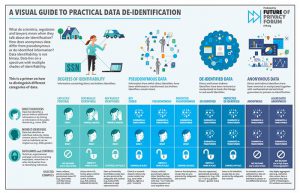
One key method for ensuring privacy while processing large amounts of data is de-identification. De-identified data refers to data through which a link to a particular individual cannot be established. This often involves “scrubbing” the identifiable elements of personal data, making it “safe” in privacy terms while attempting to retain its commercial and scientific value.
In the era of big data, the debate over the definition of personal information, de-identification and re-identification has never been more important. Privacy regimes often rely on data being considered Personal in order to require the application of privacy rights and protections. Data that is anonymous is considered free of privacy risk and available for public use.
Yet much data that is collected and used exists somewhere on a spectrum between these stages. FPF’s De-ID Project has examined practical frameworks for applying privacy restrictions to data based on the nature of data that is collected, the risks of de-identification, and the additional legal and administrative protections that may be applied.

Blog Summary: Ethical Concerns and Challenges in Research using Secondary Data
Digital data is a strategic asset for business. It is also an asset for researchers seeking to answer socially beneficial questions using company held data. Research using secondary data introduces new challenges and ethical concerns for research administrators and research ethics committees, like IRBs. FPF Senior Researcher, AI & Ethics, Dr. Sara Jordan, analyzes some […]
FPF and Leading Health & Equity Organizations Issue Principles for Privacy & Equity in Digital Contact Tracing Technologies
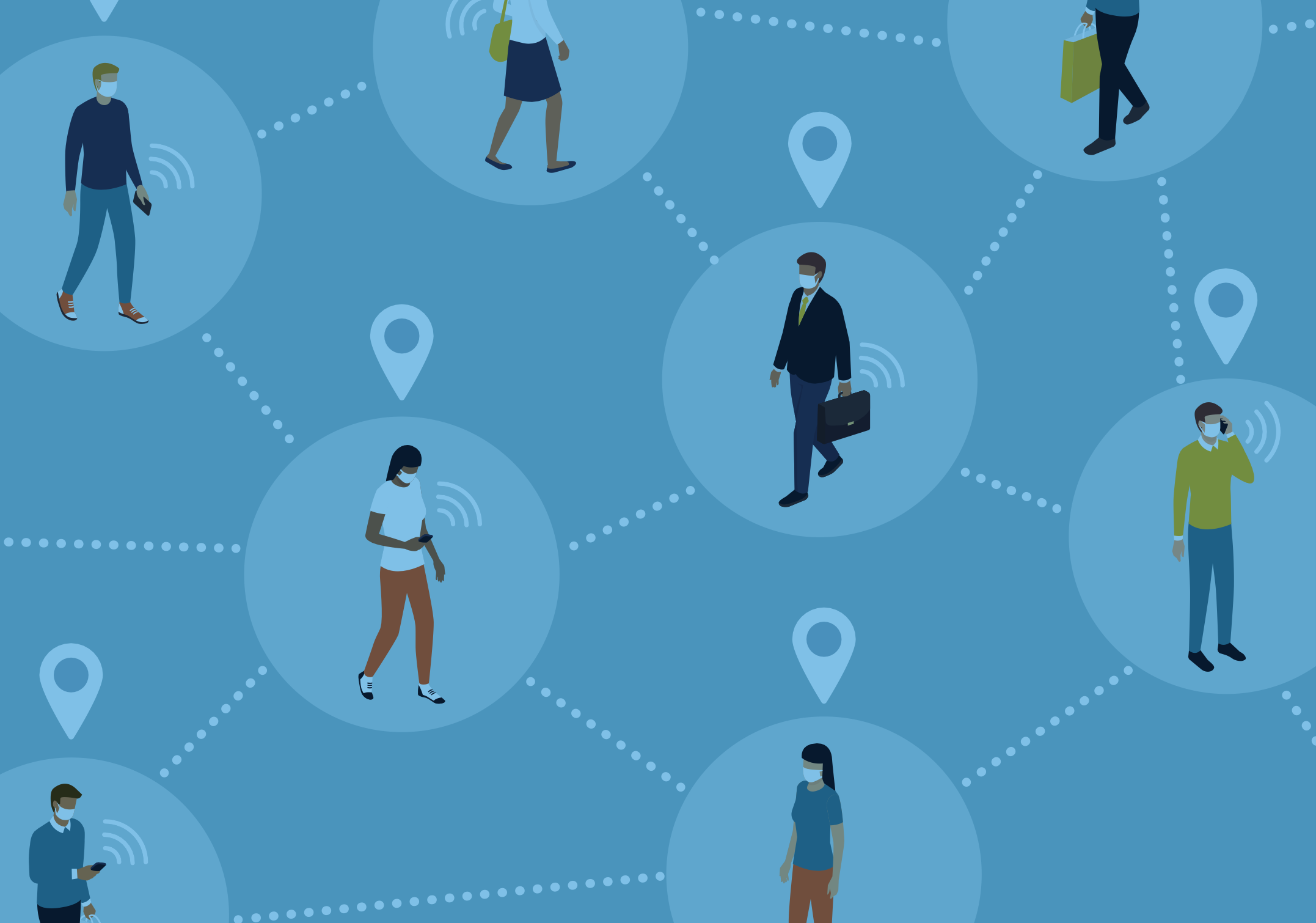
With support from the Robert Wood Johnson Foundation, FPF engaged leaders within the privacy and equity communities to develop actionable guiding principles and a framework to help bolster the responsible implementation of digital contact tracing technologies (DCTT). Today, seven privacy, civil rights, and health equity organizations signed on to these guiding principles for organizations implementing […]

Uniform Law Commission Finalizes Model State Privacy Law
This month, the Uniform Law Commission (ULC) voted to approve the Uniform Personal Data Protection Act (UPDPA), a model bill designed to provide a template for uniform state privacy legislation. After some final amendments, it will be ready to be introduced in state legislatures in January 2022. The ULC has been engaged in an effort […]
FPF Issues Award for Research Data Stewardship to Stanford Medicine & Empatica, Google & Its Academic Partners
WASHINGTON, DC (June 29, 2021) – The second-annual FPF Award for Research Data Stewardship honors two teams of researchers and corporate partners for their commitment to privacy and ethical uses of data in their efforts to research aspects of the COVID-19 pandemic. One team is a collaboration between Stanford Medicine researchers led by Tejaswini Mishra, PhD, Professor […]
Google: COVID-19 Community Mobility Reports
Google has been recognized with the second-annual FPF Award for Research Data Stewardship for its work to produce, aggregate, anonymize, and share data on community movement during the COVID-19 pandemic. Google’s Community Mobility Reports go through a robust anonymization process that employs differential privacy techniques to ensure that personal data, including an individual’s location, movement, […]
New FPF Report Highlights Privacy Tech Sector Evolving from Compliance Tools to Platforms for Risk Management and Data Utilization
As we enter the third phase of development of the privacy tech market, purchasers are demanding more integrated solutions, product offerings are more comprehensive, and startup valuations are higher than ever, according to a new report from the Future of Privacy Forum and Privacy Tech Alliance. These factors are leading to companies providing a wider […]
Colorado Privacy Act Passes Legislature: Growing Inconsistencies Ramp Up Pressure for Federal Privacy Law
Today, the Colorado Senate approved the House version of the Colorado Privacy Act (SB21-190) that passed yesterday, on June 7. If approved by Governor Jared Polis, Colorado will follow Virginia and California as the third U.S. state to establish baseline legal protections for consumer privacy. “Although the Colorado Privacy Act contains notable advances that build […]

South Korea: The First Case Where the Personal Information Protection Act was Applied to an AI System
As AI regulation is being considered in the European Union, privacy commissioners and data protection authorities around the world are starting to apply existing comprehensive data protection laws against AI systems and how they process personal information. On April 28th, the South Korean Personal Information Protection Commission (PIPC) imposed sanctions and a fine of KRW […]

A New Era for Japanese Data Protection: 2020 Amendments to the APPI
The recent amendments to Japan’s data protection law contain a number of new provisions certain to alter – and for many foreign businesses, transform – the ways in which companies conduct business in or with Japan.

Supporting Responsible Research and Data Protection
Scientific research is often dependent on access to personal information, whether collected directly from individuals or collected for a real-world use and then accessed for research. For research to be trusted, processing of personal information must be lawful, ethical and subject to privacy and security protections. Supporting responsible research is a priority for FPF: Data […]