
Privacy Enhancing Technologies (PETs) are crucial for safeguarding individual privacy while enabling socially beneficial research, data sharing, and advancements in sectors that collect or use sensitive data. As AI systems increasingly rely on vast amounts of data, PETs like differential privacy, homomorphic encryption, federated learning, zero-knowledge proofs, and even model contract clauses can help ensure that personal data remains confidential and secure. This is vital not only for protecting individual rights but also for earning and maintaining public trust in technologies that use data about people.
Ethically implementing PETs is also essential. PETs must be designed and deployed to protect marginalized groups and avoid practices that may appear to be privacy-preserving, but actually exploit sensitive data or undermine privacy. In addition, clear policy guidelines on the deployment of PETs are necessary to help make sound business cases for their use in industry. If PETs are ethically integrated into research and business practices, and if global regulators have an opportunity to support their appropriate deployment, there is enormous potential for increasing technological innovation and societal benefits while upholding privacy and public trust.
FPF supports the development of PETs, convenes experts from around the world to deploy best practices, and provides in-depth analysis of emerging technologies and their policy implications. FPF also leads the National Science Foundation and Department of Energy-funded Research Coordination Network for the use of PETs to advance socially beneficial data sharing and protect people’s privacy as data is increasingly used to train AI models. FPF also facilitates a Global PETs Network of regulators who are interested in the lawful and ethical implementation of these tools.






FPF and Privacy Analytics Identify “A Practical Path Toward Genetic Privacy”
Paper highlights de-identification standards, re-identification research, and emerging technical, contractual, and policy protections that can safeguard genetic data while supporting research. Genomic data is arguably the most personal of all personally identifiable information (“PII”). Techniques to de-identify genomic data to limit privacy and security risks to individuals–while that data is used for research and statistical […]

FPF Provides Senate Testimony on Strategies to Mitigate Privacy Risks of Using Data to Combat COVID-19
Future of Privacy Forum (FPF) Senior Counsel Stacey Gray today provided the Senate Committee on Commerce, Science, and Transportation with written testimony, including recommendations based on how experts in the U.S. and around the world are currently mitigating the risks of using data to combat the COVID-19 pandemic. “The collection and use of data, including personal […]

The Future of Privacy Technology
Today, FPF is making available a report co-authored by CEO Jules Polonetsky and Policy Fellow Jeremy Greenberg that identifies future directions and requirements of privacy technology from the industry perspective. With support by the National Science Foundation under Grant No. 1939288, a survey was designed and administered to industry privacy leaders to provide input on […]
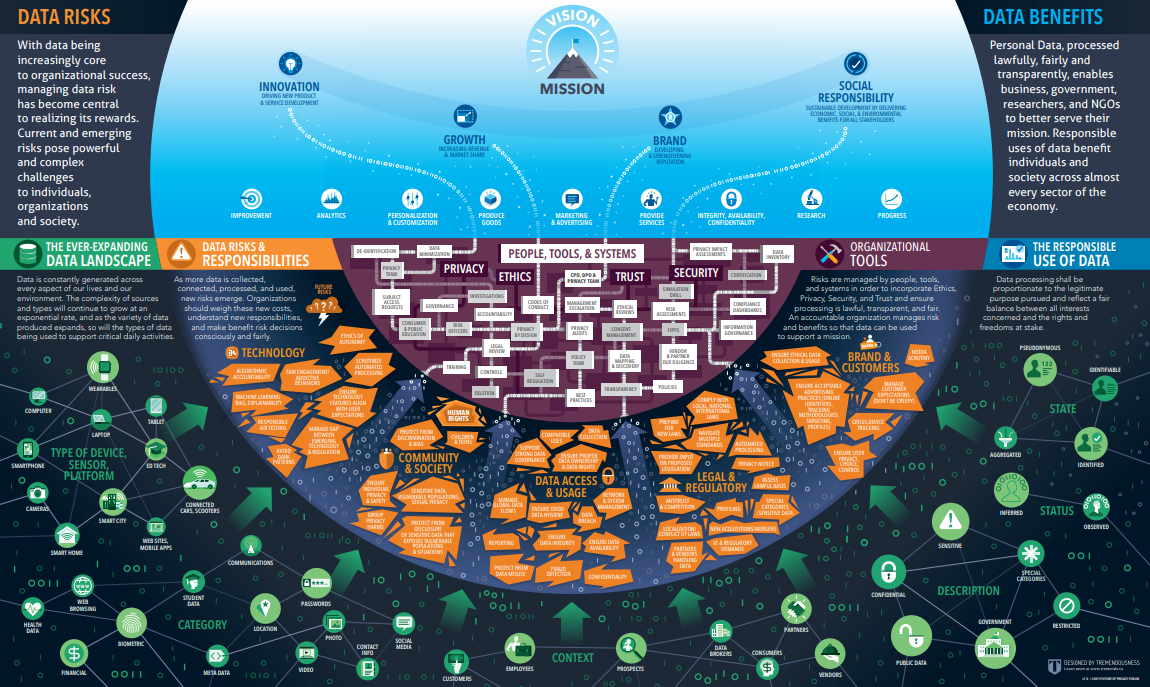
Privacy 2020: 10 Privacy Risks and 10 Privacy Enhancing Technologies to Watch in the Next Decade
Today, FPF is publishing a white paper co-authored by CEO Jules Polonetsky and hackylawyER Founder Elizabeth Renieris to help corporate officers, nonprofit leaders, and policymakers better understand privacy risks that will grow in prominence during the 2020s, as well as rising technologies that will be used to help manage privacy through the decade. Leaders must understand […]

Civic Data Privacy Leaders Convene at MetroLab Annual Summit
By Kelsey Finch, FPF Senior Counsel The MetroLab Network’s Annual Summit brought together an inspired group of civic, academic, industry, and nonprofit leaders to discuss the most important issues in smart cities and civic innovation. For the third year in a row, FPF partnered with MetroLab Network to promote data privacy perspectives and to advance responsible […]

New Privacy Tech Industry Attracts Massive Funding
Privacy Tech Alliance connecting researchers and entrepreneurs to analysts, customers, VCs WASHINGTON – July 11, 2019 – One Trust’s announcement today of a $200 million Series A investment, which follows yesterday’s announcement by TrustArc of a $70 million Series D round, demonstrates the arrival of a new industry sector for privacy protection technologies. “Investors have […]
New Privacy Tech Alliance Promotes Innovative Privacy Technologies
TEL AVIV, ISRAEL – June 25, 2019 – The Future of Privacy Forum and the Israel Tech Policy Institute are launching the Privacy Tech Alliance during CyberWeek 2019, to promote the market for privacy-protective technologies internationally, facilitate the development of new technologies, and maximize value for innovators and investors. “As the data ecosystem and regulatory requirements […]
FPF Research Coordination Network Helps Academic Stars Connect with Private Sector Privacy Pros at IAPP
The IAPP Global Privacy Summit convened many of the best minds in privacy from industry, government and civil society. To add to the mix, FPF brought six academic stars to the Summit to share their privacy research and insights, thanks to the Applied Privacy Research Coordination Network (RCN). Supported by the National Science Foundation, the […]

The Future of Ad Tech: A Discussion with FPF's Stacey Gray
Almost everyone has had a similar experience: visiting a website to shop for a product and then having an advertisement for that product “follow” them around the internet. Most free content today, from social media to news, is funded by ads. In order to deliver those ads and measure their effectiveness, companies today rely heavily […]

Consumer Genetic Testing: A Q&A with Carson Martinez
Carson Martinez is FPF’s Health Policy Fellow. She works on privacy challenges surrounding health data, particularly where it is not covered by HIPAA, as is the case with consumer-facing genetics companies, wearables, mobile health and wellness applications, and connected medical devices. Carson also leads the FPF Genetics Working Group and Health Working Group. How did […]