
Research often requires using sensitive data to answer important questions. The ethical collection and analysis of personal information can be challenging to do while still protecting the privacy of the implicated individuals, honoring informed consent, and complying with other legal obligations. The technology, policies, and ethical considerations for researchers are constantly shifting, sometimes making it difficult to keep up. That’s why FPF engages stakeholders across academia and industry to produce recommendations, best practices, and ethical review structures that promote responsible research. Our work is centered around streamlining, encouraging, and promoting responsible research that respects essential privacy and ethical considerations throughout the research lifecycle. FPF works with policymakers to develop legislative protections that support effective, responsible research with strong privacy safeguards, including hosting events that allow policymakers and regulators to engage directly with practitioners from academia, advocacy, and industry.




PrivacyNews.TV
FPF uses Facebook Live to discuss timely topics. Watch some of our previous videos here and be sure to tune in live for our next discussion!

Policy Brief: European Commission’s Strategy for AI, explained
The European Commission published a Communication on “Artificial Intelligence for Europe” on April 24th 2018. It highlights the transformative nature of AI technology for the world and it calls for the EU to lead the way in the approach of developing AI on a fundamental rights framework. AI for good and for all is the motto the Commission proposes. The Communication could be summed up as announcing concrete funding for research projects, clear social goals and more thinking about everything else.

FPF Publishes Report Supporting Stakeholder Engagement and Communications for Researchers and Practitioners Working to Advance Administrative Data Research
The ADRF Network is an evolving grassroots effort among researchers and organizations who are seeking to collaborate around improving access to and promoting the ethical use of administrative data in social science research. As supporters of evidence-based policymaking and research, FPF has been an integral part of the Network since its launch and has chaired the network’s Data Privacy and Security Working Group since November 2017.
The Top 10: Student Privacy News (Feb – July 2018)
The Future of Privacy Forum tracks student privacy news very closely, and shares relevant news stories with our newsletter subscribers.* Approximately every month, we post “The Top 10,” a blog with our top student privacy stories.

Beyond Explainability: A Practical Guide to Managing Risk in Machine Learning Models
Beyond Explainability aims to provide a template for effectively managing this risk in practice, with the goal of providing lawyers, compliance personnel, data scientists, and engineers a framework to safely create, deploy, and maintain ML, and to enable effective communication between these distinct organizational perspectives.
Immuta and the Future of Privacy Forum Release First-Ever Risk Management Framework for AI and Machine Learning
College Park, MD – June 26, 2018 – Immuta and the Future of Privacy Forum (FPF) today announced the first-ever framework for practitioners to manage risk in artificial intelligence (AI) and machine learning (ML) models. Their joint whitepaper, Beyond Explainability: A Practical Guide to Managing Risk in Machine Learning Models, provides business executives, data scientists, and compliance professionals with a strategic guide for governing the legal, privacy, and ethical risks associated with this technology.

FPF Launches Israel Tech Policy Institute
Last week, we launched The Israel Tech Policy Institute, an incubator for tech policy leadership and scholarship, advancing ethical practices in support of emerging technologies. Co-founded by Jules Polonetsky, CEO of the Future of Privacy Forum, and Omer Tene, an Israeli law professor and VP and Chief Knowledge Office at the International Association of Privacy Professionals, the Israel Technology Policy Institute is a new think tank established to provoke, convene and lead policy discussions and support research on privacy, cybersecurity and ethical use of technologies.

Empirical Research in the Internet of Things, Mobile Privacy, and Digital Advertising
In the world of consumer privacy, including the Internet of Things (IoT), mobile data, and advertising technologies (“Ad Tech”), it can often be difficult to measure real-world impact and conceptualize individual harms and benefits. Fortunately, academic researchers are increasingly focusing on these issues, leading to impressive scholarship from institutions such as the Princeton Center for Information Technology Policy (CITP), Carnegie Mellon University School of Computer Science, UC Berkeley School of Information, and many others, including non-profits and think tanks.
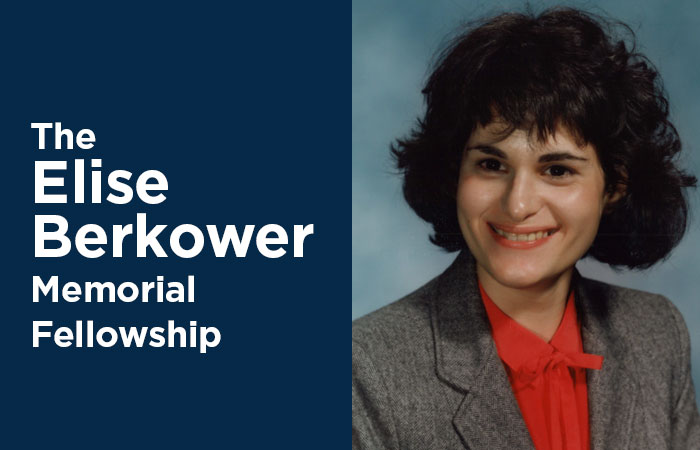
The Elise Berkower Memorial Fellowship
FPF launched a new fellowship in memory of Elise Berkower. Elise was a senior privacy executive at global measurement and data analytics company Nielsen for nearly a decade and was a valued, longtime member of the FPF Advisory Board. FPF graciously acknowledges the Berkower Family and the Nielsen Foundation as founding sponsors of the Elise Berkower Memorial Fellowship.

Future of Privacy Forum Launches Fellowship in Memory of Privacy Hero Elise Berkower
Washington, DC – Today, the Future of Privacy Forum announced the launch of a new fellowship in memory of Elise Berkower. Elise was a senior privacy executive at global measurement and data analytics company Nielsen for nearly a decade and was a valued, longtime member of the FPF Advisory Board. FPF graciously acknowledges the Berkower Family and the Nielsen Foundation as founding sponsors of the Elise Berkower Memorial Fellowship.