
Research often requires using sensitive data to answer important questions. The ethical collection and analysis of personal information can be challenging to do while still protecting the privacy of the implicated individuals, honoring informed consent, and complying with other legal obligations. The technology, policies, and ethical considerations for researchers are constantly shifting, sometimes making it difficult to keep up. That’s why FPF engages stakeholders across academia and industry to produce recommendations, best practices, and ethical review structures that promote responsible research. Our work is centered around streamlining, encouraging, and promoting responsible research that respects essential privacy and ethical considerations throughout the research lifecycle. FPF works with policymakers to develop legislative protections that support effective, responsible research with strong privacy safeguards, including hosting events that allow policymakers and regulators to engage directly with practitioners from academia, advocacy, and industry.




Facebook and Cambridge Analytica: Statement by Jules Polonetsky, FPF CEO
We are pleased to see Facebook’s response, but are looking forward to understanding how to best address the broader issues for all stakeholders. These issues are important to discuss – they are not going away.

Taming The Golem: Challenges of Ethical Algorithmic Decision-Making
This article examines the potential for bias and discrimination in automated algorithmic decision-making. As a group of commentators recently asserted, “[t]he accountability mechanisms and legal standards that govern such decision processes have not kept pace with technology.” Yet this article rejects an approach that depicts every algorithmic process as a “black box” that is inevitably plagued by bias and potential injustice.

FPF Welcomes New Senior Fellow
FPF is pleased to welcome Stanley W. Crosley as a senior fellow. Stanley has over 20 years of applied experience in law, data governance and data strategy across a broad sector of the economy, including from inside multinational corporations, academia, large law firm and boutique practices, not-for-profit advocacy organizations, and governmental agencies, and is the Co-Director of the Indiana University Center for Law, Ethics, and Applied Research in Health Information (CLEAR), is Counsel to the law firm of Drinker Biddle & Reath in Washington, DC, and Principal of Crosley Law Offices, LLC. Stan is a Senior Strategist at the Information Accountability Foundation and a Senior Fellow at the Future of Privacy Forum, where he leads health policy efforts.
FPF Publishes Model Open Data Benefit-Risk Analysis
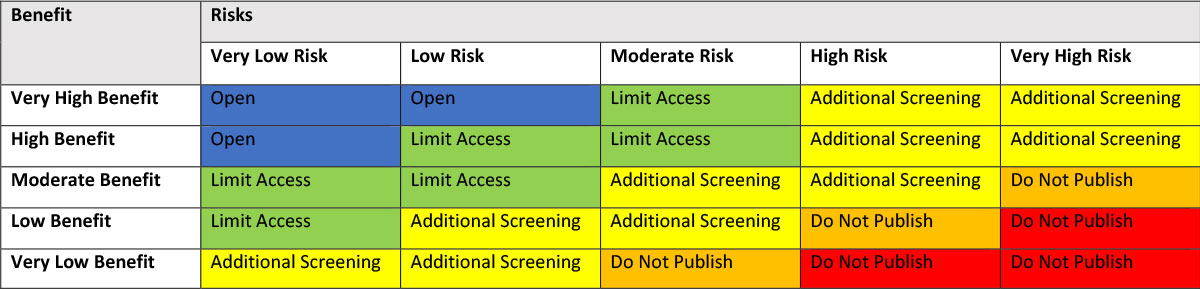
This Report first describes inherent privacy risks in an open data landscape, with an emphasis on potential harms related to re-identification, data quality, and fairness. To address these risks, the Report includes a Model Open Data Benefit-Risk Analysis (“Model Analysis”). The Model Analysis evaluates the types of data contained in a proposed open dataset, the potential benefits – and concomitant risks – of releasing the dataset publicly, and strategies for effective de-identification and risk mitigation.

New Future of Privacy Forum Study Finds the City of Seattle’s Open Data Program a National Leader in Privacy Program Management
Today, the Future of Privacy Forum released its City of Seattle Open Data Risk Assessment. The Assessment provides tools and guidance to the City of Seattle and other municipalities navigating the complex policy, operational, technical, organizational, and ethical standards that support privacy-protective open data programs.
Examining the Open Data Movement
The transparency goals of the open data movement serve important social, economic, and democratic functions in cities like Seattle. At the same time, some municipal datasets about the city and its citizens’ activities carry inherent risks to individual privacy when shared publicly. In 2016, the City of Seattle declared in its Open Data Policy that the city’s data would be “open by preference,” except when doing so may affect individual privacy.[1] To ensure its Open Data Program effectively protects individuals, Seattle committed to performing an annual risk assessment and tasked the Future of Privacy Forum (FPF) with creating and deploying an initial privacy risk assessment methodology for open data.

Public comments on proposed Open Data Risk Assessment for the City of Seattle
FPF requested feedback from the public on its proposed Draft Open Data Risk Assessment for the City of Seattle. In 2016, the City of Seattle declared in its Open Data Policy that the city’s data would be “open by preference,” except when doing so may affect individual privacy. To ensure its Open Data program effectively protects individuals, Seattle committed to performing an annual risk assessment and tasked FPF with creating and deploying an initial privacy risk assessment methodology for open data.

Privacy Scholarship Research Reporter: Issue 3, December 2017 – 2017 Privacy Papers for Policymakers Award Winners
Notes from FPF On December 12, 2017, FPF announced the winners of our 8th Annual Privacy Papers for Policymakers (PPPM) Award. This Award recognizes leading privacy scholarship that is relevant to policymakers in the United States Congress, at U.S. federal agencies, and for data protection authorities abroad. In this special issue of the Scholarship Reporter, you […]
Privacy Papers 2017: Spotlight on the Winning Authors
Today, FPF announced the winners of the 8th Annual Privacy Papers for Policymakers (PPPM) Award. This Award recognizes leading privacy scholarship that is relevant to policymakers in the United States Congress, at U.S. federal agencies, and for data protection authorities abroad.
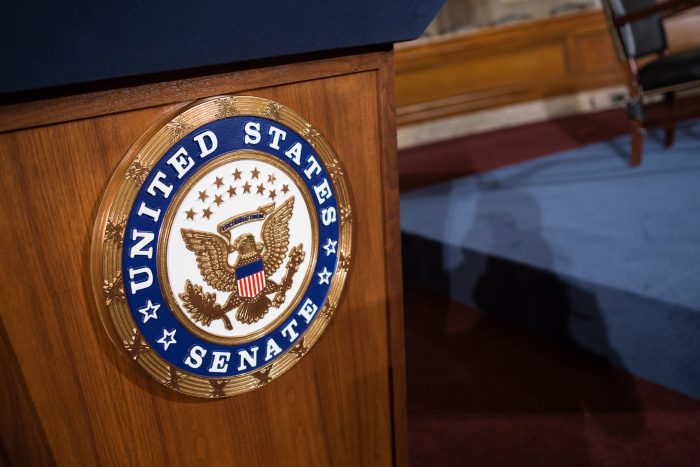
This Year's Six Must-Read Privacy Papers: The Future of Privacy Forum Announces Recipients of Annual Privacy Award
Washington, DC – Today, the Future of Privacy Forum announced the winners of the 8th Annual Privacy Papers for Policymakers Award. The PPPM Award recognizes leading privacy scholarship that is relevant to policymakers in the U.S. Congress, at U.S. federal agencies, and for data protection authorities abroad. The winners of the 2017 PPPM Award are: