
Across the United States, evolving data collection and processing practices and advances in artificial intelligence are driving new digital services, technologies, and socially beneficial research – while also raising new opportunities, risks, and questions for individuals and communities. In response, state and federal policymakers are considering new legislative and regulatory frameworks on three interconnected fronts: comprehensive consumer privacy laws that establish baseline rights and protections for personal data across the economy; frameworks that target specific sectors and practices such as automated decisionmaking, biometric identification, companion chatbots, data-driven pricing, data brokerage, frontier AI model safety, genetic data, and health data; and youth-specific privacy and online safety laws that set distinct rules for minors. These three tracks rarely stay in their lanes: a comprehensive privacy law may include AI provisions, an AI safety bill may carve out rules for minors, a youth online safety law may hinge on biometric age verification. Understanding the landscape requires understanding both the individual pieces and how they fit together.
FPF’s U.S. Legislation team provides expert, independent, pragmatic analysis of state and federal legislative and regulatory approaches to privacy, AI, and youth online safety – three distinct but increasingly intertwined issue areas. The team tracks emerging proposals, compares new laws against existing frameworks, analyzes implementation and compliance implications, and helps policymakers and stakeholders understand how legal requirements interact with current technologies, business practices, and data uses.
Through reports, blog posts, legislative and policy analyses, webinars, in-person and virtual peer-to-peer gatherings, and educational programs, FPF helps the broader technology policy and governance community understand the mechanisms and strategies available to protect privacy, promote responsible AI development and deployment, and advance youth online safety. FPF does not typically support or oppose particular bills. Instead, the U.S. Legislation team focuses on explaining the practical and legal implications of proposals – individually and as they interact with one another. This work helps ensure that privacy, AI, and youth safety compliance and policy strategies remain future-looking, adaptable, and workable for the continued, beneficial use of data and AI.
FPF’s U.S. Legislation team is led by Tatiana Rice, Senior Director.






A Conversation with FPF's Gabriela Zanfir-Fortuna
In Europe, FPF helps regulators, policymakers, and staff at data protection authorities better understand the technologies at the forefront of data protection law. FPF works with the Brussels Privacy Hub of Vrije Universiteit Brussel to provide an annual program to support practical data protection scholarship. FPF also offers the Digital Data Flows Masterclass, a year-long educational […]
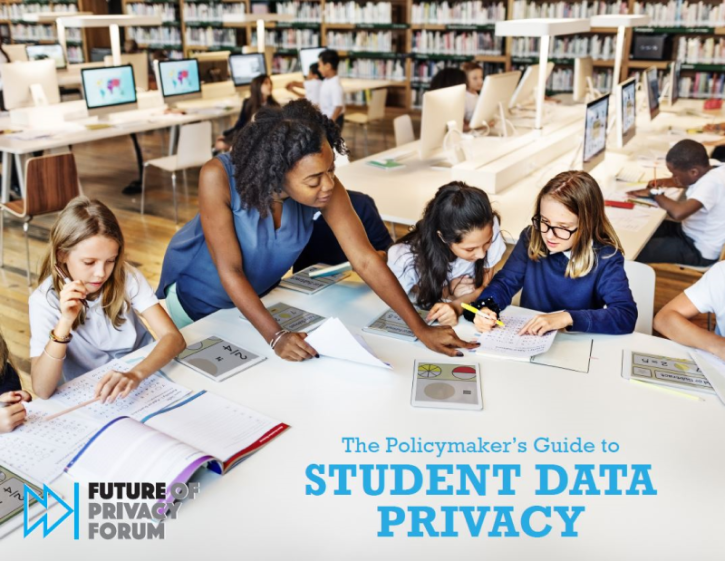
Future of Privacy Forum Releases Policymaker’s Guide to Student Data Privacy
Plain-Language Resource for Policymakers Addresses Student Privacy WASHINGTON, DC – April 4, 2019 – Future of Privacy Forum (FPF) has released The Policymaker’s Guide to Student Data Privacy, a crucial resource for federal, state, and local policymakers interested in developing thoughtful student data privacy legislation. Since 2014, state policymakers have built new legal frameworks, passing […]

Fairness, Ethics, & Privacy in Tech: A Discussion with Chanda Marlowe
After beginning her career as a high school English teacher, Chanda Marlowe’s career change led her to become FPF’s inaugural Christopher Wolf Diversity Law Fellow. She’s an expert on location and advertising technology, algorithmic fairness, and how vulnerable populations can be uniquely affected by privacy issues. What led you to the Future of Privacy Forum? I […]

The Future of Ad Tech: A Discussion with FPF's Stacey Gray
Almost everyone has had a similar experience: visiting a website to shop for a product and then having an advertisement for that product “follow” them around the internet. Most free content today, from social media to news, is funded by ads. In order to deliver those ads and measure their effectiveness, companies today rely heavily […]

FPF Comments on the California Consumer Privacy Act (CCPA)
On Friday, the Future of Privacy Forum submitted comments to the Office of the California Attorney General (AG), Xavier Becerra. Read FPF’s Full Comments (11-page letter) See Attachment 1: Comparing Privacy Laws: GDPR vs. CCPA See Attachment 2: A Visual Guide to Practical De-identification In FPF’s outreach to the AG, we commended the office for its […]
FPF Comments on the Washington Privacy Act, SB 5376
Today, the Future of Privacy Forum submitted comments to the Washington State Senate Ways & Means Committee on the proposed Washington Privacy Act, Senate Bill 5376. FPF takes a “neutral” position regarding the Bill, and makes a few important points. FPF commends the Bill’s sponsors for addressing a broad set of individual data protection rights. […]
CPDP 2019 Panel: Understanding the limits and benefits of data portability
By Gabriela Zanfir-Fortuna and Sasha Hondagneu-Messner The Future of Privacy Forum organized a panel at the 2019 Computers, Privacy and Data Protection Conference in Brussels to discuss the limits and benefits of the right to data portability as introduced by the GDPR. This panel was chaired by Thomas Zerdick (EDPS), moderated by Stacey Gray (FPF), […]

FPF's Amelia Vance on the Future of Student Privacy
Amelia Vance, Policy Counsel and Director of the FPF Education Privacy Project, is one of the foremost experts in the nation on education privacy. She has a knack for making complex regulations and technical trends accessible to individuals who are not lawyers or computer scientists, but who care deeply about student privacy – school administrators, […]

FPF at 10: Envisioning the Future of Privacy
This year, Future of Privacy Forum is celebrating our tenth anniversary as a catalyst for privacy leadership and scholarship. In recognition of this milestone, we will host an anniversary celebration on April 30 and release a report on rising privacy issues. We also are publishing a series of blog posts over the next several weeks […]

School Safety Report Neglects Privacy Concerns
Yesterday, the Federal Commission on School Safety released a report detailing its conclusions, after holding a series of meetings and hearings in the wake of school shootings. Nearly every aspect of the Commission’s report focuses on sharing data and, thus, has privacy implications for students, teachers, and the public.