
Across the United States, evolving data collection and processing practices and advances in artificial intelligence are driving new digital services, technologies, and socially beneficial research – while also raising new opportunities, risks, and questions for individuals and communities. In response, state and federal policymakers are considering new legislative and regulatory frameworks on three interconnected fronts: comprehensive consumer privacy laws that establish baseline rights and protections for personal data across the economy; frameworks that target specific sectors and practices such as automated decisionmaking, biometric identification, companion chatbots, data-driven pricing, data brokerage, frontier AI model safety, genetic data, and health data; and youth-specific privacy and online safety laws that set distinct rules for minors. These three tracks rarely stay in their lanes: a comprehensive privacy law may include AI provisions, an AI safety bill may carve out rules for minors, a youth online safety law may hinge on biometric age verification. Understanding the landscape requires understanding both the individual pieces and how they fit together.
FPF’s U.S. Legislation team provides expert, independent, pragmatic analysis of state and federal legislative and regulatory approaches to privacy, AI, and youth online safety – three distinct but increasingly intertwined issue areas. The team tracks emerging proposals, compares new laws against existing frameworks, analyzes implementation and compliance implications, and helps policymakers and stakeholders understand how legal requirements interact with current technologies, business practices, and data uses.
Through reports, blog posts, legislative and policy analyses, webinars, in-person and virtual peer-to-peer gatherings, and educational programs, FPF helps the broader technology policy and governance community understand the mechanisms and strategies available to protect privacy, promote responsible AI development and deployment, and advance youth online safety. FPF does not typically support or oppose particular bills. Instead, the U.S. Legislation team focuses on explaining the practical and legal implications of proposals – individually and as they interact with one another. This work helps ensure that privacy, AI, and youth safety compliance and policy strategies remain future-looking, adaptable, and workable for the continued, beneficial use of data and AI.
FPF’s U.S. Legislation team is led by Tatiana Rice, Senior Director.






FPF Year in Review 2025
Co-authored by FPF Communications Intern Celeste Valentino with contributions from FPF Global Communications Manager Joana Bala This year, FPF continued to broaden its footprint across priority areas of data governance, further expanding activities across a range of cross-sector topics, including AI, Youth, Conflict of Laws, AgeTech (seniors), and Cyber-Security. We have engaged extensively at the local […]

Five Big Questions (and Zero Predictions) for the U.S. Privacy and AI Landscape in 2026
Introduction For better or worse, the U.S. is heading into 2026 under a familiar backdrop: no comprehensive federal privacy law, plenty of federal rumblings, and state legislators showing no signs of slowing down. What has changed is just how intertwined privacy, youth, and AI policy debates have become, whether the issue is sensitive data, data-driven […]
FPF Releases Updated Report on the State Comprehensive Privacy Law Landscape
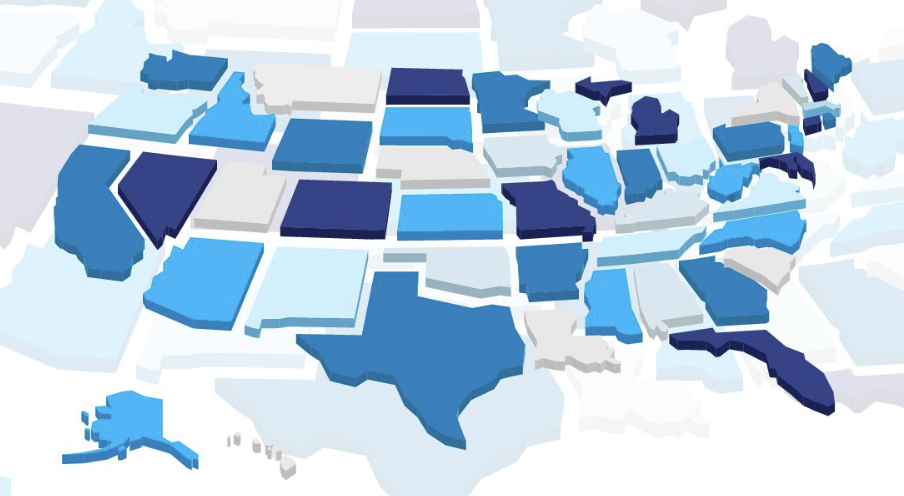
The state privacy landscape continues to evolve year-to-year. Although no new comprehensive privacy laws were enacted in 2025, nine states amended their existing laws and regulators increased enforcement activity, providing further clarity (and new questions) about the meaning of the law. Today FPF is releasing its second annual report on the state comprehensive privacy law […]

Future of Privacy Forum Appoints Matthew Reisman as Vice President of U.S. Policy
Washington, D.C. — (December 9, 2025) — The Future of Privacy Forum (FPF), a global non-profit focused on data protection, AI, and data governance, has appointed Matthew Reisman as Vice President, U.S. Policy. Reisman brings extensive experience in privacy policy, data protection, and AI governance to FPF. He most recently served as a Director of […]

What’s New in COPPA 2.0? A Summary of the Proposed Changes
On November 25th, U.S. House Energy and Commerce introduced a comprehensive bill package to advance child online privacy and safety, which included its own version of the Children and Teens’ Online Privacy Protection Act (“COPPA 2.0”) to modernize COPPA. First enacted in 1998, the Children’s Online Privacy Protection Act (COPPA) is a federal law that […]

FPF Holiday Gift Guide for AI-Enabled, Privacy-Forward AgeTech
On Cyber Monday, giving supportive technology to an older loved one or caregiver is a great option. Finding the perfect holiday gift for an older adult who values their independence can be a challenge. This year, it might be worth exploring the exciting world of AI-enabled AgeTech. It’s not only gadgets; it’s also about giving […]

Understanding the New Wave of Chatbot Legislation: California SB 243 and Beyond
As more states consider how to govern AI-powered chatbots, California’s SB 243 joins New York’s S-3008C as one of the first few enacted laws governing companion chatbots and stands out as the first to include protections tailored to minors. Signed by Governor Gavin Newsom this month, the law focuses on transparency and youth safety, requiring […]

FPF Releases Issue Brief on New CCPA Regulations for Automated Decisionmaking Technology, Risk Assessments, and Cybersecurity Audits
Since the California Consumer Privacy Act (CCPA) was enacted in 2018, business obligations under the law have continued to evolve due to several rounds of rulemaking by both the Attorney General and the California Privacy Protection Agency (CPPA). The latest regulations from the CPPA are some of the most significant yet. Starting January 1, 2026, […]
California’s SB 53: The First Frontier AI Law, Explained
California Enacts First Frontier AI Law as New York Weighs Its Own On September 29, Governor Newsom (D) signed SB 53, the “Transparency in Frontier Artificial Intelligence Act (TFAIA),” authored by Sen. Scott Wiener (D). The law makes California the first state to enact a statute specifically targeting frontier artificial intelligence (AI) safety and transparency. […]
The State of State AI: Legislative Approaches to AI in 2025
State lawmakers accelerated their focus on AI regulation in 2025, proposing a vast array of new regulatory models. From chatbots and frontier models to healthcare, liability, and sandboxes, legislators examined nearly every aspect of AI as they sought to address its impact on their constituents. To help stakeholders understand this rapidly evolving environment, the Future […]