Associated Press: Schools debate whether to detail positive tests for athletes
In a recent article published by the Associated Press in The Washington Post and The New York Times, the Future of Privacy Forum warns of the privacy risks of sharing information about positive COVID-19 tests among students, particularly student athletes who have already returned to campus to prepare for the upcoming sports season. Read an excerpt below and see the full article here.
Athletic programs sometimes avoid making formal injury announcements, citing the Health Insurance Portability and Accountability Act (HIPAA) or the Family Educational Rights and Privacy Act (FERPA). Both are designed to protect the privacy of an individual’s health records. The U.S. Education Department issued guidelines in March that said a school shouldn’t disclose personal identifiable information from student education records to the media even if it determines a health or safety emergency exists.
But is merely revealing a number going to enable anyone to identify which athletes tested positive? That’s up for debate.
Amelia Vance is the director of youth and education privacy at the Future Privacy Forum, a think tank dedicated to data privacy issues. Vance believes releasing the number of positive tests effectively informs the public without sacrificing privacy.
Vance said disclosing the number of positive tests for a certain team would help notify members of the general public who may have come into contact with the athletes and could serve as a guide to those schools that haven’t welcomed students back to campus yet.
“If you’re saying six students tested positive or a student was exposed and therefore we’re having the whole team tested or things like that, that wouldn’t probably be traced back to an individual student,” Vance said. “Therefore, neither (FERPA or HIPAA) is going to apply, so any claim that privacy laws wouldn’t allow that disclosure would be disingenuous.
“The key there is to balance the public interest with the privacy of the students,” she said. “Most of the time, the information colleges and universities need to disclose don’t require the identification of a particular student to the press or general public.”
Gauging the Liabilities of Artificial Intelligence Within Your Organization
Artificial intelligence and machine learning (AI/ML) generate significant value when used responsibly – and are the subject of growing investment for exactly these reasons. But AI/ML can also amplify organizations’ exposure to potential vulnerabilities, ranging from fairness and security issues to regulatory fines and reputational harm.
Many businesses are incorporating ever more machine-learning based models into their operations, both on the backend and in consumer facing contexts. For those companies who are not developers of these systems themselves, but who use these systems, they assume the responsibility of managing, overseeing, and controlling these algorithmically-based learning models, in many cases without extensive internal resources to meet the technical demands they incur.
General application toolkits for this challenge are not yet broadly available, and to help fill that gap while more technical support is developed, we have created a checklist focused on asking questions to carry out sufficient oversight for these systems. The questions in the attached checklist – “Ten Questions on AI Risk” – are meant to serve as an initial guide to gauging these risks, both during the build phase of AI/ML endeavors and beyond.
While there is no “one size fits all” answer for how to manage and monitor AI systems, these questions will hopefully provide a guide for companies using such models, allowing them to customize the questions and frame the answers in contexts specific to their own products, services, and internal operations. We hope to build on this start and offer additional, detailed resources for such organizations in the future.
The attached document was prepared by bnh.ai, a boutique law firm specializing in AI/ML analytics, in collaboration with the Future of Privacy Forum.
Polonetsky: Are the Online Programs Your Child’s School Uses Protecting Student Privacy? Some Things to Look For
Op-ed by Future of Privacy Forum CEO Jules Polonetsky published in The74.
As CEO of a global data protection nonprofit, I spend my workdays focused on helping policymakers and companies navigate new technologies and digital security concerns that have emerged in the wake of the COVID-19 pandemic.
Meanwhile, my children have adopted many of these technologies and are participating in online learning via Zoom and dozens of other platforms and apps — some of which have sparked serious concerns about student privacy and data security in the classroom.
These things are not contradictory. Here’s why.
Specific laws have been put in place to protect especially sensitive types of data. Your doctor uses services that safeguard your health information, and your bank relies on technology vendors that agree to comply with financial privacy laws.
Similarly, as the use of technology in the classroom skyrocketed in the past decade, federal and state laws were established that require stringent privacy protections for students.
To comply, many general consumer companies like Google, Apple and Microsoft developed education-specific versions of their platforms that include privacy protections that limit how they will use student information. School districts set up programs to screen ed tech software, even though few of the new laws came with funding.
But many of these federal and state protections apply only to companies whose products are designed for schools, or if schools have a privacy-protective contract with vendors. As schools rushed to provide distance learning during their coronavirus shutdowns, some of the tools adopted were not developed for educational environments, leaving children’s data at risk for sale or marketing uses.
If your child’s school has rolled out new technology platforms for online learning, there are important steps you can take to determine whether the tool includes adequate safeguards to protect student privacy. First, ask whether your school has vetted the company or has a contract in place that includes specific limitations on how student information can be used. Don’t hesitate to ask your child’s teacher to explain what data may be collected about your child and how it will be used — you have a right to this information.
Second, check to see if the company has signed the Student Privacy Pledge, which asks companies that provide technology services to schools to commit to a set of 10 legally binding obligations. These include not selling students’ personal information and not collecting or using students’ personal information beyond what is needed for the given educational purposes. More than 400 education technology companies have signed the pledge in recent years, so this can be a quick resource for identifying businesses that have demonstrated a commitment to ensuring that student data are kept private and secure.
Most importantly, take time to review each program’s privacy settings with your child and have an honest discussion about behavior online. Even the strictest privacy controls can’t always prevent a student from disrupting class by making racist remarks in the chat or sharing the link or log-in credentials. I hate to load another burden on parents who are trying to work from home, but making sure your kid isn’t an online troll is partly on you.
Now more than ever, we are relying on technology to keep in touch with work, school, and friends and family. It hasn’t been — and will never be — perfect. Policymakers can help schools ensure that the technologies they use meet privacy and security standards by providing the resources for schools to employ experts in those fields.
As we all try to adjust to this new normal, we should embrace technologies that can add value to students’ educational experience, enhance our ability to work remotely and help us stay connected. But we must first make sure the appropriate safeguards are in place so privacy and security don’t fall by the wayside.
Jules Polonetsky is the CEO of the Future of Privacy Forum, a Washington, D.C.-based nonprofit that serves as a catalyst for privacy leadership and scholarship, advancing principled data practices in support of emerging technologies. Previously, he served as chief privacy officer at AOL and DoubleClick, as New York City consumer affairs commissioner, as a New York state legislator, as a congressional staffer and as an attorney.
A Landmark Ruling in Brazil: Paving the Way for Considering Data Protection as an Autonomous Fundamental Right
Authors: Bruno Ricardo Bioni and Renato Leite Monteiro
A historic ruling of the Brazilian Supreme Court from May 07, 2020 describes the right to data protection as an autonomous right stemming from the Brazilian Constitution. By a significant majority, 10 votes to 1, the Court halted the effectiveness of the Presidential Executive Order (MP[1] 954/2020) that mandated telecom companies to share subscribers’ data (e.g., name, telephone number, address) of more than 200 hundred million individuals with the Brazilian Institute of Geography and Statistics (IBGE), the country’s agency responsible for performing census research. More important than the decision itself was its reasoning, which paves the way for recognizing the protection of personal data as a fundamental right, independent of the right to privacy, that already receives such recognition, in a similar fashion to the Charter of Fundamental Rights of the European Union. This article summarizes the main findings of the ruling. First, (1) it will provide background on the role of the Brazilian Supreme Court and the legal effects of the ruling. It will then look into (2) the facts of the case, (3) the main findings of the Court, to conclude with (4) an analysis of what comes next for the Brazilian data protection and privacy law.
The role of the Supreme Court and its rulings in the Brazilian legal system
The Brazilian legal system resembles the federative structure of the country. Each state has its own lower courts and appeal bodies. At the federal level, there are also lower courts and appeal bodies with specific scope, such as labor law, cases with international effects or lawsuits against federal agencies. On top of that there are superior courts also with specific scope, such as specific violations of federal laws.
At the top of the system sits the Brazilian Supreme Court (STF), a constitutional court of eleven Justices appointed by the President. With few exceptions, only extraordinary cases which directly violate the federal constitution, e.g. violation of fundamental rights, reach the court and its rulings can have binding effects upon all other levels of the Brazilian legal system, depending on the type of proceeding or effects granted by the Justices.
One particular type of proceeding, known as Direct Action of Unconstitutionality (ADI), can be filed directly to the Supreme Court without the need to be discussed on lower-level courts or any other court in cases in which laws or norms directly violate the constitution. Rulings from this particular type of proceedings have nationwide binding effects for all entities of the three branches of the government and for private organizations. This was the type of proceeding filed at STF to discuss data protection as an autonomous fundamental right. Its ruling, therefore, will have overall binding effects.
Facts of the case and proceedings
Due to social distancing measures adopted in response to the COVID-19 pandemic, staff of the Brazilian Institute of Geography and Statistics (IBGE) is not able to visit citizens in order to conduct face-to-face interviews for the statistical research necessary to perform the national census, known as National Household Sample Survey (PNAD). This is the context behind the Presidential Executive Order 954/2020 (MP), which aimed to allow the IBGE to carry out its census research through telephone interviews. In other words, the declared purpose was to avoid a “statistical blackout”.
The telephone interviews presupposed to collect data regarding various socioeconomic characteristics, such as population, education, work, income, housing, social security, migration, fertility, health, nutrition, among other topics that can be included in the research according to the information needs of Brazil, e.g., behavior data on the context of the pandemic. These interviews have always been conducted in person on a sample of 70 thousand households that were a statistical representation of the Brazilian population. However, the MP mandated that subscribers data of 200 million telecom clients should be shared with IBGE to perform the census. At a first glance, the first question brought to the Court’s attention was: why is personal data of so many citizens necessary to achieve the same purpose that used to be achieved in the past with fewer information?
The issue was raised by four different political parties and the national bar association that filed five ADI upon the STF to discuss violations to the fundamental right to privacy, expressly granted by Art. 5, X, of the Federal Constitution, and to the right to secrecy of communications data, provided by Art. 5, XII. In previous case-law, the Court struggled to recognize stored data, such as subscribers data, as data protected by Art. 5, XII. Long standing precedents only granted such type of protection to data in motion, like ongoing telephone calls or data being transmitted. Acknowledging the need to update this understanding in light of new technologies and the impact that the misuse of data can have upon individuals and the society, another argument was presented: the need to recognize the right to protect personal data as an autonomous fundamental right.
When the ADIs were filed, Justice Rosa Weber, Rapporteur of the case, granted an injunction order suspending the effects of the MP until it was further discussed by all Justices, identifying probable violations of the aforementioned constitutional rights, also arguing that despite the pandemic we are living in there was no public interest to share personal data of 200 million people to undergo the desired public policy.
The trial in front of the eleven Justices started on May 6, with the participation of the parties’ lawyers and of amici curiae, including Data Privacy Brasil. The organisation filed an amicus brief and it was represented for the oral statement by its Director Bruno Ricardo Bioni (a co-author of this article), who spoke at length about the singular position of the right to protection of personal data, its status as an autonomous fundamental right, the many vices of the executive order and the current data protection landscape in Brazil, including the fact that the Brazilian General Data Protection Law (LGPD) is still in vacatio legis. He also reminded the Court that the national data protection authority, which will provide guidance and enforcement, is yet to be established. The English translation of the oral statement is available online.
Main findings of the Court
Protection of Personal Data as an autonomous fundamental right: a remarkable shift of how the Supreme Court has been analyzing privacy and data protection
Historically, the STF has ruled solely based on the right to privacy and, most importantly, following the legal rationale of this fundamental right by which only private/confidential data should be protected. In the case RE 601314, the Court ruled that the Brazilian Federal Revenue Office (the Brazilian IRS) could have access to financial data from Banks without a court order. According to the Court, the data would remain confidential since only IRS’s staff would have access to the data, and they should abide by their severe informational fiduciary duties. Moreover, such data did not comprise sensitive (‘intimate’) information about individuals (e.g. religion, family relationships) and, therefore, requests to access data from the IRS would not disproportionately interfere on the right to private life. In the case RE 1055941, the same reasoning was adopted in order to grant similar data access request powers to the Public Prosecutor’s Office.
The new precedent of the Supreme Court is such a remarkable shift of how the Court has been analyzing privacy and data protection because it changes the focus from data that is secret to data that is attributed to persons and might impact their individual and collective lives, regardless of whether they are kept in secrecy or not. There is no more irrelevant data. Justice Carmen Lucia argued that the world that we used to live in, where personal data was freely available in telephone catalogs without substantial risks, does not exist anymore. In this sense, the Brazilian Federal Constitution protects not only confidential data, but all and any type of data that can be deemed as an attribute of the human personality. The best example is the habeas data, a procedural constitutional right by which any person has the right to know what information organizations hold about them, as it was argued by Justice Luix Fuz, recalling a precedent of the Supreme Court (Extraordinary Appeal 673.707). The habeas data constitutional right, originally conferred only against public organizations, is a reminiscence of dictatorial times in Brazil and throughout Latin America, when information about citizens was kept in secrecy by the government and used to suppress the population. This provision can now be used to retrieve personal data held by private entities, as long as the databases at issue are of public interest, such as consumer protection databases managed by data brokers.
If the Brazilian Constitution’s core value is the protection of human dignity, the protection it affords should go beyond the right to privacy in order to address other harmful challenges to an individual’s existence, and not only harms to personality rights. Today, humanity can be hacked not only through granting access to data regarding our intimacy, or aspects of human personality that must be locked under seven keys. Recalling the work of philosopher Yuval Harari, Justice Gilmar Mendes argued that due to technological progress, any type of data use that covers an extension of our individuality can pose a threat to human rights and fundamental freedoms. For this reason Justice Fux argued that just like the Charter of Fundamental Rights of the EU, the Brazilian Constitution should recognize the protection of personal data as an autonomous fundamental right, distinct from the right to privacy.
Protection of Personal Data as a pillar for democracy
The Cambridge Analytica scandal was recalled by Justice Luiz Fux to contextualize the collective dimension of data protection rights. By describing the facts surrounding that case, the Justice highlighted how the misuse of personal data can have an impact that surpasses the individual and can affect the very foundations of democracies and influence electoral outputs. “We know today that the dissemination of this data is very dangerous”, affirmed Justice Fux, reminiscing of his term as President of the Superior Electoral Court, when he analyzed a case concerning lack of transparency and knowledge of how personal data is collected and used for political purposes, which can lead to unattended consequences that violate individual and collective rights.
Protection of Personal Data is rooted in the due process clause
If the mere processing of personal data can pose risks over the rights of individuals, it should be backed by appropriate safeguards in order to manage potential harmful effects. Thus, protection of personal data should receive the same protection conferred by the due process clause. It is the type of protection that takes into consideration that there are risks to public liberties associated with the mere processing of data that is linked to a person, as argued by Justice Gilmar Mendes, quoting Julie Cohen and her work on informational due process.
“The use of personal data is inevitably an interference over the personal sphere of someone”, highlighted Justice Luis Roberto Barroso. As a consequence, it should be proportionate by verifying if:
a) the purpose of the processing is clearly specified and legitimate;
b) the amount of data collected is limited to what is strictly necessary in relation to the purposes for which they are being processed;
c) information security measures are adopted to avoid unauthorized third-party access.
Such proportionality test was the conclusion made by Justice Luis Roberto Barroso, which is clearly crafted after the traditional principles of protection of personal data. For the first time, a Judge of the Supreme Court has provided a ruling with such strong wording supporting fair information practice principles as components of an autonomous constitutional right to data protection.
Digital Rights as Fundamental Rights
In addition, another landmark case was initiated by the STF two weeks later, with two judges already publishing their opinions. The main question in this second case is whether Internet platforms could implement encryption technology to the level that it could limit and even avoid the access of law enforcement authorities to data stored or in transit necessary to investigate crimes. Again, the proceeding ADPF 403, known as Request of Non-Compliance with Basic Constitutional Principles (ADPF), that has the same effects of ADIs, discussed the violation of the fundamental rights to privacy and secrecy of communication data. “Digital Rights are Fundamental Rights”: with this strong affirmation, Justice Edson Facchin, the rapporteur, gave his vote ruling out any interpretation of the constitution that would allow a court order to provide exceptional access to end-to-end encrypted message content or that, by any other means, weakens the cryptographic protection of internet applications. Justice Rosa Weber highlighted in her ruling that “the past 3 decades have been an arms race of protection technologies and privacy violations. The law cannot be ignored and must preserve the balance between privacy and the proper functioning of the State”. She also stated that “cryptography, as a technological resource, has taken on special importance in the implementation of human rights”.
The case is still under ongoing proceedings and pending the votes of the other 9 Justices. Nonetheless, the two opinions already published are a breakthrough and show a steep change in the perception and understanding of Brazil’s highest court towards privacy and data protection rights.
A look to the future: the Brazilian General Data Protection Law and the amendment to the Brazilian Constitution
Despite this historical ruling, Brazil stilllacks an institutional infrastructure to supervise and enforce data protection rights. The National Data Protection Authority was created by the Brazilian General Data Protection Law (“LGPD”), but is yet to be established. LGPD was approved in 2018, with an initial adaptation period of 18 months, which was soon amended to be increased by 6 months, leaving the effective date to August 2020. In parallel, a proposal to amend the Federal Constitution aims to include the protection of personal data in the list of fundamental rights. The proposal was unanimously approved by the Senate and by a special parliamentary commission of the House of Representative. Now it needs to be approved by two-thirds of this house.
Now, due to the COVID-19 pandemic, a new bill and another executive order aim to postpone the entering into force of the LGPD to 2021. The bill was already voted by both the Senate and the House of Representatives and it is now to Presidential confirmation. If ratified as it is, the new law would keep the effective date to August 2020. However, it would amend LGPD to allow penalties and enforcement actions only to August 2021. In parallel, a presidential executive order already amended LGPD to change the effective date to May 2021. Nevertheless, this order needs to be approved by the Congress until July this year, what is unlikely to happen due to disputes between the two branches. That said, we can end up not knowing until July when the law will be in effect, one month before its original and possible date. On top of that, the National Data Protection Authority (ANPD), created in Dezember 2018, is yet to be established. Therefore, we can end up in twilight zone with no knowledge what may take place.
What is remarkable is that until the bill to amend the constitution is not adopted, which may not happen in the near future due to political unrest, this ruling of the Brazilian Supreme Court already paves the way to recognize the right to data protection in practice.
About the authors:
Bruno Ricardo Bioni is a PhD candidate at University of São Paulo School of Law. He was a study visitor at Council of Europe/CoE and at the European Data Protection Board/EDPB. Founder of Data Privacy Brasil; Contact: [email protected].
Renato Leite Monteiro is a PhD candidate at the University of São Paulo School of Law. He was a study visitor at Council of Europe and actively participated in the discussions that led to the Brazilian General Data Protection Law. Founder of Data Privacy Brazil; Contact: [email protected].
Data Privacy Brasil is a non-governmental organization with two operational branches: Data Privacy Brasil School, which provides training services and privacy courses, and the Research Association Data Privacy Brasil, which focuses on the research of the interconnection between protection of personal data, technology and fundamental rights. Data Privacy Brasil aims to improve privacy and data protection capacity-building for organizations active in Brazil.
[1] MP- Brazilian abbreviation for Provisional Measure which is a legal act in Brazil through which the President can enact laws for 60 days without approval by the National Congress.
Endgame Issues: New Brookings Report on Paths to Federal Privacy Legislation
This afternoon, The Brookings Institution released a new report, Bridging the gaps: A path forward to federal privacy legislation, a comprehensive analysis of the most challenging obstacles to Congress passing a comprehensive federal privacy law. The report includes a detailed range of practical recommendations and options for legislative text, the result of work with a range of stakeholders to attempt to draft a consensus-driven model privacy bill that would bridge the gaps between sharply divided stakeholders (read the full legislative text of that effort here).
Among the legislative options for issues that will have to be addressed to pass a federal privacy law, the report explores: endgame issues (including preemption and enforcement), hard issues (such as limits on processing of data, civil rights, and algorithmic decision-making), solvable issues (such as covered entities, data security, and organizational accountability), and implementation issues (such as notice, transparency, and effective dates).
Watch The Brookings Institution’s June 3rd webinar, “What will it take to bridge gaps in federal privacy legislation?”, here
Below, we discuss how the Brookings report addresses the two “endgame issues,” enforcement and preemption, in a path towards federal privacy legislation. We agree that these are endgame issues given that neither is optional–both topics must be addressed in any federal privacy law–and because they are issues on which lawmakers on both sides of the aisle (and more broadly, industry and privacy advocates) remain the most deeply divided.
Enforcement
Any meaningful federal law must contain provisions for its enforcement. However, there is considerable disagreement regarding how a privacy law should be enforced. Enforcement mechanisms can vary widely, from agency enforcement (by the Federal Trade Commission or another federal agency), to state law enforcement (such as Attorneys General), to various kinds of private rights of action (by which individuals can challenge violations in court).
A number of Senate and House Democrats and privacy advocates are proponents of a federal private right of action (usually in addition to federal agency enforcement). Many privacy advocates observe that private litigation has played an important role in enforcing federal civil rights laws. They have also expressed concerns that a federal agency will not have sufficient resources, political will, or incentives to adequately enforce the law, for example, when a violation involves harm to only one or a few individuals. Read more from advocates:
In contrast, most tech and business groups, and many Republicans, have expressed support for the more centralized enforcement authority of the Federal Trade Commission. Typically, they observe that data privacy harms can be difficult to define and measure, and argue that centralized enforcement would provide needed clarity and legal certainty to businesses and consumers around a consistent national standard. Business stakeholders also tend to cite concerns over contingency-based class action litigation, including risks to small businesses and financial incentives for meritless litigation. Read more from tech and business groups:
The Brookings proposal suggests a potential compromise: a tiered and targeted private right of action. Recovery would typically be limited to “actual damages,” but would impose statutory damages of up to $1000 per day for “wilful or repeated violations.” Specified harms under the duty of care would not be subject to a heightened standard, while other violations would require individuals to show a “knowing or reckless” violation to sue. Technical violations only give rise to suit if they were “wilful or repeated.” Importantly, potential plaintiffs would also be required to exercise a “right of recourse” before bringing a suit. This approach would give covered entities an opportunity to receive notice and cure the violation, and individuals a way to address privacy disputes outside the courts.
Preemption
When Congress passes a federal privacy law, lawmakers must decide to what extent it will “preempt,” or nullify, current and future state and local privacy and data protection laws. Given the nature of modern data flows, most companies see clear benefit in uniform obligations across state lines and for consumers to have a core set of common rights. However, some argue that privacy can also have a uniquely local character, and note that state legislators have been at the forefront of many novel privacy protections, including in response to crises or rapid technological changes.
The Brookings report proposes several potential compromises to attempt to bridge the gaps between the broad preemption in Senator Wicker (R-MS)’s staff discussion draft and the narrow preemption provisions in most Democratic bills, including Senator Cantwell’s Consumer Online Privacy Rights Act (COPRA). The report suggests preempting state laws only where they interfere with federal provisions specifically related to data collection, processing, transfers, and security. It also recommends that the Federal Trade Commission be authorized to preempt any state law inconsistent with the federal standard, and suggests a limited eight-year sunset clause on preemption.
Looking Ahead
We are optimistic that this new report from The Brookings Institution will be a source of thoughtful debate, and help stakeholders advance the conversation about these contentious issues. In addition to the difficult “endgame” issues of enforcement and preemption, the report identifies a detailed and wide range of other solvable issues having to do with implementation or operational issues on which there is broad agreement. As a result, it provides a highly practical starting point for stakeholders to engage around key issues that will need consensus.
The report observes that its recommendations “will not satisfy maxialists on either side of the debate” but that it may address “legitimate interests of divergent stakeholders.” Indeed, both sides have something to gain from striking a balance – and we agree that “both have something to lose from continued inaction and stalemate.”
Thermal Imaging as Pandemic Exit Strategy: Limitations, Use Cases and Privacy Implications
Authors: Hannah Schaller, Gabriela Zanfir-Fortuna, and Rachele Hendricks-Sturrup
Around the world, governments, companies, and other entities are either using or planning to rely on thermal imaging as an integral part of their strategy to reopen economies. The announced purpose of using this technology is to detect potential cases of COVID-19 and filter out individuals in public spaces who are suspected of suffering from the virus. Experts agree that the technology cannot directly identify COVID-19. Instead, it detects heightened temperature that may be due to a fever, one of the most common symptoms of the disease. Heightened temperature can also indicate a fever resulting from a non-COVID-19 illness or non-viral causes such as pregnancy, menopause, or inflammation. Not all COVID-19 patients experience heightened temperature, and individuals routinely reduce their temperatures through the use of common medication.
In this post, we (1) map out the leading technologies and products used for thermal imaging, (2) provide an overview of the use cases currently being considered for the use of thermal imaging, (3) review the key technical limitations of thermal scanning as described in scientific literature, (4) summarize the chief concerns articulated by privacy and civil rights advocates, and finally, (5) provide an in depth overview of regulatory guidance from the US, Europe and Singapore regarding thermal imaging and temperature measurement as part of the deconfinement responses, before reaching (6) conclusions.
Our main conclusions:
Thermal imaging cameras detect infrared radiation and can measure the surface temperatures of people and objects from afar;
Thermal imaging is currently used in airports, public transit hubs, offices, retail businesses, health facilities, and on public streets;
Thermal imaging technology can reasonably correlate core temperatures with influenza infection in controlled environments, but technical limitations render it less effective in public settings with high pedestrian traffic;
Privacy and civil rights advocates have raised concerns about discrimination and loss of opportunity that can result from thermal imaging programs;
Organizations considering the deployment of thermal imaging as part of their anti-COVID-19 strategies should carefully analyze whether the benefits of such measures outweigh the risks of discrimination, loss of opportunity, and the risks to the civil rights of individuals who will be subjected to this type of screening;
These concerns are particularly acute when organizations screen individuals en masse;
Advice from public health authorities, public health specialists, and other regulators should always be part of this assessment;
Organizations should, whenever practical, consult individuals who will be subjected to these measures as part of learning about their legitimate expectations when it comes to safety and other rights in the current stage of the pandemic.
Overview of Technologies Being Used
FLIR Systems, Inc., one of the largest makers of thermal imaging cameras, explains that the cameras detect infrared radiation and measure the surface temperatures of people and objects. They do this by measuring the temperature differences between objects. Thermal cameras can be used to sense elevated skin temperature (EST), a proxy for core body temperature, and thus identify people who may have a fever. This allows the cameras used to single out people with EST for further screening with precise tools similar to an oral thermometer. As FLIR acknowledges, thermal cameras are not a replacement for such devices, which directly measure core body temperature.
FLIR explains that thermal cameras need to be calibrated in a lab, and be periodically recalibrated to ensure that their temperature readings match the actual temperatures of people and objects. FLIR recommends having cameras recalibrated annually. In addition to reading absolute temperatures, FLIR’s cameras have a ‘screening’ mode, where people’s temperatures are measured relative to a sampled average temperature (SAT) value. This value is an average of the temperatures of ten randomly chosen people at the testing location. The camera user then sets an “alarm temperature” at 1°C to 3°C greater than the SAT value, and the camera displays an alarm when it detects someone in this zone. As FLIR notes, a SAT value can be more accurate than absolute temperatures because it accounts for “many potential variations during screening throughout the day, including fluctuations in average person temperatures due to natural environmental changes, like ambient temperature changes.”
The accuracy of a thermal camera’s reading is affected by several factors, including the camera’s distance from the target. FLIR suggests that the camera should be as close to the target as possible, and telephoto lenses might be appropriate for longer-range readings. The camera’s functions and settings can affect its accuracy as well and need to be appropriately configured.
Thermal imaging can be paired with various other technologies. Draganfly, Inc., a Canadian drone company, has mounted thermal sensors on what it calls ‘pandemic drones’ for broad-scale aerial surveillance. The drones are also equipped with computer vision that can sense heart and respiratory rate, detect when someone coughs or sneezes, and measure how far apart people are from one another to enforce social distancing. Reportedly, it can do all of this through a single camera from a distance of 160 feet. In a video interview, Draganfly’s CEO stated that the sensors can even distinguish between different kinds of coughing.
Thermal imaging has also been paired with facial recognition by some companies based in China, including SenseTime and Megvii. Chinese AI startup Rokid has mounted a camera on a pair of glasses that uses facial recognition and thermal imaging to identify people, measure their temperature, and record this information. In Thailand, thermal imaging has been integrated into the existing biometric-based border control system, which identifies travelers using fingerprint scans and facial recognition.
While many US locations still perform temperature screenings with handheld thermometers, interest in thermal imaging cameras is growing rapidly. Several thermal imaging companies claim to have sold thousands of units to US customers since the COVID-19 outbreak began. Thermal cameras are appealing as an exit strategy solution due to some promised advantages over handheld thermometers. They claim to detect the temperatures of many people at once, whereas handheld thermometers can only test one person at a time. They also claim to measure temperatures from a distance as people move. Theoretically, these abilities would lessen or eliminate the need for people to wait in line to have their temperatures taken, which in turn also reduces the risk of COVID-19 transmission. All of these promises should be weighed together with the limitations of the technology along with the implications to privacy and other civil rights.
Current Use Cases
Airports. Airports across the world are using thermal cameras to screen travelers. Some countries, including China, Japan, South Korea, Singapore, Canada, and India, began using them in 2002-2003 (in response to SARS) or 2009 (in response to swine flu) and continue to use them in response to COVID-19. Some airports in these countries have installed additional cameras in recent months. Other countries, like Italy, have recently begun using thermal imaging at airports for the first time. Rome’s Fiumicino Airport is testing helmets equipped with thermal cameras, worn by its staff, to detect travelers’ temperatures. Other countries have resisted this technology. In the UK, Public Health England decided that British airports will not use thermal cameras, although the CEO of Heathrow Airport was in favor of doing so. US airports who are not using thermal cameras, are evaluating the possibility of doing so. Instead, screening procedures include taking temperatures with a handheld thermometer, looking for signs of illness, and requiring travelers to fill out a questionnaire. In response to plans of the US Department of Homeland Security to check commercial airline passengers’ temperatures, a member of the Privacy and Civil Liberties Oversight Board is pressing the agency for more details, warning the global pandemic “is not a hall pass to disregard the privacy and civil liberties of the traveling public.”
Transportation. Some Chinese cities are equipping public transportation centers with cameras that combine thermal imaging and facial recognition. Wuhan Metro transport hubs are being equipped with cameras from Guide Infrared, and Beijing railway stations are adding cameras from Baudi and Megvii. In addition, a Chinese limousine service has installed thermal cameras in its vehicles to monitor drivers and passengers. In Dubai, police are using thermal imaging and facial recognition to monitor public transport users via cameras mounted on ‘smart helmets.’
Employee Screening. Companies are using thermal cameras to screen employees for fevers. This is done broadly in China and South Korea at entrances to offices and major buildings, often using combined thermal imaging and facial recognition. Elsewhere, thermal cameras without facial recognition are increasingly used. For example, Brazilian mining company Vale SA is installing thermal cameras to screen employees entering buildings, mines, and other areas. Indian Railways installed a thermal camera from FLIR at an office entrance, among other COVID-19 mitigation measures.
Some US companies and organizations are also screening employees with thermal cameras, including Tyson Foods; Amazon, which is screening warehouse workers; and the VA Medical Center in Manchester, New Hampshire, which is scanning staff and patients. It appears that most US companies that have begun screening employees for fevers, like Walmart and Home Depot, are using hand-held thermometers.
Public Facing Offices. As stated above, thermal cameras read skin temperature, and are not a substitute for temperature-taking methods that measure core body temperature. However, some locations are making decisions based solely on thermal camera readings. For example, in Brasov, Romania, a city office installed thermal cameras at its entrances, automatically denying entrance to anyone with a temperature of over 38°C. Because thermal camera readings do not always match core body temperatures, there is a risk that people without fevers will be unfairly impacted by reliance solely on thermal camera temperature readings.
Customer and Patient Screening. Thermal cameras are growing in popularity among US businesses and hospitals as a way to screen customers and patients, respectively. A grocery store chain in the Atlanta, Georgia area is screening incoming customers using FLIR cameras. Customers with temperatures of 100.4°F or higher are pulled aside by an employee and given a flyer asking them to leave, in an attempt to handle the situation discreetly. Wynn Resorts in Las Vegas plans to screen guests at its properties and require anyone who registers a temperature of 100.4°F or higher to leave. Texas businesses and hospitals are also starting to adopt thermal cameras. Hospitals elsewhere are following this trend – for example, Tampa General Hospital in Florida now screens patients with a thermal camera system made by care.ai, a healthcare technology company.
Public Surveillance. Thermal cameras allow authorities and businesses to screen large numbers of people in real-time, making them ideal for monitoring public areas. In China, thermal cameras with facial recognition surveil many public places; some systems can even notify police of people who are not wearing masks. In several cities in Zhejiang province, police and other officials are wearing Rokid’s thermal glasses to monitor people in public spaces like parks and roadways. These glasses combine thermal imaging with facial recognition, as they also record photos and videos. Thermal sensing drones are also being used in numerous cities.
Use of thermal imaging has grown outside of Asia, too. In India, a thermal camera provider is considering installing its cameras around Delhi, both in public spaces and in businesses. Huawei has also offered thermal cameras as a solution to monitoring COVID-19 in India. Outside of Asia, in New Zealand, thermal cameras, originally developed for pest control, are being reworked to monitor for fevers in public places and are in use by some businesses. Police, in some areas of the UK, use thermal cameras to spot people breaking social distancing orders at night. The Quassim region of Saudi Arabia is monitoring the public with drones carrying thermal cameras.
It is uncommon in the US to use thermal cameras as a tool for public surveillance. However, police in Westport, Connecticut tested a Draganfly ‘pandemic drone’ to be used to measure temperatures and enforce social distancing, back in April. Westport police use drones for other purposes, but not for this kind of mass-monitoring. The program was quickly dropped when it was met with criticism by the public and the American Civil Liberties Union (ACLU) of Connecticut, which criticized the effectiveness of the drones and raised privacy concerns. Other cities that were also interested in Draganfly’s drones, like Los Angeles, Boston, and New York, may still be considering them.
In addition to drones, some US entities are reportedly considering Rokid’s thermal glasses. The company is discussing the sale of its glasses with various US businesses, hospitals, and law enforcement departments.
Technical and Other Limitations
In general, thermal imaging is used in regulated clinical settings with validated clinical protocols to diagnose or detect illness and triage patients. The use of specific thermal imaging devices to detect possible cases of COVID-19 or for other medical purposes, in general, requires US Food and Drug Administration (FDA) approval. In such cases, thermal imaging technologies would be considered by the FDA as medical devices. Concerning labeling for thermal imaging technologies, the FDA stated:
“When evaluating whether these products are intended for a medical purpose, among other considerations, FDA will consider whether:
1) They are labeled or otherwise intended for use by a health care professional;
2) They are labeled or otherwise for use in a health care facility or environment; and
3) They are labeled for an intended use that meets the definition of a device, e.g., body temperature measurement for diagnostic purposes, including such use in non-medical environments (e.g., airports).”
The use of thermal imaging in non-medical environments, however, warrants the necessity to explore the technical limitations of using such technologies in high-traffic areas, like airports, for non-diagnostic yet medical purposes.
The fact that fever or body temperature alone can be a poor indicator of viral infection or contagion complicates the validity of thermal scanning for COVID-19 surveillance. If not most of the time, fevers can be masked with over-the-counter or unrestricted treatments, such as non-steroidal anti-inflammatory drugs, that can alleviate signs of fever for up to four to six hours depending on the severity or stage of the condition. Non-infectious conditions, such as pregnancy, menopause, or inflammation, however, might also cause elevated temperature, which can render thermal scanning as highly sensitive but non-specific to any particular condition. For example, according to Johns Hopkins Medicine, hot flashes are the most common symptom of menopause, affecting 75% of all women in this stage, for up to two years. Also, confounding factors like inconsistencies or variations in viral response or strain can render thermal scanning insufficient for detecting specific types of infectious diseases like respiratory viruses.
Scientific literature suggests that reliance on public thermal scanning to detect fever is concerning from an ethical standpoint, and, given its technical limitations, is not a reliable disease surveillance strategy to support phased reopening. In a study evaluating the utility of thermal scanning in airports, researchers concluded that because the technology would be applied in a public setting unbeknownst to public passengers, controversy and complexity around matters of opt-in/out consent are inevitable. Studies have shown that thermal imaging technology can reasonably correlate core temperatures with influenza infection. However, its technical limitations render it insufficient to detect fever in settings where several individuals are moving in different directions at once, like in public settings with random, high pedestrian traffic. FDA labeling requirements are consistent with this limitation, mandating that labels acknowledge that the technology “should be used to measure only one subject’s temperature at a time.” Therefore, thermal scanning protocols would likely require structured, individual-level assessments along with non-compulsory and non-coercive (freely given) consent to be somewhat successful and feasible within public health surveillance settings that adhere to ethical standards of personal autonomy.
Privacy and Civil Rights Advocates’ Concerns
Privacy and civil rights advocates in the US have raised concerns about the potential consequences of using thermal imaging such as discrimination and loss of opportunity. Since thermal imaging cannot distinguish fevers caused by COVID-19 from other causes of high body temperature, equating raised body temperature with the virus would lead to many people falsely being identified as COVID-19 risks and facing the associated downsides of that label, including discrimination. The Electronic Frontier Foundation (EFF) points out that thermal cameras are surveillance devices that can “chill free expression, movement, and association; aid in targeting harassment and over-policing of vulnerable populations; and open the door to facial recognition.” In light of the questionable effectiveness of thermal cameras, EFF cautions against using them to monitor the public at large. The ACLU of Connecticut criticized Draganfly’s drones as “privacy-invading,” and urged officials only to adopt surveillance measures against the spread of COVID-19 that are “advocated for public health professionals and restricted solely for public health use.” These concerns are also expressed in the context of fears that surveillance technologies adopted during the pandemic may remain long after their original purpose has been fulfilled.
In a recent White Paper on “Temperature Screening and Civil Liberties during an Epidemic,” the ACLU recommended that temperature screening “should not be deployed unless public health experts say that it is a worthwhile measure notwithstanding the technology’s problems. To the extent feasible, experts should gather data about the effectiveness of such checks to determine if the tradeoffs are worth it.” The ACLU further recommended that people should know when their temperature is going to be taken and that “standoff thermal cameras should not be used.” In addition, “no action concerning an individual should be taken based on a high reading from a remote temperature screening device unless it is confirmed by a reading from a properly operated clinical grade device, and provisions should be made for those with fevers not related to infectious illness.”
Regulatory Responses
In the US, regulatory responses to taking one’s temperature in non-healthcare services scenarios are primarily stemming from anti-discrimination statutory obligations. The Equal Employment Opportunity Commission (EEOC) recently revised its rules regarding the Americans With Disabilities Act in the context of a pandemic. The revisions allow employers to take employees’ temperatures during COVID-19. They also allow employers to take job candidates’ temperatures after making a conditional offer, as well as withdraw a job offer if a newly hired employee is diagnosed with COVID-19. However, the guidance does not distinguish between manual temperature checks and thermal scanning cameras.
This distinction drives many of the regulatory responses in Europe, where multiple Data Protection Authorities (DPAs) have published guidance on checking temperatures of employees, but also of customers or pedestrians. One of the regulators that draws a clear distinction between the two types of measuring temperature is the CNIL (the French DPA). According to the CNIL, “the mere verification of temperature through a manual thermometer (such as, for example, the contactless thermometers using infrared) at the entrance of a place, without any trace being recorded, and without any other operation being effectuated (such as taking notes of the temperature, adding other information etc.), does not fall under data protection law”.
However, things fundamentally change when thermal scanning through cameras is involved. In this sense, the CNIL issued a prohibition: “According to the law (in particular Article 9 [of the General Data Protection Regulation] GDPR), and in the absence of a law that expressly provides this possibility, it is forbidden for employers to:
collect the temperature of employees or visitors as soon as it is recorded through an automated process or in a paper file; [and]
collect temperature in an automated manner or to use tools such as thermal cameras.”
The prohibition of these two types of temperature measurement echoes guidance issued by the French Ministry of Labor in its “National Protocol for Deconfinement Measures.” Before including a prohibition for temperature measurement with the use of cameras, the Protocol relies on the findings of the High Council for Public Health that the COVID-19 infection may be asymptomatic or barely symptomatic, and that “fever is not always present in patients.” It also recalls that a person with COVID-19 can be infectious “up to 2 days before the onset of clinical signs,” and that “bypass strategies to this control are possible by taking antipyretics.” The Ministry of Labor concludes that “taking temperature to single out a person possibly infected would be falsely reassuring, with a non-negligible risk of missing infected persons.”
The Spanish DPA takes the position that taking the temperatures of individuals to determine their ability to enter the workplace, commercial spaces, educational institutions, or other establishments, amounts to processing of personal data without making any distinction in its guidance between manually held thermometers and thermal imaging. It seems to focus on the purposes for which individual measurement of temperature is used when making this assessment. The Spanish DPA highlights in its detailed guidance that “this processing of personal data amounts to a particularly severe interference in the rights of those affected. On one hand, because it affects data related to health, not only because the value of the body temperature is data related to health by itself, but also because, as a consequence of that value it is assumed that a person suffers or not from a disease, in this case a coronavirus infection.”
The Spanish DPA also notes that the consequences of a possible negation to enter a specific space may have a significant effect on the person concerned. Therefore, it urges organizations to consider, among other measures, properly informing workers, visitors or clients about temperature monitoring. They should also allow those individuals with a higher than normal temperature to object to a decision that impedes their access in a specific place in front of personnel who are qualified to assess possible alternative reasons for the high temperature and can allow access where justified. It is also relevant to note that, when it comes to lawful grounds for processing, the Spanish DPA does not deem consent and legitimate interests as appropriate lawful grounds. The processing needs to be based either in a legal obligation or in the interest of public health, ensuring that the additional conditions required by these two lawful grounds are met.
The Italian DPA (Garante) takes the position that taking one’s “body temperature in real time, when associated with the data subject’s identity, is an instance of processing personal data.” As a consequence of this fact, the DPA states that “it is not permitted to record the data relating to the body temperature found; conversely, it is permitted to record the fact that the threshold set out in the law is exceeded, and recording is also permitted whenever it is necessary to document the reasons for refusing access to the workplace.” This rule applies in an employment context. Where the body temperature of customers or occasional visitors is checked, “it is not, as a rule, necessary to record the information on the reason for refusing access, even if the temperature is above the threshold indicated in the emergency legislation.”
It is important to highlight here that in the case of Italy, there is special legislation adopted for managing the COVID-19 pandemic that mandates temperature taking by “an employer whose activities are not suspended (during the lockdown – n.)” to comply with the measures for the containment and management of the epidemiological emergency. This special legislation acts as a lawful ground for processing. Once the legislation expires or becomes obsolete, taking the temperature of employees or other individuals entering a workplace will likely remain without a lawful ground. According to the Garante, another instance where special emergency legislation allows for temperature measurement is in the case of airport passengers. It should also be noted that neither the Garante’s guidance, nor the special legislation mentioned above make a distinction between manual temperature taking and the use of thermal cameras.
By contrast, the Belgian DPA takes the position that “the mere capturing of temperature” is not a processing of personal data, without distinguishing between manual temperature taking and the use of thermal cameras. Accordingly, the DPA issued very brief guidance stating that “if taking the temperature is not accompanied by recording it somewhere or by another type of processing, the GDPR is not applicable.” It nonetheless reminds employers that all the measures they implement must be in accordance with labor law as well as the guidance of competent authorities.
The Dutch DPA warned controllers that want to measure the temperature of employees or visitors about the uncertainty of detecting COVID-19 by merely detecting a fever. It also advised that “taking temperatures is not simply allowed. Usually you use this to process medical data. And this falls under the GDPR.” According to the Dutch DPA, “the GDPR applies in this situation because you not only measure someone’s temperature, but you also do something with this medical information. After all, you don’t measure for nothing. Your goal is to give or deny someone access. To this end, this person’s temperature usually has to be passed on or recorded somewhere so that, for example, a gate can open to let someone in.” In further guidance on the question of whether temperature measurement falls under the GDPR, the DPA explained that “a person’s temperature is personal data. (…) The results (of temperature measurement – n.) will often have to be passed on and registered somewhere to allow or deny someone access. Systems in which gates open, which give a green light or which do something automated on the basis of the measurement data are also protected by the GDPR.” The DPA also states that even when the GDPR is not applicable in those cases where the temperature is merely read with no further action, a breach of the right to privacy or of other fundamental rights might be at issue: “The protection of other fundamental rights, such as the integrity of the body, may also be expressly at stake. Depending on how it is set up, only measuring temperature can indeed be illegal.”
The UK Information Commissioner’s Office (ICO) warns organizations that want to deploy temperature checks or thermal cameras on site that “when considering the use of more intrusive technologies, especially for capturing health information, you need to give specific thought to the purpose and context of its use and be able to make the case for using it. Any monitoring of employees needs to be necessary and proportionate, and in keeping with their reasonable expectations.” However, it does seem to allow such practices in principle, but only after a Data Protection Impact Assessment is conducted. The ICO states that it worked with the Surveillance Camera Commissioner to update a DPIA template for uses of thermal cameras. “This will assist you thinking before considering the use of thermal cameras or other surveillance,” the ICO adds.
The Czech DPA also adopted specific guidance for the use of thermal cameras and temperature screening, taking the position that data protection law is applicable only when “the employer intends to record the performed measurements and further work with data related to high body temperature in conjunction with other data enabling the identification of the person whose body temperature is being taken.” As opposed to the Spanish DPA, which found that legitimate interests cannot be a lawful ground for processing such data, the Czech DPA suggests that employers can process the temperature of their employees on the basis of legitimate interests, paired with one of the acceptable uses for processing health data under Article 9(2). The DPA further advises that the necessity of such measures needs to be continuously assessed and warns that “measures which may be considered necessary in an emergency situation will be unreasonable once the situation returns to normal.”
In Germany, the Data Protection Commissioner of Saarland has already started an investigation into a supermarket which installed thermal cameras to select customers with normal temperatures for its premises, after declaring to the media that “the filming was used to collect personal data, including health data, in order to identify a potential infected person,” and this measure breached the GDPR and the right to informational self-determination. According to media reports, the supermarket decided to suspend the thermal scanning measure. In addition, the DPA of Rhineland-Phalz notes in official guidance that “the mere fact that an increased body temperature is recorded does not automatically lead to the conclusion that COVID-19 is present. Conversely, an already existing coronavirus disease does not necessarily have to be identified by an increased body temperature. Therefore, the suitability of the body temperature measurement is in doubt.” The DPA suggests that alternative measures should be implemented by employers to comply with their duty of care towards the health of employees, such as working from home whenever possible or encouraging employees to seek medical advice at the first signs of disease. The DPA of Hamburg is more precise and clearly states that “neither the use of thermal imaging cameras nor digital fiber thermometers to determine symptoms of illness is permitted” to screen persons to enter shops or other facilities. This can only be offered to individuals as a “voluntary service.”
It seems that all DPAs which issued guidance on this matter have determined that thermal scanning and temperature management are particularly intrusive measures. But their responses vary, from a clear prohibition to use thermal cameras for triaging people (CNIL, Hamburg DPA), to allowing thermal scanning in a quite restricted way (Spanish DPA), to possibly allowing video thermal scanning by default as long as a DPIA is conducted (UK ICO), to making a point about hand-handled temperature measurement as not falling under data protection law (Dutch DPA, Belgian DPA, Czech DPA, CNIL), to not making any differentiation between hand-handled temperature measurement and video thermal scanning when allowing such measures (Italian DPA). The European Data Protection Board (EDPB) has not yet issued specific guidance on the use of thermal cameras or, generally, on the measurement of temperature. Given the diversity in approaches taken by European DPAs, it may be necessary for the EDPB to provide harmonized guidance.
Elsewhere in the world, the Singaporean Personal Data Protection Commissionadvises organizations that “where possible, deploy solutions that do not collect personal data. For instance, your organisation may deploy temperature scanners to check visitors’ temperature without recording their temperature readings, or crowd management solutions that only detect or measure distances between human figures without collecting facial images.”
Conclusion
This article provides a comprehensive overview of the use cases for thermal scanning cameras, their technical and medical limitations, the civil rights concerns surrounding them, and the up-to-date regulatory responses to their use in the fight against the spread of COVID-19 as countries are entering the first “deconfinement” stage in this pandemic. Organizations considering the deployment of temperature measuring as part of their exit strategies should carefully analyze whether the benefits of such measures outweigh the risks of discrimination, loss of opportunity, and the risks to the civil rights of the individuals who will be subjected to this type of screening en masse. Advice from public health authorities, public health specialists, and other regulators should always be part of this assessment, as well as consulting individuals who will be subjected to these measures as part of learning about their legitimate expectations when it comes to safety in the current stage of the pandemic versus other rights.
The authors thank Charlotte Kress for her research support.
Bipartisan Privacy Bill Would Govern Exposure Notification Services
Authors: Stacey Gray, Senior Counsel; Katelyn Ringrose, Christopher Wolf Diversity Law Fellow; and Polly Sanderson, Policy Counsel
Yesterday, Senators Cantwell (D-WA), Cassidy (R-LA), and Klobuchar (D-MN) introduced a new COVID-19 data protection bill, the Exposure Notification Privacy Act, which would create legal limits for “automated exposure notification services.” The bill comes on the heels of Republican and Democratic-led bills introduced earlier this month that would govern COVID-19 data much more broadly.
In contrast, the Exposure Notification Privacy Act would specifically regulate “exposure notification” apps, primarily mobile apps that enable individuals to receive automated alerts if they have been exposed to COVID-19. Such apps often harness Bluetooth, location data or other information from phones, to enable automated alerts for users who have come into contact with an asymptomatic person who is later diagnosed with COVID-19. The Center for Disease Control has described exposure notification systems as a complement to traditional manual techniques used to monitor the spread of COVID-19.
As cities and states begin to reopen, many public health authorities are working with private companies or not for profits to develop these apps. Large employers are also considering using exposure notification services as part of “back to work” strategies to help ensure safe working environments. In order for automated exposure notifications to be highly effective, it is estimated that 40-60% of a given population would need to install such an app. (However, contact tracing may work at much lower levels than most people think). However, recent research shows a marked lack oftrust among the American population when it comes to their digital privacy amid COVID-19. For these reasons, if exposure notification methods are to be effective, trust and adoption are crucial.
“Exposure notification services can support the work of public health agencies and can help employers keep workplaces safe, but only if they are designed and implemented with privacy in mind and in the public interest. The Cantwell-Cassidy bill guarantees that data collected by mobile apps is protected by strong legal safeguards, in addition to technical measures companies put in place.” – Jules Polonetsky, CEO, Future of Privacy Forum
Below, FPF summarizes the core provisions of the Exposure Notification Privacy Act, which, if passed, would become effective immediately. If adopted, it would codify core data protection principles, such as purpose limitation. We describe below the Act’s: (1) jurisdictional and material scope; (2) obligations for covered entities; (3) anti-discrimination provisions; and (4) federal and state enforcement and oversight.
The full text of the Exposure Notification Privacy Act can be found HERE.
The section-by-section of the bill can be found HERE.
Unlike other COVID-19 privacy bills recently introduced, the Exposure Notification Privacy Act has a narrow scope–applying only to entities that collect data through “automated exposure notification services,” i.e., mobile apps that enable automated alerts to those who may have been exposed to COVID-19.
Covered entities include commercial businesses, non-profits, and common carriers; collecting or processing data that is “linked or reasonably linkable to [any] individual or device linked or reasonably linkable to an individual.” Although the bill does not contain an explicit exemption for de-identified data, covered data does not include “aggregate data.”
Importantly, this bill would not apply to the various technologies, including mobile apps, that enable traditional manual contact tracing, i.e., tracing that involves public health experts interviewing a diagnosed person and contacting friends and family who may have been exposed. For example, New York City is partnering with Salesforce to assist manual contact tracers by deploying a call center as well as a customer relationship and case management system. San Francisco and Massachusetts have also been ramping up manual contact tracing efforts. Many of those are already subject to restrictions mandating confidentiality for public health agencies.
In addition, this bill would not affect state and local government entities who are developing and implementing automated exposure notification services “in house,” without partnering with private companies or non-profits. Generally, the federal government cannot directly regulate local governments engaged in traditionally local activities such as public health.
Obligations of Covered Entities
Under this bill, commercial entities or nonprofits that operate “automated exposure notification services” would be subject to strict legal requirements. Many of the bill’s requirements are consistent with the requirements for COVID-19 apps set by the App Store and Google Play. As a result, app developers using the API created by Google and Apple should already be substantially in compliance.
These obligations include:
App operators would be required to “collaborate with” a public health authority. This legal restriction would prevent commercial entities from developing and offering their own apps independently of any involvement of public health officials. For example, many large employers are developing “back to work” strategies that include deploying their own exposure notification apps to help ensure safe working environments for employees and customers. Under this bill, such employers would be prevented from doing so unless 1) the app facilitates manual contact tracing (rather than automated alerts); or 2) if they begin collaborating, at least to a certain extent, with a public health authority. As some workplace apps will likely be considered essential to helping employers ensure a safe working environment, the extent to which employers must collaborate with public health authorities–whether they must work closely together or, for example, adopt local health guidelines–will likely need further clarity. This is an area for further development by the Senate Commerce Committee.
Apps would have to be voluntary. The bill includes robust consent requirements that would require exposure notification apps to be voluntary. In order to process data as part of such a service, an app would be required to obtain “affirmative express consent,” which must be “freely given” and “nonconditioned,” after the user receives a “clear and conspicuous” disclosure of the data practices.
Any COVID-19 diagnosis would have to be confirmed by a public health authority. The bill would require any diagnosis processed by an exposure notification service to be an “authorized diagnosis,” meaning confirmed by a public health authority or health care provider. This would preclude exposure notification services from being designed in such a way that individuals could self-report potential or unconfirmed COVID-19 diagnoses.
Data would have to be deleted regularly and upon request. The bill would require operators to either delete an individual’s data upon request or allow individuals a mechanism to delete their own data. Furthemore, the bill would require operators and service providers, on a recurring basis every thirty days, to delete covered data. This recurring deletion requirement would not apply to data processed for public health research purposes.
Data would have to be kept secure. Covered entities would be required to implement reasonable security practices, a requirement that reflects the sensitive nature of the data. Specifically, operators would be required to assess reasonably foreseeable system risks and vulnerabilities, and undertake responsive and preventative actions in line with generally acceptable security standards to mitigate those risks.
App operators would be prohibited from using data for any commercial purposes, or transferring data for secondary purposes. Aside from specific public health research related to COVID-19 approved by an institutional review board, operators would be prohibited from collecting or processing data beyond the “minimum amount necessary to implement an exposure notification service for public health purposes related to COVID-19.” The bill’s limitations on transferring covered data to executive agencies for secondary purposes would preclude the use of covered data for law enforcement or immigration.
Platforms and apps would be required to publish privacy policies and public guidance. Platforms and apps would be obligated to publish public guidance on functionality, how to interpret the notifications, any limitations with respect to the accuracy or reliability of the exposure risk, and how the effectiveness of the service is measured, including adoption rates. In addition to requiring operators to publish robust privacy policies outlining their data practices, the bill would make it unlawful for an operator to engage in a deceptive act or practice concerning an exposure notification service.
Anti-Discrimination Provisions
In addition to obligations on app providers, the bill featuresstronganti-discrimination provisionsthat would apply to restaurants, educational institutions, hotels, retailers, and other places of “public accomodation” (as defined in Section 301 of the Americans with Disabilities Act). If passed, the bill would make it unlawful for these kinds of establishments to use data from such automated exposure notification services to deny people entry, services, or otherwise discriminate against them.
This would likely prevent these kinds of notification apps from being repurposed as immunity passports, at least to the extent that they are used to disallow someone from using public spaces “based solely on data collected or processed through an exposure notification service or an individual’s choice to use or not use” such a service. Immunity passports are methods for individuals to verify their “risk status” with respect to COVID-19 – i.e., that they have not been exposed, or are not showing symptoms for purposes of travel and work. Immunity passports have been widely criticized for their potential lack of efficacy, as well as their disparate impacton the basis of class and race.
Enforcement and Oversight
The Exposure Notification Privacy Act’s requirements would be enforced by the Federal Trade Commission (FTC) and State Attorneys General (AGs). A violation of the bill would be treated as a violation of the FTC’s prohibition against unfair or deceptive acts or practice under the FTC Act (15 U.S.C. 57(a)(1)(B)). The bill also preserves existing rights of individuals under other federal and state laws, including consumer protection laws, civil rights laws, or common law. We expect further discussion in Congress around the issue of one federal standard, given the expected inter-state interoperability of many of the exposure notification apps. The Exposure Notification Privacy Act would become effective on the date of enactment.
This bill would also extend the purview of the Privacy and Civil Liberties Oversight Board (PCLOB) to federally declared public health emergencies as well as federal actions used to combat terrorism. PCLOB is an independent executive branch agency that is currently tasked with ensuring that federal efforts to protect the U.S. from terrorism appropriately safeguard privacy and civil liberties.
Looking Ahead
As governments around the world grapple with “back to work” strategies for 2020 and beyond, many are considering whether and how to use exposure notification services to help contain the virus. Senator Cantwell’s proposal offers a promising legal model to build much-needed trust in such services.
In the United States, public health authorities in North Dakota, South Dakota, Utah, Georgia, California, and others are working with private companies to develop contact tracing services. Abroad, Canada recently released “Privacy Principles for Contact Tracing,” Australia has enacted legislation for their Covidsafe tracing app to allay privacy concerns, and the UK has created a Data Ethics Advisory Board for the NHS COVID-19 App.
Meanwhile, Google and Apple have partnered to provide the interoperability and API access needed for Bluetooth-powered exposure notification services to function effectively. Both companies have outlined strict standards for apps deploying this new API, in addition to creating guidelines for any COVID-19 related apps, including those that offer medical advice, education or training services, and social support.
Did we miss anything? Let us know at [email protected] as we continue tracking developments related to exposure notification services.
FPF Releases New Report on GDPR Guidance for US Higher Education Institutions
Today, FPF released The General Data Protection Regulation: Analysis and Guidance for US Higher Education Institutions by Senior Counsel Dr. Gabriela Zanfir-Fortuna. The new report contains analysis and guidance to assist United States-based higher education institutions and their edtech service providers in assessing their compliance with the European Union’s General Data Protection Regulation (GDPR).
The GDPR, which went into effect two years ago this week on May 25, 2018, grants individuals’ certain rights to control how their personal data is collected and used, and imposes steep penalties on organizations found to be noncompliant. When the GDPR came into effect, there was limited guidance and decisions available to help US higher education institutions and edtech companies in understanding their obligations. Now, two years into the regulation’s implementation, there is significant guidance that can be analyzed and applied. The law applies to most U.S.-based higher education and edtech companies, as these have some type of interaction with EU residents, whether students, faculty, alumni, or through study abroad programs or other initiatives.
“With this report, we hope to support higher education institutions and edtech companies to solidify trust in the way they are handling personal data of students, prospective students, and faculty, by implementing data practices that fully take into account privacy and data protection requirements”, said Dr. Zanfir-Fortuna, the author of the report, who is Senior Counsel for the Future of Privacy Forum.
Amelia Vance, FPF’s Director of Youth & Education Privacy, cautioned that many U.S.-based institutions remain unprepared, despite the high stakes.
“As higher education institutions around the country navigate this unprecedented time, including a rapid transition to online learning and administration, it is critical to remain vigilant about data protection and privacy requirements,” said Vance. “An effective compliance program requires continuous attention and evolution. The consequences of losing sight of that now – potentially millions of dollars under GDPR – are significant, even during these uncertain times.”
The report includes a 10-step checklist with instructions for executing an effective GDPR compliance program. It is designed to assist both organizations with established compliance programs seeking to update or refresh their understanding of their obligations under GDPR, as well as those that are still in the process of creating or sustaining a compliance structure and seeking more in-depth guidance.
About FPF
The Future of Privacy Forum (FPF) is a Washington, DC-based think tank that seeks to advance responsible data practices. The forum is led by Internet privacy experts and includes an advisory board comprised of leading figures from industry, academia, law, and advocacy groups. For more information, visit www.fpf.org.
Tech Talk with the Regulators – Understanding Anonymization Under the GDPR
The General Data Protection Regulation (GDPR) has already been in existence for four years, and has been in force for two years. How can anonymization techniques under the GDPR help Data Protection Officers (DPOs) assess innovation? I hosted a webinar with Truata that featured experts from DPAs in Italy, Ireland, and the UK to find out more about their perspective.
The recording is available here (link to the webinar).
‘A revision of the 2014 opinion on anonymization techniques is in the working program of the EDPB’
In 2014, the European data protection authorities, assembled in the Article 29 Working Party provided guidance in their opinion on anonymization techniques. Giuseppe D’Acquisto, Senior Technology Advisor at the Italian Data Protection Authority, said that some adjustments to the 2014 guidance are needed because there are unexplored aspects of anonymization in the GDPR: “A revision of the 2014 opinion is in the working program of the EDPB.”
Ultan O’Carroll, Deputy Commissioner for Technology and Operational Performance at the Data Protection Commission in Ireland, said: “The 2014 opinion is still as valid as it ever was, if not more so.”
O’Carroll: “The principles and rights that we talked about in the 2014 opinion, and the risks that were identified – all of which have materialized in the GDPR – are particular about the importance of singling out, for instance. So, the guidance continues to be relevant and impactful, and outlines considerations for data controllers as they use and attempt to anonymize data.”
‘Unexplored aspects of anonymization in the GDPR’
D’Acquisto gave three examples where in his view the use of Privacy Enhancing Technologies (PETs) could play a role.
On legitimate interest as a legal ground: “Anonymization techniques can become an element in the balancing test when you want to invoke legitimate interest.”
On public interest as a legal ground: “Public interest is an opportunity when used in combination with national law.” He called on national legislators to explore the possibility of including the use of privacy-enhancing safeguards in laws.
On the secondary, (in)compatible use of personal data for further processing: “Rethinking the 2014 opinion is useful to explore new opportunities for data controllers.”
D’Acquisto’s last remark came against the background of Recital 50 of the GDPR. It clarifies Article 6 of the GDPR which stipulates the lawfulness of processing. Recital 50 states that the processing of personal data for purposes other than those for which the personal data were initially collected should be allowed only where the processing is compatible with the purposes for which the personal data were initially collected. In order to ascertain whether a purpose of further processing is compatible with the purpose for which the personal data are initially collected, the controller should take into account the existence of appropriate safeguards in both the original and intended further processing operations. D’Acquisto stressed that value could be added to data in the interest of the public when applying anonymization techniques as safeguards for our rights and freedoms.
‘Time to focus on privacy risk management’
Simon McDougall, Executive Director for Technology Policy and Innovation at the Information Commissioner’s Office in the UK, said that it is time to focus on privacy risk management: “There is a tension between risk management and hard science. We can now quantify re-identification risk, for example. The problem is that most people do not understand risk. They struggle with the concept of residual risk and the question of what risk to accept.”
McDougall stressed that the challenge today is about communication: “We now have a better understanding of how to manage (residual) risks and bring them back to an acceptable level.”
He also explained the benefits of a layered approach to privacy risk management, rather than a focus on a single technology. “Think of it as a Swiss cheese notion of [stacked] risk management measures,” McDougall said. “A layered approach to control prevents risk from passing through various risk mitigation measures because the holes do not line up.”
While it is important to keep up with the cutting edge of anonymization technologies in order to understand the full scope of possibilities, McDougall implored the audience to “look at the basics, not just the cutting-edge material.”
‘Legal and technical competences are complementary to each other’
From the discussion, it became clear that to move the use of anonymization techniques forward, Data Protection Officers (DPOs) have an important role to play. The broader questions around innovation, sharing of data, and repurposing of data have become particularly important in the context of COVID-19. Accordingly, each of the experts expressed their advice for DPOs given the developments in anonymization technologies.
D’Acquisto suggested that DPOs should not rely on either legal or technical competence alone. “Both competencies are important in order to tackle the complex aspects of anonymization techniques,” he said. “If we look at one, we miss the opportunities of the other. Each is complementary to the other. A holistic approach is needed with legal safeguards, technical safeguards, and a path toward compliance.”
‘DPOs: do not go alone; get help’
O’Carroll added that it is essential that DPOs not act in isolation. “DPOs need to get access to scientists and to organizational people, but also to expert advice in terms of social science, cognitive science, interface design, or mathematics, for example. Do not go alone; get help,” he said. “And be sure that what you’re presenting is robust. Take your time to do that. It’s not worth carrying forward without that because you’ll be asked questions that you may not think about.”
In closing, McDougall remarked that “DPOs should think about themselves as intelligent customers. Anonymization technologies are very complex. A DPO should be able to have conversations with experts. Instead of thinking this is all incredibly complicated, they should try to understand what the risks are for the individual and the organization. But it is possible to follow, to understand the principles, to understand that the levels of risk and the technology itself are changing all the time. It is possible to keep up with it so you can then have the conversation with the right expert.”
To learn more about FPF in Europe, please visit fpf.org/eu.
Apple & Google Update Terms for COVID-19 Apps
While the legislative process for COVID-related data is advancing, the business and platform standards for apps are falling in place.
Rules for All COVID Apps
In response to the coronavirus pandemic, developers are rushing to create applications to support healthcare systems, spread awareness in the community, guide epidemiological research, and mitigate the spread. Apple and Google have reemphasized their existing policies in app development, data protection, and appropriate content, and have bolstered requirements with direct specifications regarding COVID-19 apps.
The new Bluetooth Exposure APIs created by Apple and Google have received a significant amount of attention. Due to the expanded access to Bluetooth scanning enabled by these APIs, both companies have limited use of these APIs to apps provided by health departments. Apple and Google require that the apps must be voluntary, cannot collect location information, and only gather very limited additional user information. For more information about the Apple/Google Exposure Notification API, read more about the details provided by Apple and Google.
However, new App Store and Google Play terms updated by the companies also set new rules for ALL COVID-related apps.
Apple’s COVID-19 App Requirements
In a March 14 post, Apple explained that it would evaluate COVID-19 apps critically, ensuring that data sources are reputable.
A COVID-19-specific app will only be considered if developers represent recognized entities such as “government organizations, health-focused NGOs, companies with clear credentials in health issues, and medical or educational institutions. Any entertainment or game apps with COVID-19 as their theme will be prohibited.”
In addition to these new requirements, Apple’s updated policy also describes relevant limitations on certain types of apps.
According to a new section 5.1.1.ix., apps in “highly-regulated” fields, such as healthcare, financial services, and air travel, need to be submitted by a “legal entity that provides the services, and not by an individual developer.”
Safety consistently remains a top priority for Apple’s restrictions. Section 1.4.1 prohibits medical apps from providing inaccurate data or information. Apple’s team will utilize greater scrutiny when evaluating apps that could be used for diagnosing or treating patients. Developers must be reachable by users to respond effectively to questions and support issues.
Privacy policies in the App Store call for transparency about all data collection, retention, and sharing. If the app collects health-related data, this personal data may not be used for advertising, nor can the app store this information in iCloud. However, this information may be used to improve health management or support relevant research if the user (or guardian of a minor) consents. Consent requirements are as follows:
nature, purpose, and duration of the research
procedures, risks, and benefits to the participant
information about confidentiality and handling of data (including any sharing with third parties)
a point of contact for participant questions
the withdrawal process
Apps conducting health research must obtain permission from an independent ethics review board.
Just like any application available in the App Store, many preexisting relevant restrictions continue to apply to new apps related to COVID-19.
Google’s COVID-19 App Requirements
Google also posted updated guidelines for COVID apps, which it defined as follows:
Apps that are subject to these requirements include, but may not be limited to:
Apps that use, approximate or leverage coronavirus, COVID-19, pandemic, or related keywords in their Google Play Store listing metadata.
Apps that provide medical, treatment, vaccine, testing, or other related information specifically for COVID-19.
Apps that support COVID-19-related response, containment, research, or education/training efforts.
Apps that support services used to respond specifically to COVID-19, for example, apps that provide social support (food stamps, payment), healthcare, loans, etc., specifically in response to COVID-19.
The new Google Play rules state that only the following categories of apps are eligible to use COVID-19 or other related keywords and marketing in their Google Play Store app listing:
Official governmental apps, which connect users to authoritative information and services.
Apps published by, or in direct affiliation with:
a healthcare system or provider (e.g. CVS Health, UK National Health Service, UnitedHealth Group, Kaiser Permanente, French national healthcare system, Netcare (South Africa), One Medical, etc.);
a nationally recognized medical or epidemiological research organization deeply rooted in medical research (including nationally recognized medical schools). (The medical or epidemiological research organization or government research, should have approval from a registered governing body (for example, Institutional Review Board in the US, or the National Health Service (NHS) in the UK). In case of dispute, a local or national government, or verifiable healthcare non-governmental organization (NGO) endorsement will be required.) or; apps directly endorsed by an official. The app must be directly published by or in direct partnership with one of the entities (e.g. the authorizing institution or organization is referenced, with full permission, in the app’s title, logo, or Google Play Store description). Endorsement by a non-government entity alone does not meet the qualification (e.g., an app endorsed by staff at a medical school would not qualify if that app is not published by or in direct partnership with the medical school).
Apps specifically created in response to COVID-19 may not access personal and sensitive data that is not required to directly support pandemic response efforts and epidemiological research. The privacy policy must outline this data use. COVID-19 apps that handle personal user data must also strictly comply with other existing Google Play Policy requirements.
Google also reiterated its restrictions to content regarding sensitive events, misrepresentation, and deceptive behavior. COVID-19 apps cannot contain unverifiable information that counteract efforts of community education and relief.

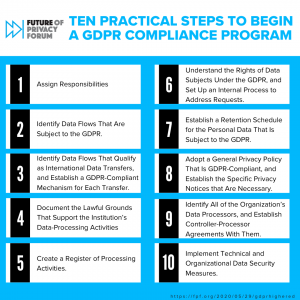 “With this report, we hope to support higher education institutions and edtech companies to solidify trust in the way they are handling personal data of students, prospective students, and faculty, by implementing data practices that fully take into account privacy and data protection requirements”, said Dr. Zanfir-Fortuna, the author of the report, who is Senior Counsel for the Future of Privacy Forum.