
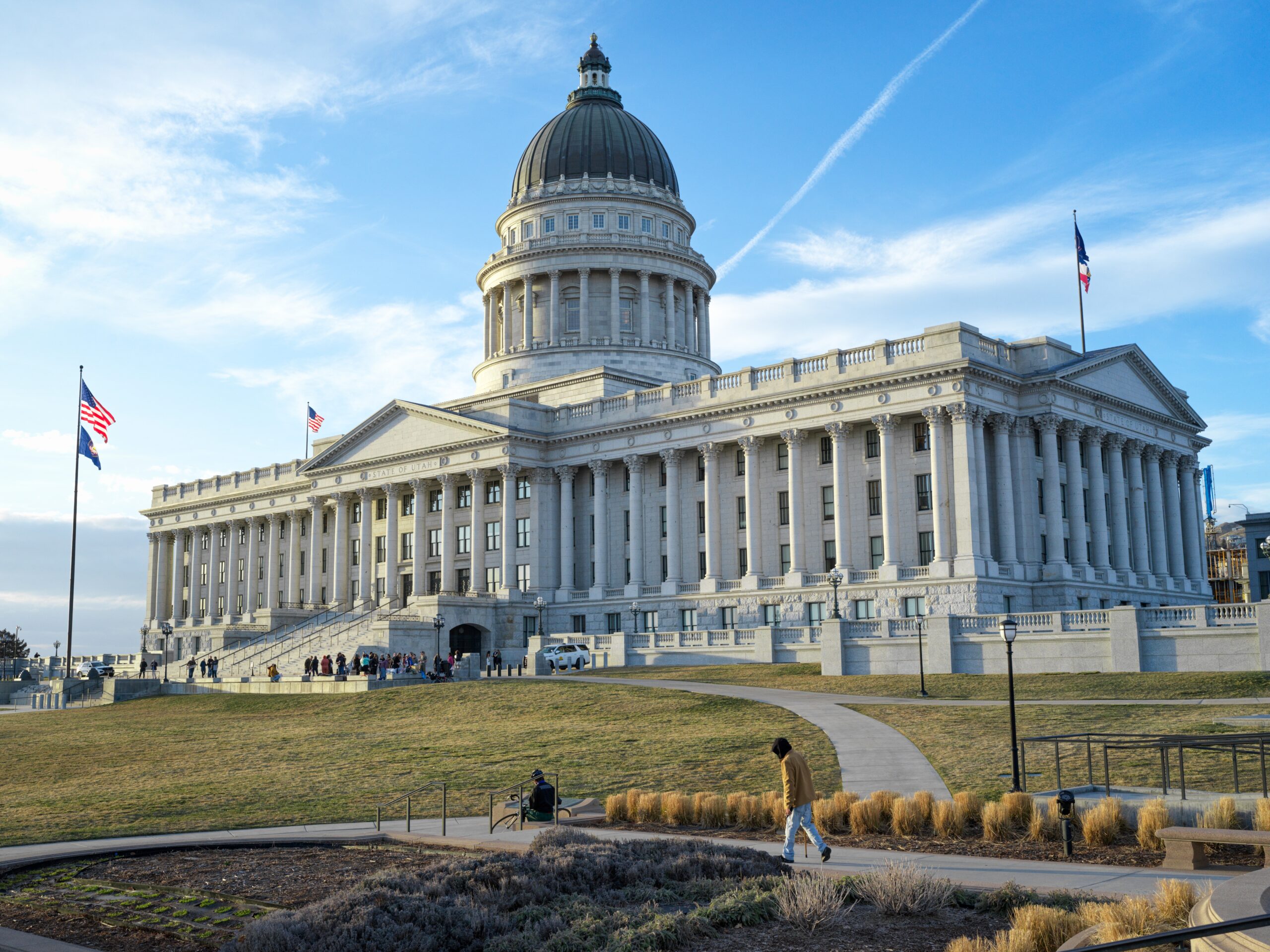
Chatbots in Check: Utah’s Latest AI Legislation
With the close of Utah’s short legislative session, the Beehive State is once again an early mover in U.S. tech policy. In March, Governor Cox signed several bills related to the governance of generative Artificial Intelligence systems into law. Among them, SB 332 and SB 226 amend Utah’s 2024 Artificial Intelligence Policy Act (AIPA) while HB 452 establishes new regulations for […]
Chatbots in Check: Utah’s Latest AI Legislation
With the close of Utah’s short legislative session, the Beehive State is once again an early mover in U.S. tech policy. In March, Governor Cox signed several bills related to the governance of generative Artificial Intelligence systems into law. Among them, SB 332 and SB 226 amend Utah’s 2024 Artificial Intelligence Policy Act (AIPA) while […]
FPF-Deep Fake_illo03-FPF-AI
% PRINCIPAL UPDATE OFFICE SNOW DAY May 13 No School Student Cash Assist FREE REMINDER NO SCHOOLfor Students Professional Learning Day PRINCIPAL UPDATE Readiness Checklist Educate and train students, staf, and parents about the impacts and consequences of deepfakes Keep current with laws and regulations and understand how laws apply to sharing student information, even when that information may be AI-generated When investigating incidents, consider that any digital media could be a deepfake and reliable detection is difcult Engage in open discussion on how to address potential incidents Establish communication protocols around what to communicate and to whom Provide support to the impacted individuals, and consider confdentiality and privacy of all parties when investigating and communicating about an incident Be aware of personal and community biases and norms Determine how existing policies and practices might apply, including policies on bullying, harassment, Title IX, sexting, technology use, disruption of school, misconduct outside of school, and impersonation of others on social media Update current policies and procedures to ensure they address deepfakes, including image-based sexual abuse and harassment Consider implementing policies for third-party vendors on how they should address a deepfake incident Evaluate if a sexually explicit deepfake incident qualifes as a form of sexual harassment Consult with legal counsel Work with local law enforcement to establish incident thresholds and response responsibilities Establish an after-action review process Deepfakes can be created using commonly available online tools or proprietary programs and are increasingly sophisticated and hard to detect. While some jurisdictions have started to create requirements for transparency or authentication for all types of synthetic content, including deepfakes, those requirements do not yet have substantial reach. School leaders must be vigilant in addressing its potential impacts by identifying and mitigating potential harms while navigating this evolving challenge. Recent incidents […]
FPF-Deep-Fake_2025 (1)
% PRINCIPAL UPDATE OFFICE SNOW DAYMay 13 No School Student Cash Assist FREE REMINDER NO SCHOOLfor Students Professional Learning Day PRINCIPAL UPDATE Readiness Checklist Educate and train students, staf, and parents about the impacts and consequences of deepfakes Keep current with laws and regulations and understand how laws apply to sharing student information, even when that information may be AI-genera ted When investigating incidents, consider that any digital media could be a deepfake and reliable detection is difcult Engage in open discussion on how to address potential incidents Establish communication protocols around what to communicate and to whom Provide support to the impacted individuals, and consider confidential ity and privacy of all parties when investigating and communicating about an inc ident Be aware of personal and community biases and norms Determine how existing policies and practices might apply, including policies on bullying, harassment, Title IX, sexting, technology use, disruption of school, misconduct outside of school, and impersonation of others on social medi a Update current policies and procedures to ensure they address deepfakes, including image-based sexual abuse and harassment Consider implementing policies for third-party vendors on how they shoul d address a deepfake incident Evaluate if a sexually explicit deepfake incident qualifies as a form of sexual harassment Consult with legal counsel Work with local law enforcement to establish incident thresholds and response responsibilities Establish an after-action review process Deepfakes can be created using commonly available online tools or proprietary programs and are increasingly sophisticated and hard to detect. While some jurisdictions have started to create requirements for […]
Comments from Future of Privacy Forum on the Development of an Artificial Intelligence (AI) Action Plan
On March 14, the Future of Privacy Forum (FPF), submitted comments in response to the Request for Information on the Development of an Artificial Intelligence (AI) Action Plan published in the Federal Register on February 6, 2025. FPF is a non-profit organization that serves as a catalyst for privacy leadership and scholarship, advancing principled data […]

Singapore Management University and Future of Privacy Forum Form Partnership to Advance Expertise in Digital Law and Data Governance in Asia-Pacific
March 10, 2025 — Singapore Management University (SMU) and the Future of Privacy Forum (FPF) have signed a Memorandum of Understanding (MOU) to strengthen collaboration in data governance, privacy, and emerging technology regulation across the Asia-Pacific region. By combining SMU’s expertise in digital law with FPF’s global leadership in data protection, privacy and emerging technology […]
Full – Submission to MeitY on India’s Draft DPDP Rules (Final) (5 March 2025)
Future of Privacy Forum A sia-Pacific 9 Straits View #06-07 M arina O ne W est Tow er 018937 Singapore 5 M arch 2025 M inistry of Electronics and Inform ation Technology (G overnm ent of India) Electronics N iketan, 6 CG O Com plex, Lodhi Road N ew D elhi – 110003 To the […]
Data Sharing for Research Tracker
Co-authored by Hannah Babinski, former FPF Intern In celebration of International Open Data Day, FPF is proud to launch the Data Sharing For Research Tracker, a growing list of organizations that make data available for researchers. It provides information about the company, the data, any access restrictions, and relevant links: One of the most difficult, […]
Geopolitical fragmentation, the AI race, and global data flows: the new reality
Most countries in the world have data protection or privacy laws and there is growing cross-border enforcement cooperation between data protection authorities, which might lead one to believe that the protection of global data flows and transfers is steadily advancing. However, instability and risks arising from wars, trade disputes, and the weakening of the rule […]
FPF Submits Comments to the California Privacy Protection Agency on Proposed Rulemaking
On February 19, the Future of Privacy Forum (FPF) submitted comments to the California Privacy Protection Agency (CPPA) concerning draft regulations governing cybersecurity audits, risk assessments, automated decisionmaking technology (ADMT) access and opt-out rights under the California Consumer Privacy Act. We offer consideration and recommendations intended to strengthen the proposed regulations by reducing ambiguity and […]