
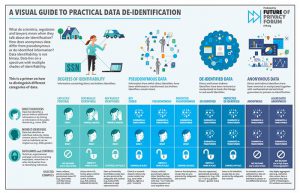
One key method for ensuring privacy while processing large amounts of data is de-identification. De-identified data refers to data through which a link to a particular individual cannot be established. This often involves “scrubbing” the identifiable elements of personal data, making it “safe” in privacy terms while attempting to retain its commercial and scientific value.
In the era of big data, the debate over the definition of personal information, de-identification and re-identification has never been more important. Privacy regimes often rely on data being considered Personal in order to require the application of privacy rights and protections. Data that is anonymous is considered free of privacy risk and available for public use.
Yet much data that is collected and used exists somewhere on a spectrum between these stages. FPF’s De-ID Project has examined practical frameworks for applying privacy restrictions to data based on the nature of data that is collected, the risks of de-identification, and the additional legal and administrative protections that may be applied.
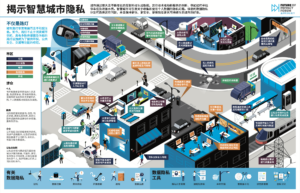
Protecting the Privacy of Customers of Broadband and Other Telecommunications Services
The Future of Privacy Forum filed comments with the Federal Communications Commission (FCC) in response to the FCC’s proposed rules regarding the privacy and data practices of Internet Services Providers (ISPs). The FCC’s March 31, 2016 Notice of Proposed Rulemaking (NPRM or Notice) seeks to regulate ISP’s data practices pursuant to Section 222 of the Communications Act – a sector-specific statute that includes detailed requirements that apply to telecommunications services, but does not apply to other services offered by broadband providers nor to online services operating at the edge of the network (e.g. web sites).
June 22nd Webinar: PII Cookies and De-Identification – Accounting for Shades of Grey
Despite a broad consensus around the need for and value of de-identification, one of the biggest challenges in the privacy profession remains how to determine when data is, or is not, de-identified. Join us for this in-depth discussion on how and when privacy professionals, industry groups, and regulators around the world have tackled this thorny question.

The CNIL released its inspection program for 2016 revealing sectors of focus
In 2016, the CNIL plans to conduct between 400 and 450 inspections: 25% of inspections will be related to the three themes set out in the CNIL’s 2016 annual program, 20% will be based on complaints received by the CNIL, 35% will be undertaken after formal notices or sanctions, at the CNIL’s initiative or related to news topics, and the remaining 20% will aim to check video surveillance systems.

Should Colleges Report When They Get Government Data Requests?
Last year, the University of California, Berkeley, announced that it was publishing a transparency report detailing government requests for data, similar to what tech companies including Google and Facebook have been doing for years.
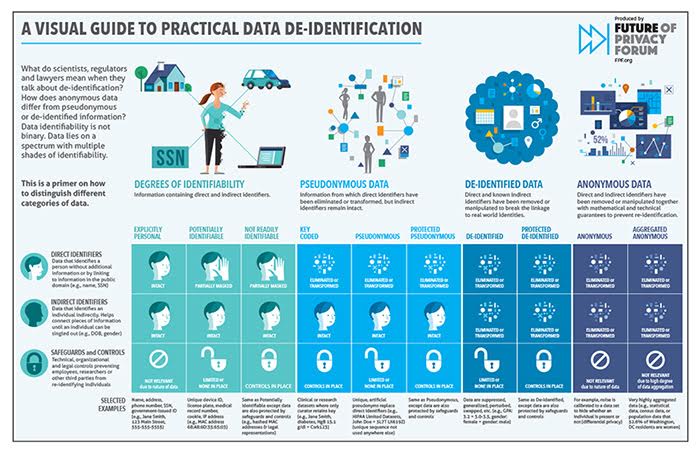
A Visual Guide to Practical Data De-Identification
For more than a decade, scholars and policymakers have debated the central notion of identifiability in privacy law.
De-Identification: Practice and Policy, April 13 in San Francisco
The Future of Privacy Forum, EY, and Privacy Analytics are hosting an event to share and advance practices and policies around de-identification. This all day forum will include panel discussions on topics such as emerging policy questions, de-identification case studies, implementation and best practices, and the role of controls. We encourage audience participation and knowledge sharing. Wednesday, April 13, […]

FPF Welcomes New Senior Fellow – Ira Rubinstein
FPF is proud to welcome its newest Senior Fellow, Ira Rubinstein. Ira will be working with FPF staff, fellows and members on a number of cross-Atlantic privacy issues and will be collaborating with EU academics and institutions on projects focused on de-identification, ethics, big data, and other issues. Ira Rubinstein is a Senior Fellow at […]

States and the District of Columbia Introduce ACLU Sponsored Legislation to Address Student Privacy
Recently, the ACLU, in partnership with the Tenth Amendment Center, created model legislation for states to “take control of their privacy in a digital age.” On January 20th, 2016 the ACLU coordinated with legislators in 16 states and the District of Columbia to roll out a variety of privacy bills simultaneously, many of which addressed […]
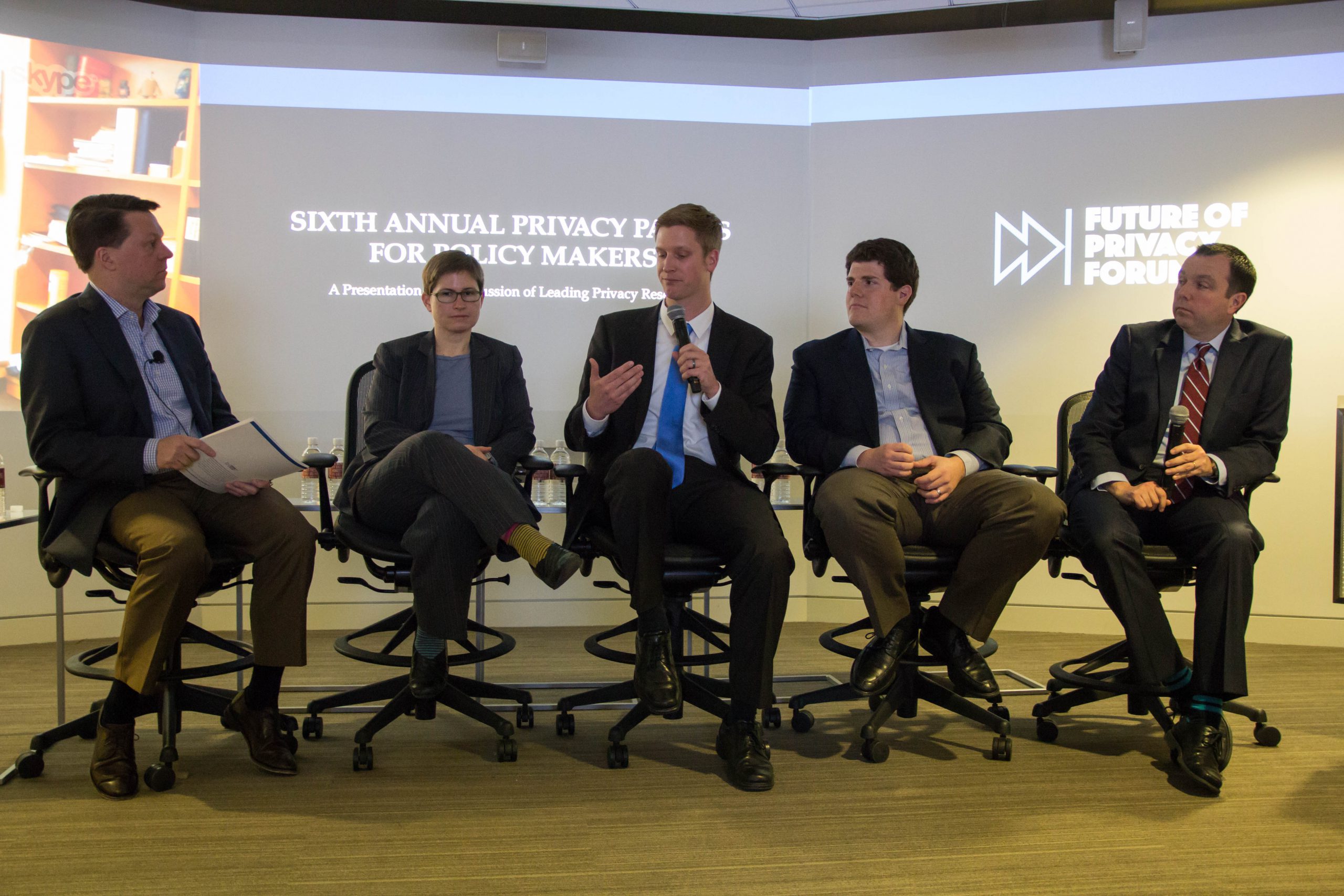
Leading Research Presented at Annual Privacy Papers for Policymakers
On Wednesday evening, the Future of Privacy Forum hosted the Sixth Annual Privacy Papers for Policymakers, an annual presentation and discussion of leading privacy research. The top papers, all published in 2015, were selected by a subcommittee from the FPF Advisory Board as the best papers to inform any conversation about regulatory privacy initiatives in Congress, as […]
What Privacy Papers Should Policymakers be Reading in 2016?
Each year, FPF invites privacy scholars and authors to submit articles and papers to be considered by members of our Advisory Board, with an aim toward showcasing those articles that should inform any conversation about privacy among policymakers in Congress, as well as at the Federal Trade Commission and in other government agencies. For our […]