
Mobility-related technologies are evolving rapidly, transforming the safety and convenience of transportation. Many of these new features are enabled by the collection of new types of data, putting the topic of privacy in connected cars and other modes of transportation on the agenda of industry, policymakers, and regulators. Advancing sensible practices will be essential to ensure that the collection and use of this data is responsible, thoughtful, and communicated effectively to consumers.
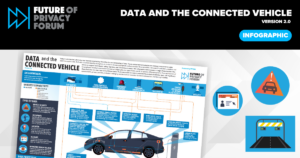








CPDP2020 Panel: The Future Is Now: Autonomous Vehicles, Trolley Problem(s) and How to Deal with Them
Last week, FPF brought together a panel of technology, legal, regulatory, and business voices to discuss “The Future is Now: Autonomous Vehicles, Trolley Problem(s) and How to Deal with Them” at the 13th annual Computers, Privacy, and Data Protection conference. The premise of the panel was that autonomous and highly automated vehicles are likely the […]

A Privacy Playbook for Connected Car Data
Drivers and passengers expect cars to be safe, comfortable, and trustworthy. Individuals often consider the details of their travels—and the vehicles that take them between their home, the office, a hospital, their place of worship, or their child’s school—to be sensitive, personal data. The newest cars contain numerous sensors, from cameras and GPS to accelerometers […]

The Future Is Now: FPF at CPDP2020
Computers, Privacy and Data Protection (CPDP) Conference 2020 commences next week in Brussels, bringing together academics, data protection authorities, policymakers, data scientists, and civil society to network, exchange ideas, and talk over the latest trends. Check out the panels and events FPF will be participating in below. Algorithmic Regulation of Transportation Wednesday, January 22 at […]

FPF Welcomes New Staff to Focus on Artificial Intelligence and Mobility
FPF is pleased to announce the addition of two new members to its team, Dr. Sara Jordan and Chelsey Colbert. As individuals’ personal data is increasingly used by algorithmic systems that employ machine learning and artificial intelligence technologies, the benefits to consumers, businesses and society are evident, but so are the privacy risks. In her […]

Award-Winning Paper: "The Many Revolutions of Carpenter"
For the tenth year, FPF’s annual Privacy Papers for Policymakers program is presenting to lawmakers and regulators award-winning research representing a diversity of perspectives. Among the papers to be honored at an event at the Hart Senate Office Building on February 6, 2020 is The Many Revolutions of Carpenter by Paul Ohm of Georgetown University […]

CCPA 2.0? A New California Ballot Initiative is Introduced
Introduction On September 13, 2019, the California State Legislature passed the final CCPA amendments of 2019. Governor Newsom is expected to sign the recently passed CCPA amendments into law in advance of his October 13, 2019 deadline. Yesterday, proponents of the original CCPA ballot initiative released the text of a new initiative (The California Privacy […]

Civic Data Privacy Leaders Convene at MetroLab Annual Summit
By Kelsey Finch, FPF Senior Counsel The MetroLab Network’s Annual Summit brought together an inspired group of civic, academic, industry, and nonprofit leaders to discuss the most important issues in smart cities and civic innovation. For the third year in a row, FPF partnered with MetroLab Network to promote data privacy perspectives and to advance responsible […]
NAI’s 2020 Code of Conduct Expands Self-Regulation for Ad Tech Providers
By Christy Harris, Stacey Gray, and Meredith Richards As debates over the shape of federal privacy legislation in the United States continue, online advertising remains a key focus of scrutiny in the US Congress, with its recent hearing on digital advertising and data privacy. Amidst these debates, the Networking Advertising Initiative (NAI), the leading self-regulatory body […]

As Legislators Debate Ad Tech, Browsers and Operating Systems Announce New Technical Controls
Congress continues to hold data privacy hearings, including yesterday’s Understanding the Digital Advertising Ecosystem and the Impact of Data Privacy and Competition Policy. The continued debate over adtech practices is reaching a crescendo, making the case for quick action on a comprehensive federal privacy law that can set parameters for how personal data is collected, […]

A Conversation with Christopher Wolf, Founder of FPF
Christopher Wolf is the founder and Board President of the Future of Privacy Forum and a leading attorney in privacy and data protection. Chris helped break the path for privacy law and the modern Internet. He has had a hand in advising and shaping thinking on many leading-edge tech issues including Internet free speech, Internet […]