
Privacy Enhancing Technologies (PETs) are crucial for safeguarding individual privacy while enabling socially beneficial research, data sharing, and advancements in sectors that collect or use sensitive data. As AI systems increasingly rely on vast amounts of data, PETs like differential privacy, homomorphic encryption, federated learning, zero-knowledge proofs, and even model contract clauses can help ensure that personal data remains confidential and secure. This is vital not only for protecting individual rights but also for earning and maintaining public trust in technologies that use data about people.
Ethically implementing PETs is also essential. PETs must be designed and deployed to protect marginalized groups and avoid practices that may appear to be privacy-preserving, but actually exploit sensitive data or undermine privacy. In addition, clear policy guidelines on the deployment of PETs are necessary to help make sound business cases for their use in industry. If PETs are ethically integrated into research and business practices, and if global regulators have an opportunity to support their appropriate deployment, there is enormous potential for increasing technological innovation and societal benefits while upholding privacy and public trust.
FPF supports the development of PETs, convenes experts from around the world to deploy best practices, and provides in-depth analysis of emerging technologies and their policy implications. FPF also leads the National Science Foundation and Department of Energy-funded Research Coordination Network for the use of PETs to advance socially beneficial data sharing and protect people’s privacy as data is increasingly used to train AI models. FPF also facilitates a Global PETs Network of regulators who are interested in the lawful and ethical implementation of these tools.





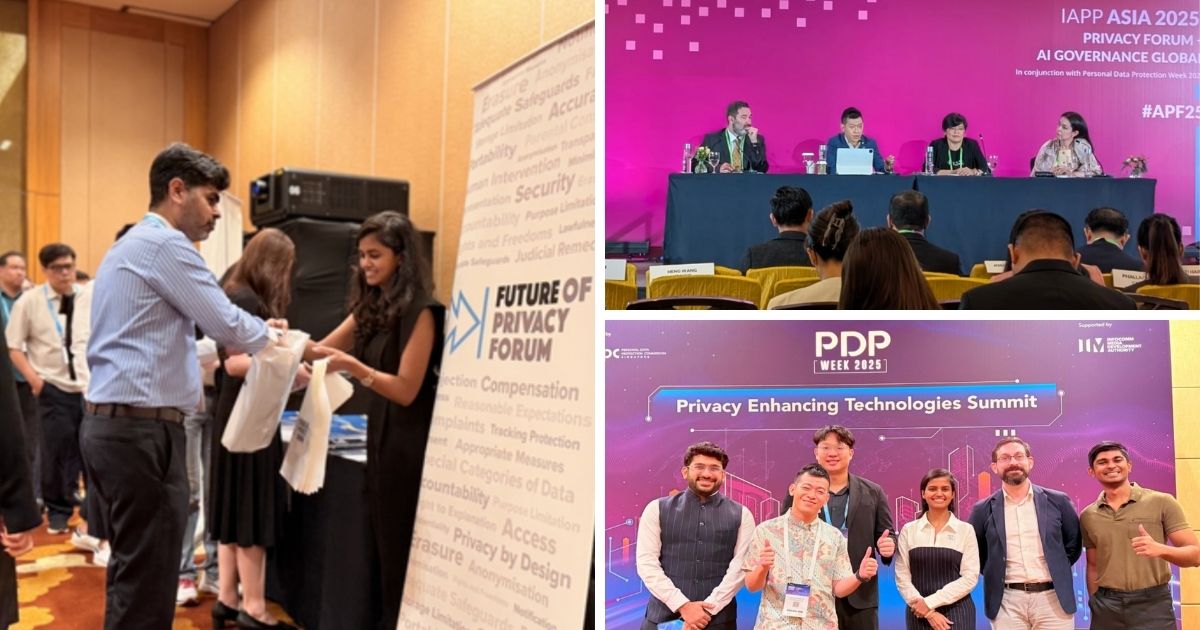
FPF at PDP Week 2025: Generative AI, Digital Trust, and the Future of Cross-Border Data Transfers in APAC
Authors: Darren Ang Wei Cheng and James Jerin Akash (FPF APAC Interns) From July 7 to 10, 2025, the Future of Privacy Forum (FPF)’s Asia-Pacific (APAC) office was actively engaged in Singapore’s Personal Data Protection Week 2025 (PDP Week) – a week of events hosted by the Personal Data Protection Commission of Singapore (PDPC) at […]

Practical Takeaways from FPF’s Privacy Enhancing Technologies Workshop
In April, the Future of Privacy Forum and the Mozilla Foundation hosted an all-day workshop with technology, legal, and policy experts to explore Privacy Enhancing Technologies (PETs). During the workshop, multiple companies presented technologies they developed and implemented to preserve individuals’ privacy. In addition, the participants discussed steps for broadening the adoption of these technologies […]

Nature of Data in Pre-Trained Large Language Models
The following is a guest post to the FPF blog by Yeong Zee Kin, the Chief Executive of the Singapore Academy of Law and FPF Senior Fellow. The guest blog reflects the opinion of the author only. Guest blog posts do not necessarily reflect the views of FPF. The phenomenon of memorisation has fomented significant […]
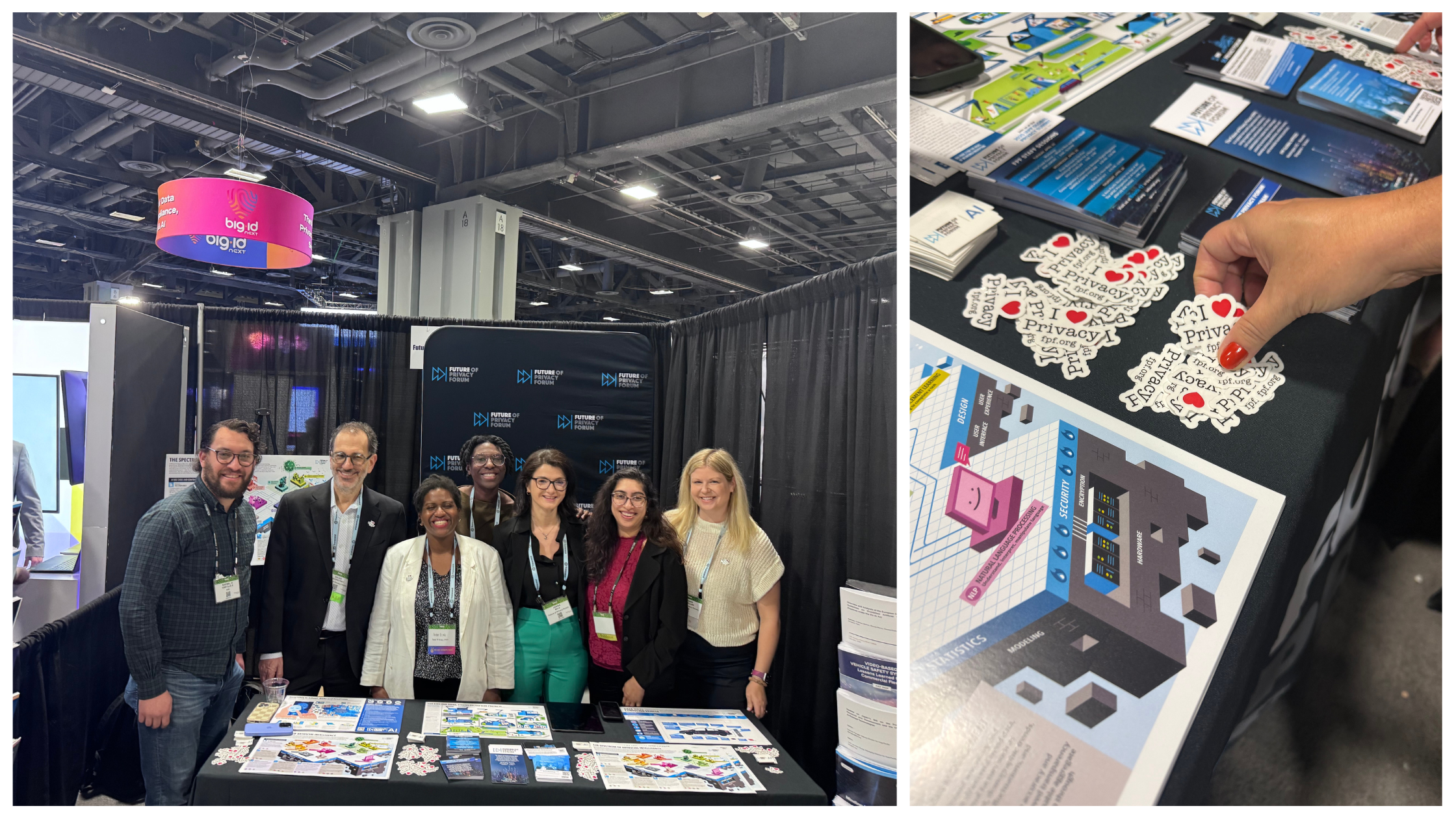
FPF Experts Take The Stage at the 2025 IAPP Global Privacy Summit
By FPF Communications Intern Celeste Valentino Earlier this month, FPF participated at the IAPP’s annual Global Privacy Summit (GPS) at the Convention Center in Washington, D.C. The Summit convened top privacy professionals for a week of expert workshops, engaging panel discussions, and exciting networking opportunities on issues ranging from understanding U.S. state and global privacy […]

The Curse of Dimensionality: De-identification Challenges in the Sharing of Highly Dimensional Datasets
The 2006 release by AOL of search queries linked to individual users and the re-identification of some of those users is one of the best known privacy disasters in internet history. Less well known is that AOL had released the data to meet intense demand from academic researchers who saw this valuable data set as essential […]

FPF Releases Report on the Adoption of Privacy Enhancing Technologies by State Education Agencies
The Future of Privacy Forum (FPF) released a landscape analysis of the adoption of Privacy Enhancing Technologies (PETs) by State Education Agencies (SEAs). As agencies face increasing pressure to leverage sensitive student and institutional data for analysis and research, PETs offer a unique potential solution as they are advanced technologies designed to protect data privacy […]

FPF’s Year in Review 2024
With contributions from Judy Wang, Communications Intern 2024 was a landmark year for the Future of Privacy Forum, as we continued to grow our privacy leadership through research and analysis, domestic and global meetings, expert testimony, and more – all while commemorating our 15th anniversary. Expanding our AI Footprint While 2023 was the year of […]

In a Landmark Judgment, The Inter-American Court of Human Rights Recognized an Autonomous Right to Informational Self-Determination
The following is a guest post to the FPF blog by Jonathan Mendoza Iserte, Secretary of Personal Data Protection at Mexico’s Instituto Nacional de Transparencia y Acceso a la Información y Protección de Datos Personales (INAI), and Nelson Remolina Angarita, Professor at the Faculty of Law, Universidad de los Andes, (Colombia). The guest blog reflects the […]

FPF Launches New Privacy-Enhancing Technologies Repository
For some time now, stakeholders at the intersection of data, privacy, and new technologies have increasingly recognized the potential of a range of technical and computational approaches and techniques to mitigate privacy risks. This set of tools and methods are otherwise known as privacy-enhancing technologies (PETs) and are understood as a group of techniques that […]
Updated February 25, 2025: FPF no longer coordinates the Multistate AI Policymaker Working Group
Updated February 25, 2025: FPF no longer coordinates the MAP-WG. Please read here for more information. Future of Privacy Forum Convened Over 200 State Lawmakers in AI Policy Working Group Focused on 2025 Legislative Sessions The Multistate AI Policymaker Working Group (MAP-WG) was convened by FPF to help state lawmakers from more than 45 states […]