
Privacy Enhancing Technologies (PETs) are crucial for safeguarding individual privacy while enabling socially beneficial research, data sharing, and advancements in sectors that collect or use sensitive data. As AI systems increasingly rely on vast amounts of data, PETs like differential privacy, homomorphic encryption, federated learning, zero-knowledge proofs, and even model contract clauses can help ensure that personal data remains confidential and secure. This is vital not only for protecting individual rights but also for earning and maintaining public trust in technologies that use data about people.
Ethically implementing PETs is also essential. PETs must be designed and deployed to protect marginalized groups and avoid practices that may appear to be privacy-preserving, but actually exploit sensitive data or undermine privacy. In addition, clear policy guidelines on the deployment of PETs are necessary to help make sound business cases for their use in industry. If PETs are ethically integrated into research and business practices, and if global regulators have an opportunity to support their appropriate deployment, there is enormous potential for increasing technological innovation and societal benefits while upholding privacy and public trust.
FPF supports the development of PETs, convenes experts from around the world to deploy best practices, and provides in-depth analysis of emerging technologies and their policy implications. FPF also leads the National Science Foundation and Department of Energy-funded Research Coordination Network for the use of PETs to advance socially beneficial data sharing and protect people’s privacy as data is increasingly used to train AI models. FPF also facilitates a Global PETs Network of regulators who are interested in the lawful and ethical implementation of these tools.






Event Report: Brussels Privacy Symposium 2020 – Research and the Protection of Personal Data Under the GDPR
On December 2, 2020, the Future of Privacy Forum (FPF) and the Brussels Privacy Hub of Vrije Universiteit Brussel (VUB) hosted the Brussels Privacy Symposium 2020: Research and the protection of Personal Data Under the GDPR. The event, convened by FPF CEO Jules Polonetsky and Dr. Christopher Kuner, Co-Chair of the Brussels Privacy Hub, brought together […]

FPF in 2020: Adjusting to the Unexpected
With 2020 fast coming to a close, we wanted to take a moment to reflect on a year that forced us to re-focus our priorities, along with much of our lives, while continuing to produce engaging events, thought-provoking analysis, and insightful reports. Considering Privacy & Ethics at the Dawn of a New Decade Early in […]

FPF Health and AI & Ethics Policy Counsels Present a Scientific Position at ICML 2020 and at 2020 CCSQ World Usability Day
On November 12, 2020, FPF Policy Counsels Drs. Rachele Hendricks-Sturrup and Sara Jordan presented privacy-by-design alongside human-centered design concepts during the 2020 CCSQ World Usability Day virtual conference. This presentation followed Drs. Hendricks-Sturrup’s and Jordan’s July 2020 scientific position paper presented at the International Conference on Machine Learning (ICML) 2020, entitled “Patient- Reported Outcomes: A Privacy-Centric and Federated Approach […]
Workshop Report: Privacy & Pandemics – Responsible Use of Data During Times of Crisis
In October 2020, the Future of Privacy Forum (FPF) convened a virtual workshop entitled “Privacy and Pandemics: Responsible Uses of Technology and Health Data During Times of Crisis” with invited computer science, privacy law, public policy, social science, and health information experts from around the world to examine benefits, risks, and strategies for the collection […]
2020 Brussels Privacy Symposium
The 2020 Brussels Privacy Symposium is the fourth-annual academic program jointly presented by the Brussels Privacy Hub of Vrije Universiteit Brussel (VUB) and the Future of Privacy Forum (FPF) and is a global convening of practical, applicable, substantive privacy research and scholarship. On December 2, 2020, the fourth iteration of the Brussels Privacy Symposium, “Research and the Protection of […]

Five Top of Mind Data Protection Recommendations for Brain-Computer Interfaces
By Jeremy Greenberg, [email protected] and Katelyn Ringrose [email protected]. Key FPF-curated background resources – policy & regulatory documents, academic papers, and technical analyses regarding brain-computer interfaces are available here. Recently, Elon Musk livestreamed an update for Neuralink—his startup centered around creating brain-computer interfaces (BCIs). BCIs are an umbrella term for devices that detect, amplify, and translate […]

FPF Webinar Explores the Future of Privacy-Preserving Machine Learning
On June 8, FPF hosted a webinar, Privacy Preserving Machine Learning: New Research on Data and Model Privacy. Co-hosted by the FPF Artificial Intelligence Working Group and the Applied Privacy Research Coordination Network, an NSF project run by FPF, the webinar explored how machine learning models as well as data fed into machine learning models […]
Privacy Scholarship Research Reporter: Issue 5, July 2020 – Preserving Privacy in Machine Learning: New Research on Data and Model Privacy
Notes from FPF In this edition of the “Privacy Scholarship Reporter”, we build on the general knowledge from the first two and then explore some of the technical research being conducted to achieve ethical and privacy goals. “Is it possible to preserve privacy in the age of AI?”, is a provocative question asked by academic […]
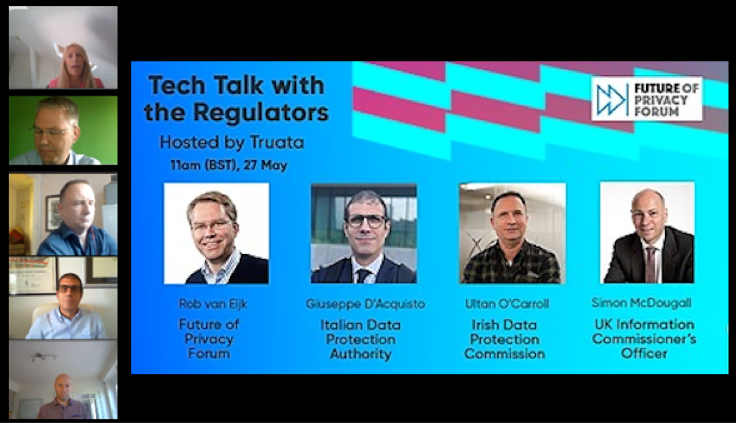
Tech Talk with the Regulators – Understanding Anonymization Under the GDPR
The General Data Protection Regulation (GDPR) has already been in existence for four years, and has been in force for two years. How can anonymization techniques under the GDPR help Data Protection Officers (DPOs) assess innovation? I hosted a webinar with Truata that featured experts from DPAs in Italy, Ireland, and the UK to find […]
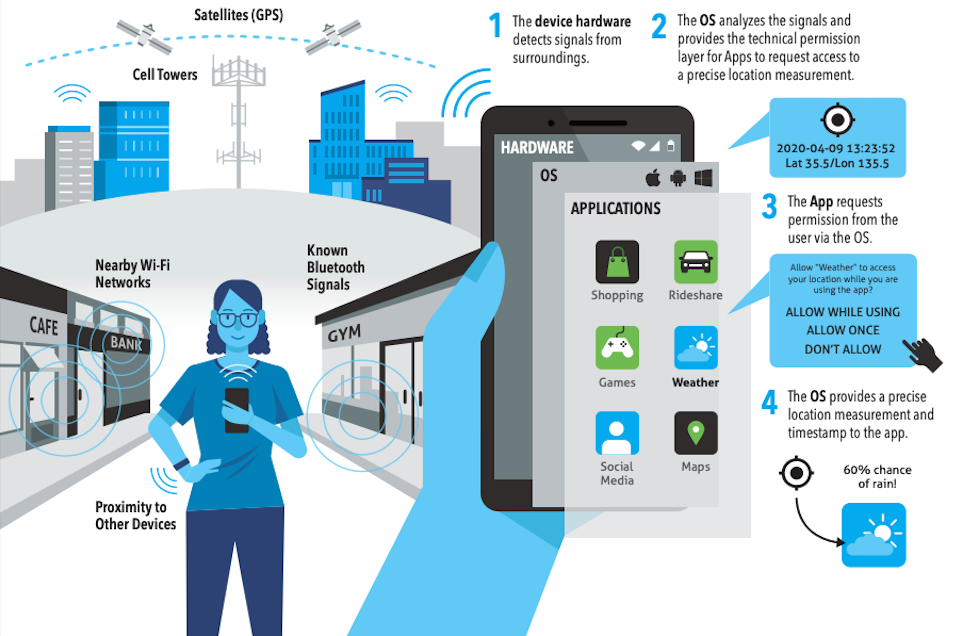
Understanding the "World of Geolocation Data"
How is location data generated from mobile devices, who gets access to it, and how? As debates over companies and public health authorities using device data to address the current global pandemic continue, it is more important than ever for policymakers and regulators to understand the practical basics of how mobile operating systems work, how […]