
Research often requires using sensitive data to answer important questions. The ethical collection and analysis of personal information can be challenging to do while still protecting the privacy of the implicated individuals, honoring informed consent, and complying with other legal obligations. The technology, policies, and ethical considerations for researchers are constantly shifting, sometimes making it difficult to keep up. That’s why FPF engages stakeholders across academia and industry to produce recommendations, best practices, and ethical review structures that promote responsible research. Our work is centered around streamlining, encouraging, and promoting responsible research that respects essential privacy and ethical considerations throughout the research lifecycle. FPF works with policymakers to develop legislative protections that support effective, responsible research with strong privacy safeguards, including hosting events that allow policymakers and regulators to engage directly with practitioners from academia, advocacy, and industry.



2020 Brussels Privacy Symposium
The 2020 Brussels Privacy Symposium is the fourth-annual academic program jointly presented by the Brussels Privacy Hub of Vrije Universiteit Brussel (VUB) and the Future of Privacy Forum (FPF) and is a global convening of practical, applicable, substantive privacy research and scholarship. On December 2, 2020, the fourth iteration of the Brussels Privacy Symposium, “Research and the Protection of […]

Exploring Consumer Attitudes About Privacy
We’ve been taking a look at recent studies about consumer attitudes regarding data use and privacy. A new study, “Privacy Front and Center,” from Consumer Reports’ Digital Lab with support from Omidyar Network, found that American consumers are increasingly concerned about privacy and data security when purchasing new products and services, which may be a competitive advantage […]

FPF Best Practices and Contract Guidelines Help Companies Share Data with Academic Researchers
Does your company have data that could help academic researchers unravel the mysteries of human health, behavior, education, or other areas of study? Data held by private organizations has the potential to lead to scientific insights that can benefit society and improve lives – if it can be accessed in a responsible manner that respects […]

FPF Submits Feedback and Comments on UNICEF’s Draft Policy Guidance on AI for Children
Last week, FPF submitted feedback and comments to the United Nations Children’s Fund (UNICEF) on the Draft Policy Guidance on Artificial Intelligence (AI) for Children, which seeks “to promote children’s rights in government and private sector AI policies and practices, and to raise awareness of how AI systems can uphold or undermine children’s rights.” The […]

A Look Back at the Role of Law and the Right To Privacy in LGBTQ+ History
By Katelyn Ringrose, Christopher Wolf Diversity Law Fellow at the Future of Privacy Forum, and Christopher Wood, Executive Director of LGBT Tech, with thanks to Connor Colson, FPF Policy Intern. LGBTQ+ rights are, and have always been, linked with privacy. Over the years, privacy-invasive laws, practices, and norms have been used to oppress LGBTQ+ individuals […]
Dr. Lauren Gardner, Creator of Johns Hopkins University’s COVID-19 Dashboard, and UC Berkeley Data Analytics Researcher Dr. Katherine Yelick to Keynote FPF Conference on Privacy & Pandemics
Workshop Explores the Value and Limits of Data and Technology in the Context of the COVID-19 Pandemic Today, the Future of Privacy Forum announced a pair of distinguished professors and researchers will be the keynote speakers for a two-day virtual workshop exploring the value and limits of data and technology in the context of a […]
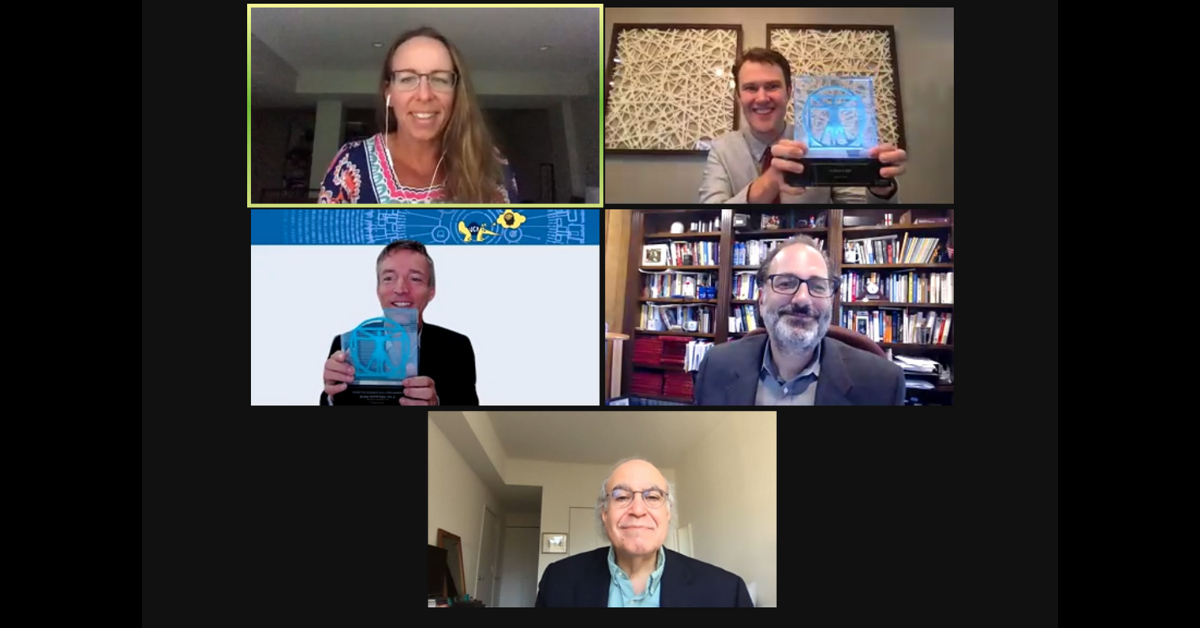
Event Recap: Using Corporate Data for Research – Lessons from an Award-Winning Project
Last week, FPF hosted a virtual event honoring the winners of the first-ever FPF Award for Research Data Stewardship: University of California, Irvine Professor of Cognitive Sciences Mark Steyvers and Lumos Labs, represented by General Manager Bob Schafer. In addition to the awardees, the event featured Daniel L. Goroff, Vice President and Program Director at […]

Five Top of Mind Data Protection Recommendations for Brain-Computer Interfaces
By Jeremy Greenberg, [email protected] and Katelyn Ringrose [email protected]. Key FPF-curated background resources – policy & regulatory documents, academic papers, and technical analyses regarding brain-computer interfaces are available here. Recently, Elon Musk livestreamed an update for Neuralink—his startup centered around creating brain-computer interfaces (BCIs). BCIs are an umbrella term for devices that detect, amplify, and translate […]

FPF Submits Comments Regarding Data Protection & COVID-19 Ahead of National Committee on Vital and Health Statistics Hearing
Yesterday, FPF submitted comments to the National Committee on Vital and Health Statistics (NCVHS) ahead of a Virtual Hearing of the Subcommittee on Privacy, Confidentiality, and Security on September 14, 2020. The hearing will explore considerations for data collection and use during a public health emergency, in light of the deployment of new technologies for […]

FPF Presents @ RightsCon 2020: “Frontiers in health data privacy: navigating blurred expectations across the patient-consumer spectrum”
The patient-consumer spectrum is a growing concept in which healthcare is rapidly transitioning from a periodic activity in fixed, traditional health care settings to an around-the-clock activity that involves the generation, use, and integration of data reflecting many aspects of individuals’ lives and behaviors. Accompanying this spectrum are blurred distinctions between traditional versus consumer-generated health […]