
Across the United States, evolving data collection and processing practices and advances in artificial intelligence are driving new digital services, technologies, and socially beneficial research – while also raising new opportunities, risks, and questions for individuals and communities. In response, state and federal policymakers are considering new legislative and regulatory frameworks on three interconnected fronts: comprehensive consumer privacy laws that establish baseline rights and protections for personal data across the economy; frameworks that target specific sectors and practices such as automated decisionmaking, biometric identification, companion chatbots, data-driven pricing, data brokerage, frontier AI model safety, genetic data, and health data; and youth-specific privacy and online safety laws that set distinct rules for minors. These three tracks rarely stay in their lanes: a comprehensive privacy law may include AI provisions, an AI safety bill may carve out rules for minors, a youth online safety law may hinge on biometric age verification. Understanding the landscape requires understanding both the individual pieces and how they fit together.
FPF’s U.S. Legislation team provides expert, independent, pragmatic analysis of state and federal legislative and regulatory approaches to privacy, AI, and youth online safety – three distinct but increasingly intertwined issue areas. The team tracks emerging proposals, compares new laws against existing frameworks, analyzes implementation and compliance implications, and helps policymakers and stakeholders understand how legal requirements interact with current technologies, business practices, and data uses.
Through reports, blog posts, legislative and policy analyses, webinars, in-person and virtual peer-to-peer gatherings, and educational programs, FPF helps the broader technology policy and governance community understand the mechanisms and strategies available to protect privacy, promote responsible AI development and deployment, and advance youth online safety. FPF does not typically support or oppose particular bills. Instead, the U.S. Legislation team focuses on explaining the practical and legal implications of proposals – individually and as they interact with one another. This work helps ensure that privacy, AI, and youth safety compliance and policy strategies remain future-looking, adaptable, and workable for the continued, beneficial use of data and AI.
FPF’s U.S. Legislation team is led by Tatiana Rice, Senior Director.





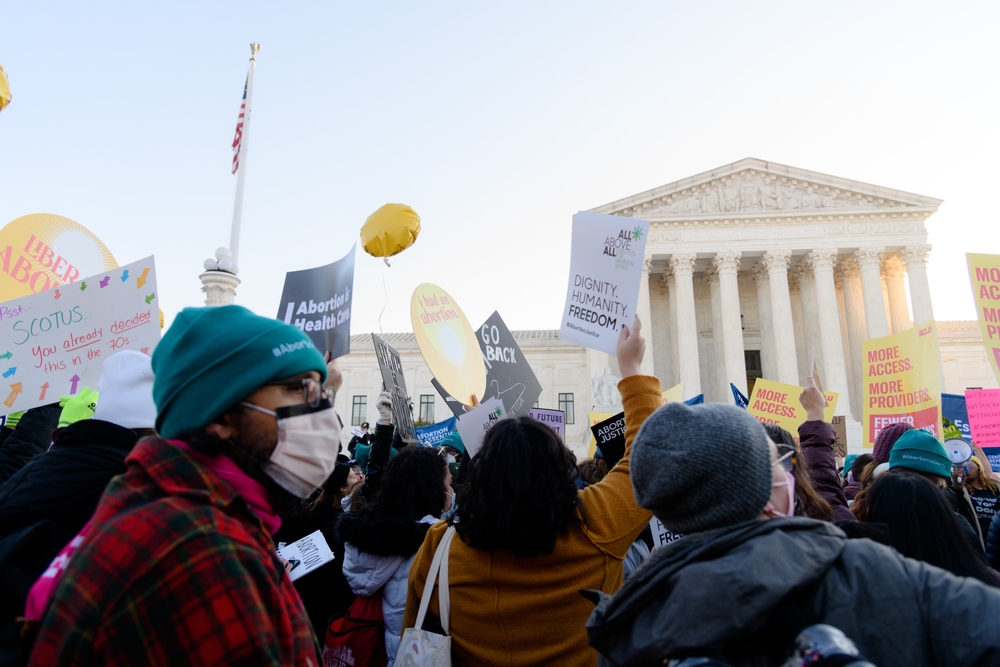
Reproductive Rights Have Been Privacy Rights For 50 Years
About fifty years ago, the U.S. Supreme Court decided a case that would provide the basis for federal privacy protections for reproductive health decisions. The importance of protecting reproductive information and choice, particularly where abortion was concerned, was the basis for Roe v. Wade (1973) and Planned Parenthood v. Casey (1992), which provided women and […]
FPF Statement on the House Energy and Commerce Subcommittee on Innovation, Data and Commerce’s May 23 unanimous House subcommittee vote on the American Privacy Rights Act
Today, the House Energy and Commerce Subcommittee on Innovation, Data and Commerce unanimously passed the revised draft of the American Privacy Rights Act.

Peak Privacy: Vermont’s Summit on Data Privacy
On June 13, 2024, Governor Phil Scott vetoed H. 121. This marked the first governor veto of a comprehensive privacy bill passed by the state legislature. Immediately prior to the close of the state legislative session on May 10, 2024, the Vermont legislature passed H. 121, “An act relating to enhancing consumer privacy and the […]

The North Star State Joins the State Privacy Law Constellation
On May 19, 2024, the Minnesota Legislature passed HF 4757, an omnibus budget bill that includes the Minnesota Consumer Data Privacy Act (MNCDPA). The bill now heads to Governor Walz for signature. Developed by State Representative Steve Elkins over nearly five years and multiple legislative sessions, the MNCDPA is among the strongest iterations of the […]

Little Users, Big Protections: Colorado and Virginia pass laws focused on kids privacy
‘Don’t call me kid, don’t call me baby’ – unless you are a child residing in either Colorado or Virginia, where children will soon have increased privacy protections due to recent advances in youth privacy legislation. Virginia and Colorado both have broad-based privacy laws already in effect. During the 2024 state legislative sessions, both states […]

Colorado Enacts First Comprehensive U.S. Law Governing Artificial Intelligence Systems
On May 17, Governor Polis signed the Colorado AI Act (CAIA) (SB-205) into law, establishing new individual rights and protections with respect to high-risk artificial intelligence systems. Building off the work of existing best practices and prior legislative efforts, the CAIA is the first comprehensive United States law to explicitly establish guardrails against discriminatory outcomes […]

Now, On the Internet, Will Everyone Know if You’re a Child?
With help from Laquan Bates, Policy Intern for Youth and Education How Knowledge Standards Have Changed the Status Quo As minors increasingly spend time online, lawmakers continue to introduce legislation to enhance the privacy and safety of kids’ and teens’ online experiences beyond the existing Children’s Online Privacy Protection Act (COPPA) framework. Proposals have proliferated […]

New Age-Appropriate Design Code Framework Takes Hold in Maryland
On April 6, the Maryland legislature passed HB 603/SB 571, the “Maryland Age-Appropriate Design Code Act” (Maryland AADC), which is currently awaiting action from Governor Moore. While FPF has already written about Maryland’s potentially “paradigm-shifting” state comprehensive privacy law, the Maryland AADC may similarly pioneer a new model for other states. The Maryland AADC seeks […]

Manipulative and Deceptive Design: New Challenges in Immersive Environments
With help from Selin Fidan, Beth Do, Daniel Berrick, and Angela Guo Immersive technologies like spatial computing, gaming, and extended reality (XR) offer exciting ways to experience and engage with the world. However, interfaces for immersive technologies that further blur the lines between the physical and the virtual may also open the door to new, […]

Setting the Stage: Connecticut Senate Bill 2 Lays the Groundwork for Responsible AI in the States
NEW: Read Tatiana Rice’s op-ed in the CT Mirror on SB2 Last night, on April 24, the Connecticut Senate passed SB 2, marking a significant step toward comprehensive AI regulation in the United States. This comprehensive, risk-based approach has emerged as a leading state legislative framework for AI regulation. If enacted, SB 2 would stand […]