
Across the United States, evolving data collection and processing practices and advances in artificial intelligence are driving new digital services, technologies, and socially beneficial research – while also raising new opportunities, risks, and questions for individuals and communities. In response, state and federal policymakers are considering new legislative and regulatory frameworks on three interconnected fronts: comprehensive consumer privacy laws that establish baseline rights and protections for personal data across the economy; frameworks that target specific sectors and practices such as automated decisionmaking, biometric identification, companion chatbots, data-driven pricing, data brokerage, frontier AI model safety, genetic data, and health data; and youth-specific privacy and online safety laws that set distinct rules for minors. These three tracks rarely stay in their lanes: a comprehensive privacy law may include AI provisions, an AI safety bill may carve out rules for minors, a youth online safety law may hinge on biometric age verification. Understanding the landscape requires understanding both the individual pieces and how they fit together.
FPF’s U.S. Legislation team provides expert, independent, pragmatic analysis of state and federal legislative and regulatory approaches to privacy, AI, and youth online safety – three distinct but increasingly intertwined issue areas. The team tracks emerging proposals, compares new laws against existing frameworks, analyzes implementation and compliance implications, and helps policymakers and stakeholders understand how legal requirements interact with current technologies, business practices, and data uses.
Through reports, blog posts, legislative and policy analyses, webinars, in-person and virtual peer-to-peer gatherings, and educational programs, FPF helps the broader technology policy and governance community understand the mechanisms and strategies available to protect privacy, promote responsible AI development and deployment, and advance youth online safety. FPF does not typically support or oppose particular bills. Instead, the U.S. Legislation team focuses on explaining the practical and legal implications of proposals – individually and as they interact with one another. This work helps ensure that privacy, AI, and youth safety compliance and policy strategies remain future-looking, adaptable, and workable for the continued, beneficial use of data and AI.
FPF’s U.S. Legislation team is led by Tatiana Rice, Senior Director.




Statement by Future of Privacy Forum CEO Jules Polonetsky on the Consumer Online Privacy Rights Act
WASHINGTON, DC – November 26, 2019 – Statement by Future of Privacy Forum CEO Jules Polonetsky regarding the introduction of a new comprehensive federal privacy bill, the Consumer Online Privacy Rights Act (COPRA), proposed today by Senators Maria Cantwell, Amy Klobuchar, Brian Schatz, and Ed Markey: “This is the most sophisticated federal proposal to emerge […]
What They’re Saying: Stakeholders Warn Senate Surveillance Bill Could Harm Students, Communities
Parents, privacy advocates, education stakeholders, and members of the disability rights community are raising concerns about new Senate legislation that would mandate unproven student surveillance programs and encourage greater law enforcement intervention in classrooms in a misguided effort to improve school safety. Last week, Senator John Cornyn (R-TX) introduced the RESPONSE Act, legislation that is intended to help reduce and […]
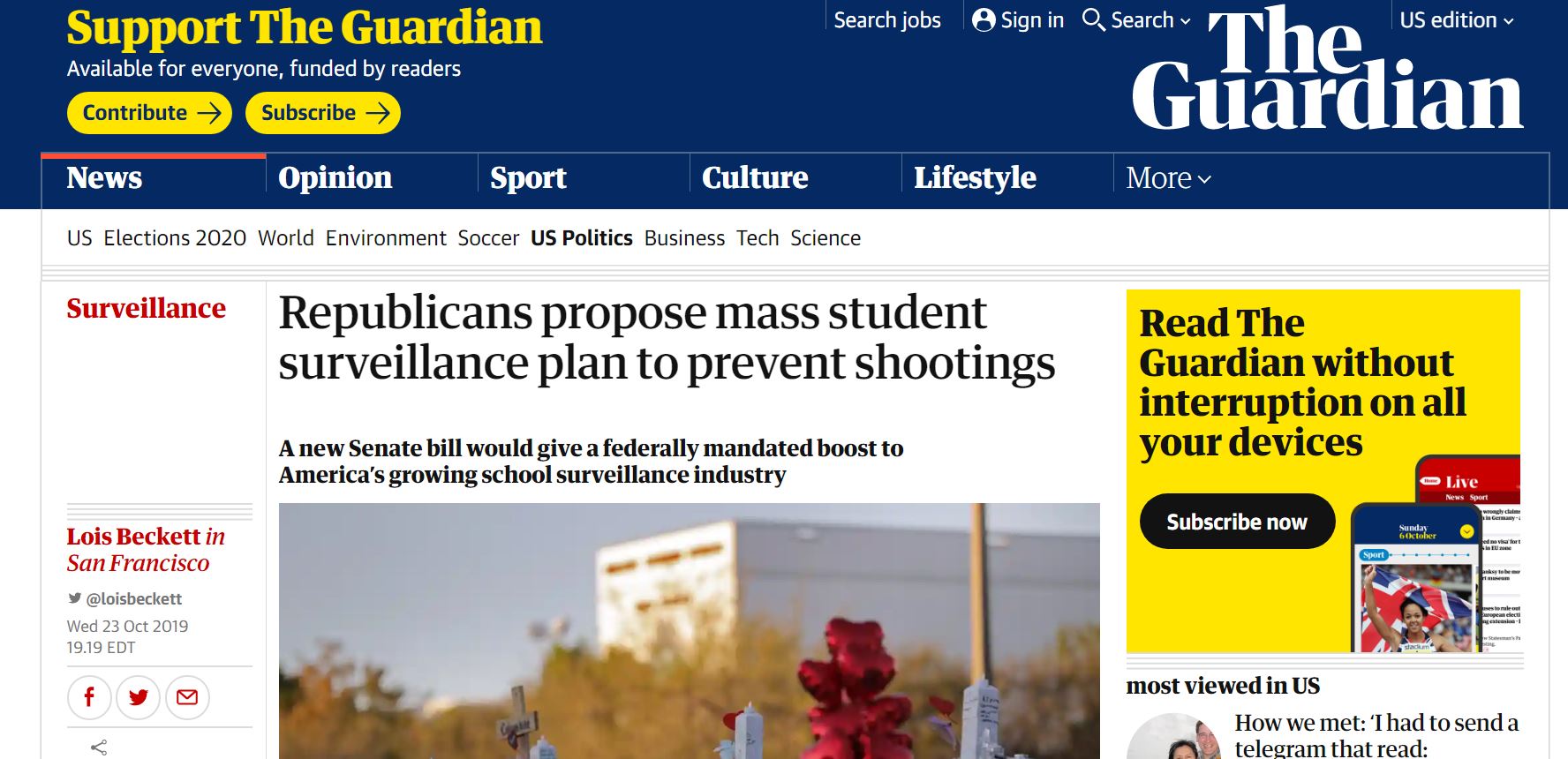
ICYMI: New Senate Legislation Mandates “Pervasive Surveillance” in Attempt to Improve School Safety
Bill would require schools nationwide to impose network monitoring technology “before there is any clear evidence that it’s effective in preventing violence.”
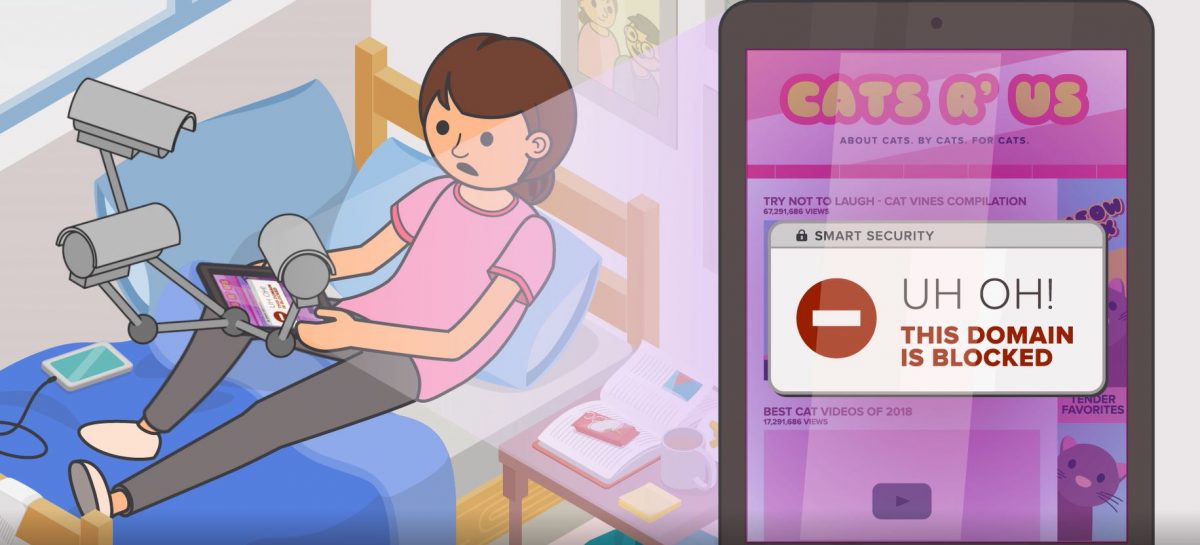
Increased Surveillance is Not an Effective Response to Mass Violence
By Sara Collins and Anisha Reddy This week, Senator Cornyn introduced the RESPONSE Act, an omnibus bill meant to reduce violent crimes, with a particular focus on mass shootings. The bill has several components, including provisions that would have significant implications for how sensitive student data is collected, used, and shared. The most troubling part […]
CCPA 2.0? A New California Ballot Initiative is Introduced
Introduction On September 13, 2019, the California State Legislature passed the final CCPA amendments of 2019. Governor Newsom is expected to sign the recently passed CCPA amendments into law in advance of his October 13, 2019 deadline. Yesterday, proponents of the original CCPA ballot initiative released the text of a new initiative (The California Privacy […]

10 Reasons Why the GDPR Is the Opposite of a ‘Notice and Consent’ Type of Law
The below piece was originally published on Medium. For a version with humorous images, head to the original post. A ‘notice and consent’ privacy law puts the entire burden of privacy protection on the person and then it doesn’t really give them any choice. The GDPR does the opposite of this. There is so much […]

How the FTC Became a "Super CNIL"
By Winston Maxwell European data protection authorities are quick to remind citizens and companies that the U.S. lacks adequate protection of personal data. Many Europeans therefore assume that the U.S. is a privacy no-man’s-land. Yet on July 24, 2019 the FTC levied a privacy fine against Facebook that is far above GDPR levels, and imposed […]
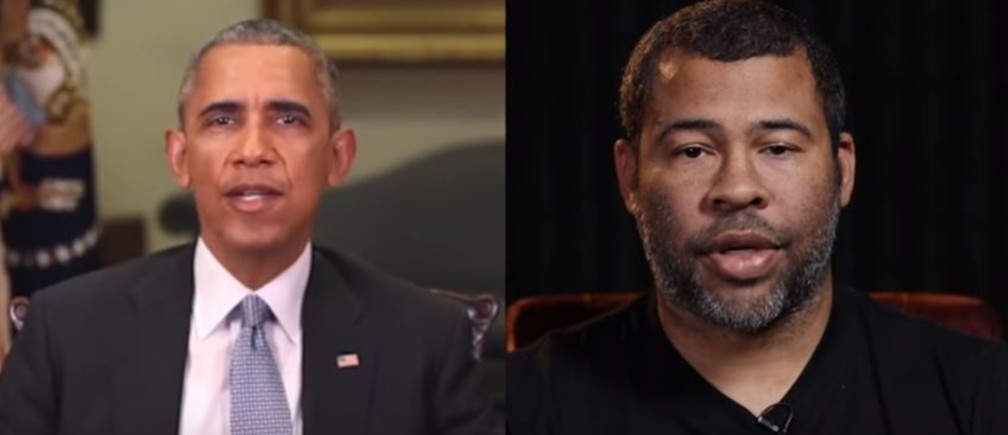
Digital Deep Fakes
The media has recently labeled manipulated videos of people “deepfakes,” a portmanteau of “deep learning” and “fake,” on the assumption that AI-based software is behind them all. But the technology behind video manipulation is not all based on deep learning (or any form of AI), and what are lumped together as deepfakes actually differ depending on the particular technology used. So while the example videos above were all doctored in some way, they were not all altered using the same technological tools, and the risks they pose – particularly as to being identifiable as fake – may vary.
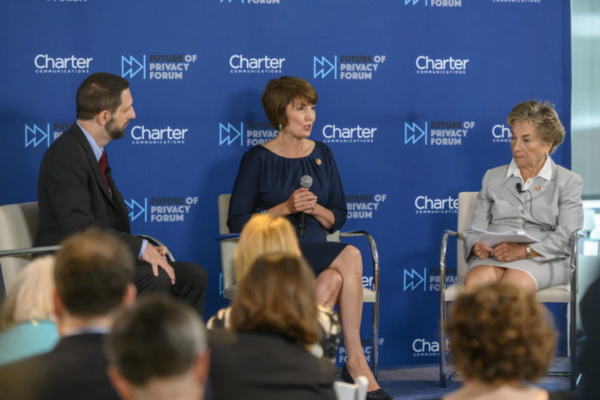
Congressional Leaders Join Future of Privacy Forum, Charter Communications to Discuss Consumer Privacy
Will Congress advance a federal privacy law? FPF Vice President of Policy John Verdi spoke with two leading House members to find out. Watch the video below of John’s July 19th conversation with House Energy & Commerce Subcommittee on Consumer Protection Chair Jan Schakowsky and Ranking Member Cathy McMorris Rodgers. Thank you to Charter Communications […]
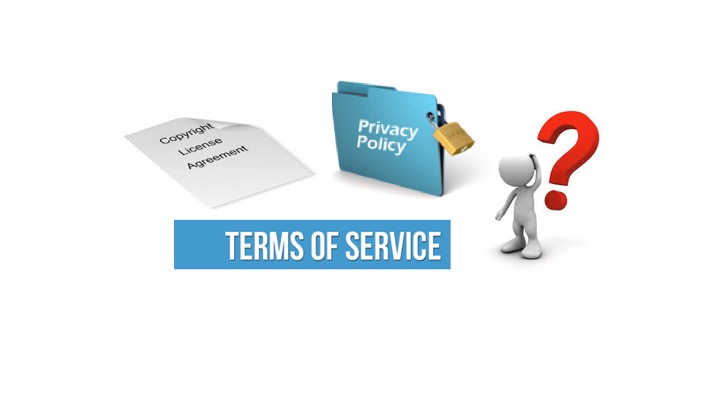
COPYRIGHTS AND PRIVACY: What is the Irrevocable License and is it Really a Privacy Concern?
The reasons for the development and inclusion of these clauses, and the privacy controversies the terms can trigger, tell an interesting tale about the intersection of data protection and intellectual property law.