
Across the United States, evolving data collection and processing practices and advances in artificial intelligence are driving new digital services, technologies, and socially beneficial research – while also raising new opportunities, risks, and questions for individuals and communities. In response, state and federal policymakers are considering new legislative and regulatory frameworks on three interconnected fronts: comprehensive consumer privacy laws that establish baseline rights and protections for personal data across the economy; frameworks that target specific sectors and practices such as automated decisionmaking, biometric identification, companion chatbots, data-driven pricing, data brokerage, frontier AI model safety, genetic data, and health data; and youth-specific privacy and online safety laws that set distinct rules for minors. These three tracks rarely stay in their lanes: a comprehensive privacy law may include AI provisions, an AI safety bill may carve out rules for minors, a youth online safety law may hinge on biometric age verification. Understanding the landscape requires understanding both the individual pieces and how they fit together.
FPF’s U.S. Legislation team provides expert, independent, pragmatic analysis of state and federal legislative and regulatory approaches to privacy, AI, and youth online safety – three distinct but increasingly intertwined issue areas. The team tracks emerging proposals, compares new laws against existing frameworks, analyzes implementation and compliance implications, and helps policymakers and stakeholders understand how legal requirements interact with current technologies, business practices, and data uses.
Through reports, blog posts, legislative and policy analyses, webinars, in-person and virtual peer-to-peer gatherings, and educational programs, FPF helps the broader technology policy and governance community understand the mechanisms and strategies available to protect privacy, promote responsible AI development and deployment, and advance youth online safety. FPF does not typically support or oppose particular bills. Instead, the U.S. Legislation team focuses on explaining the practical and legal implications of proposals – individually and as they interact with one another. This work helps ensure that privacy, AI, and youth safety compliance and policy strategies remain future-looking, adaptable, and workable for the continued, beneficial use of data and AI.
FPF’s U.S. Legislation team is led by Tatiana Rice, Senior Director.





Comparing the Data Broker Bill to the Consumer Privacy Bill of Rights
Considering the privacy concerns raised by data brokers, we thought it would be useful to compare how data brokers are treated under Senator Edward Markey’s recent data broker bill, which has considerable support from privacy and consumer advocates (as well as Senators Blumenthal, Franken, and Whitehouse), and under the Consumer Privacy Bill of Rights. The different receptions […]
White House Consumer Privacy Bill Starts an Important Conversation
This afternoon the White House released a discussion draft of its Consumer Privacy Bill of Rights Act. Jules Polonetsky and Chris Wolf issued the following response: Today’s release of the text of Consumer Privacy Bill of Rights demonstrates the U.S.’s continuing commitment to advance privacy protection for consumers. Although the current system of FTC enforcement actions […]
The Student Privacy Pledge and Security
We know it is critical for ed tech companies to get security right. The Student Privacy Pledge developed by FPF and SIIA requires signatories to maintain “a comprehensive security program that is reasonably designed to protect the security . . . of personal student information . . . appropriate to the sensitivity of the information.” […]
White House Return to Big Data Focuses on Price Discrimination
Today, the White House released an interim progress report detailing the Administration’s efforts on privacy in big data since its landmark report last spring. The update highlights the President’s recent calls for new privacy legislation, including efforts on student privacy and the Consumer Privacy Bill of Rights, and also calls for deeper understanding of differential […]

President Obama Backs FPF-SIIA Student Privacy Pledge
President Obama today strongly endorsed the Student Privacy Pledge, calling for more companies to make a firm commitment to using student data only …

Travis LeBlanc on the FCC's New Privacy Role
At today’s FCBA brown bag lunch, FCC Enforcement Bureau Chief Travis LeBlanc discussed the Commission’s recent entrance into privacy enforcement and fielded questions as to what companies might do to avoid running afoul of the Enforcement Bureau. LeBlanc emphasized the innovation continues to outpace regulators, noting that much of the Commission’s investigative and enforcement work […]
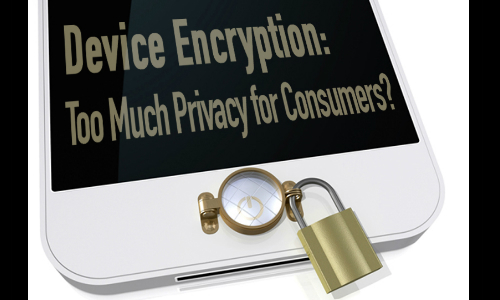
Discussing the Merits of Device Encryption
In the wake of Apple and Google’s recent decision to implement “whole device encryption” on their latest mobile operating systems, the FBI has warned that the tech giants’ actions will force law enforcement to “go dark” when it comes to keeping tabs of criminals. FPF has previously explored the question of encryption and law enforcement access, […]
Amend the U.S. Privacy Act to Provide Further Privacy Protections to European and Other Non-US Persons
I had the pleasure of participating recently at a Georgetown Law Center conference called “Privacy Act @40.” My panel was on “Looking Ahead,” and my comments focused on new ways that the United States is (and can) extend appropriate privacy rights to citizens of other countries. Today, just a couple of weeks later, Google has […]

FTC Wants Tools to Increase Transparency and Trust in Big Data
However we want to define “Big Data” – and the FTC’s latest workshop on the subject suggests a consensus definition remains elusive – the path forward seems to call for more transparency and the establishment of firmer frameworks on the use of data. As Chairwoman Ramirez suggested in her opening remarks, Big Data calls for […]
FPFcast: Stalking and the Location Privacy Protection Act with Cindy Southworth
June 30, 2014: Stalking and the Location Privacy Protection Act [audio In this podcast, FPF Policy Counsel Joseph Jerome talks with Cindy Southworth from the National Network to End Domestic Violence about stalking apps and how Senator Franken’s proposed bill might curtail their use. Click on the media player above to listen, or download the […]