
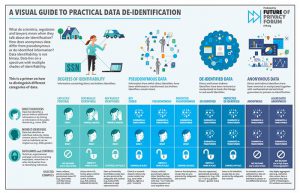
One key method for ensuring privacy while processing large amounts of data is de-identification. De-identified data refers to data through which a link to a particular individual cannot be established. This often involves “scrubbing” the identifiable elements of personal data, making it “safe” in privacy terms while attempting to retain its commercial and scientific value.
In the era of big data, the debate over the definition of personal information, de-identification and re-identification has never been more important. Privacy regimes often rely on data being considered Personal in order to require the application of privacy rights and protections. Data that is anonymous is considered free of privacy risk and available for public use.
Yet much data that is collected and used exists somewhere on a spectrum between these stages. FPF’s De-ID Project has examined practical frameworks for applying privacy restrictions to data based on the nature of data that is collected, the risks of de-identification, and the additional legal and administrative protections that may be applied.

Mandating “Evidence-Based” Suicide Detection in Chatbots
Co-authored by Sarah Hanson, FPF Health & Wellness Intern This article discusses suicidal ideation, which may be distressing for some readers. (If you or someone you know is struggling, help is available. You can call or text the Suicide & Crisis Lifeline at 988 or visit 988 Lifeline for free, confidential, 24/7 support.) As many […]
No Silver Bullet, But a Silver Lining? PETs and International Data Transfers
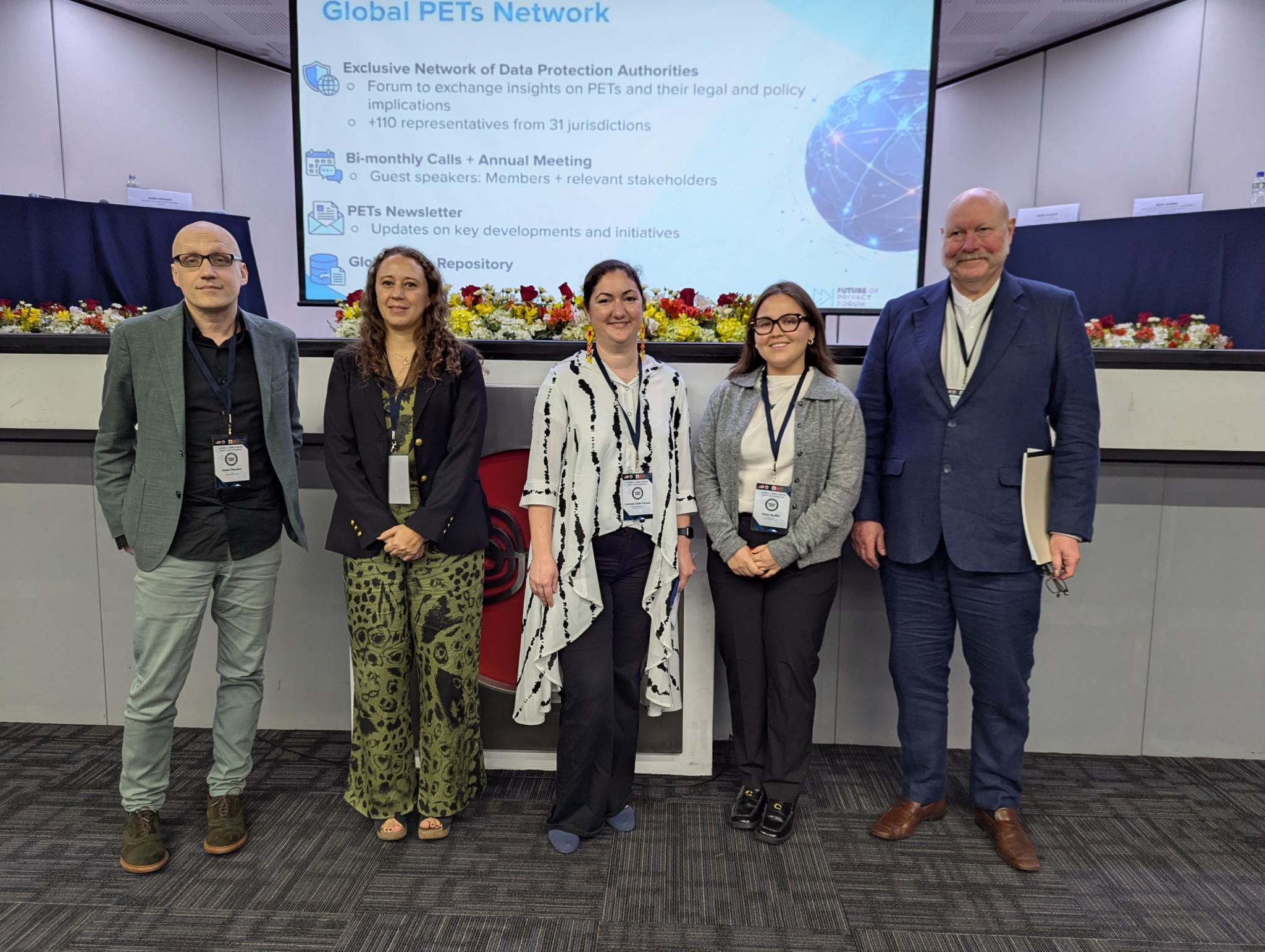
Is there a role for Privacy Enhancing Technologies (PETs) to play in the context of international data transfers? The answer to this question could be one of the keys to unlock trusted cross-border data flows at scale in the age of AI. This was the topic explored in a session organized by the Future of […]

FPF Releases Practitioner Guides on Privacy Enhancing Technologies for Education Stakeholders
The Future of Privacy Forum (FPF) has released a suite of practitioner resources on Privacy Enhancing Technologies (PETs) for the education sector. Building on FPF’s 2025 landscape analysis of PETs adoption by State Education Agencies, the new resources move from landscape analysis to implementation considerations — providing audience-specific guidance for the three practitioner communities most […]

Celebrating Another Year of Privacy and AI Governance: FPF at the 2026 IAPP Global Summit
Authored by FPF Communications Intern Celeste Valentino FPF experts participated in the 2026 IAPP Global Summit and hosted FPF privacy executive convenings in Washington, D.C. from March 31 to April 2. As a major gathering for privacy professionals, the event featured a heavy schedule of workshops and panels focused on the intersection of U.S. and […]

2026: A Year at the Crossroads for Global Data Protection and Privacy
There are three forces twirling and swirling to create a perfect storm for global data protection and privacy this year: the surprise reopening of the General Data Protection Regulation (GDPR) which will largely play out in Brussels over the following months, the complexity and velocity of AI developments, and the push and pull over the […]
Future of Privacy Forum to Honor Top Scholarship at Annual Privacy Papers for Policymakers Event
Washington D.C. — (January 26th, 2026) — Today, the Future of Privacy Forum (FPF) — a global non-profit that advances principled and pragmatic data protection, AI, and digital governance practices — announced the winners of its 16th annual Privacy Papers for Policymakers (PPPM) Awards. The PPPM Awards recognize leading research and analytical scholarship in privacy […]

Innovation and Data Privacy Are Not Natural Enemies: Insights from Korea’s Experience
The following is a guest post to the FPF blog authored by Dr. Haksoo Ko, Professor at Seoul National University School of Law, FPF Senior Fellow and former Chairperson of South Korea’s Personal Information Protection Commission. The guest post reflects the opinion of the author only and does not necessarily reflect the position or views […]

FPF Year in Review 2025
Co-authored by FPF Communications Intern Celeste Valentino with contributions from FPF Global Communications Manager Joana Bala This year, FPF continued to broaden its footprint across priority areas of data governance, further expanding activities across a range of cross-sector topics, including AI, Youth, Conflict of Laws, AgeTech (seniors), and Cyber-Security. We have engaged extensively at the local […]
Rethinking Personal Data: The CJEU’s Contextual Turn in EDPS vs. SRB
Author: Cédric Burton The following is a guest post to the FPF blog authored by Cédric Burton, Partner and Global Co-Chair Data, Privacy and Cybersecurity, Wilson Sonsini Brussels. The guest post reflects the opinion of the author only and does not necessarily reflect the position or views of FPF and our stakeholder communities. FPF provides […]

Practical Takeaways from FPF’s Privacy Enhancing Technologies Workshop
In April, the Future of Privacy Forum and the Mozilla Foundation hosted an all-day workshop with technology, legal, and policy experts to explore Privacy Enhancing Technologies (PETs). During the workshop, multiple companies presented technologies they developed and implemented to preserve individuals’ privacy. In addition, the participants discussed steps for broadening the adoption of these technologies […]