“What does it mean for people actually working with data, people monitoring data, people analyzing data, people selling data? What does it mean to actually be thinking about privacy as a human right?” Future of Privacy Forum CEO Jules Polonetsky posed these questions at the beginning of his keynote, Navigating Privacy in a Data-Driven World: Treating Privacy as a Human Right, at RSA Conference2020 in San Francisco on February 26.
During the keynote session, Polonetsky discussed the limitations of consumer protection laws in protecting individuals’ privacy and explored how to best safeguard data to protect human rights. He expressed the importance of instituting laws that support de-identification and pseudonymization, and of independent academics being able to access data for the benefit of research and society.
“Are corporations having too much power over individuals because of how much data they have? Are foreign countries interfering in our elections? Are automated decisions being made where I’ll be turned down for healthcare, I’ll be turned down for insurance, my probation will be extended?” asked Polonetsky. “These are not privacy issues, right? These are issues of power. These are issues of human rights at the end of the day.”
EU DPAs Issue Green and Red Lights for Processing Health Data During the COVID-19 Epidemic
As Europe is grappling with an exponential increase in COVID-19 cases, some European Data Protection Authorities issued public interest guidance on the limits of collecting, sharing and using personal data relating to health in these exceptional circumstances. Particular areas of concern are related to the breadth of measures that employers can legally take to monitor the health of their employees, as well as the collection of health data by government agencies. Overall, regulators highlight that data protection law is by no means a barrier to public health, but advise organizations against “systematic and generalized” monitoring and collection of data related to health of their employees outside official requests and measures of public health authorities.
Background: the GDPR refers to “monitoring epidemics and their spread”
The GDPR individualizes several avenues to process personal data when the vital interests of individuals are concerned or for important grounds of public interest. Recital 46 specifically refers to the lawfulness of some types of processing that serve these two goals, “including for monitoring epidemics and their spread”. There are provisions in both Article 6 GDPR (the general lawful grounds for processing personal data), and Article 9 (the prohibition to process sensitive data and the exceptional circumstances in which they can be processed) that allow for collection, use and necessary sharing of personal data related to health in the context of an epidemic.
For example, “reasons of public interest in the area of public health, such as protecting against serious cross-border threats to health” are specifically mentioned as a permissible use of sensitive data, including data related to health, under Article 9(2)(i) GDPR, if provided by Union or Member State law. At the same time, Recital 52 specifically refers to derogations from the prohibition on processing sensitive data justified for “monitoring and alert purposes” and “the prevention or control of communicable diseases and other serious threats to health”.
Garante: Systematic and generalized collection of health data by employers, discouraged
Italy has been by far the most impacted country by the COVID-19 epidemic in Europe to date, with the government taking yesterday the unprecedented measure of closing the entire country. The Italian data protection supervisory authority – the Garante, highlighted in early guidance issued last week that public health authorities are the organizations mandated to collect and manage data about health related to the virus’ spread.
“Preventing the spread of Coronavirus is an objective to be pursued by entities that are tasked with discharging this mission in a professional manner. The investigation into and collection of information on the symptoms typical of Coronavirus and on the recent movements of each individual are the responsibility of healthcare professionals and the civil protection system, which are the entities tasked with ensuring compliance with the public health rules that were recently adopted”, wrote the Garante.
Therefore, the key recommendation made by the Italian DPA was for employers to “refrain from collecting, in advance and in a systematic and generalised manner, including through specific requests to individual workers or unauthorized investigations, information on the presence of any signs of influenza in the worker and his or her closest contacts, or anyhow regarding areas outside of the work environment”. The Garante recalled that employees are under an obligation to inform their employer of any danger to health and safety at the workplace and encouraged employers to set up specific channels of communication related to this type of information.
The Garante called on all controllers to “comply strictly with the instructions provided by the Ministry of Health and the competent institutions to prevent the spread of the Coronavirus without undertaking autonomous initiatives aimed at the collection of data also on the health of users and workers”.
The Italian Government published yesterday evening a Decree in the Official Journal (No 14/2020) to create a special legal framework for collecting and sharing personal data related to health by public health authorities and by private companies that are part of the national health system for the duration of the state of emergency related to COVID-19.
Irish DPC: Requesting information about recent travel and symptoms of employees and visitors, potentially justified
The Irish Data Protection Commissioner clarified from the outset in her guidance that “data protection law does not stand in the way of the provision of healthcare and the management of public health issues”. But at the same time “there are important considerations which should be taken into account when handling personal data in these contexts, particularly health and other sensitive data”. Not only that the processing needs to be necessary and proportionate, but it also “needs to be informed by the guidance and/or directions of public health authorities, or other relevant authorities.”
The DPC highlights particularly relevant aspects for compliance, such as transparency about the measures taken, in house confidentiality in handling information about possible infestations with COVID-19 of specific employees, ensuring appropriate data security, processing the minimum amount of personal data to achieve the purpose of implementing measures to prevent or contain the spread of the virus, as well as keeping track of all decisions made with regard to collection of such data and safeguards implemented, as part of accountability obligations.
The Guidance also has a Q&A section that addresses specific scenarios brought up by organizations in their communication with the DPC. For example, can an employer require all staff and visitors to the building to fill out a questionnaire requesting information on their recent travel history concerning countries affected by the virus, and medical information such as temperature? Considering that under Irish law employers also have a legal obligation to protect the health of their employees and maintain a safe place of work, on top of the justifications specific to data protection law mentioned above, “employers would be justified in asking employees and visitors to inform them if they have visited an affected area and/or are experiencing symptoms”. If such information would be gathered via questionnaires, this would need to have a justification based on necessity and proportionality, taking into account any directions and guidance of public health authorities.
The CNIL: Collection of medical files or questionnaires from all employees, likely not justified
The French supervisory authority – the CNIL, reminded organizations that personal data related to health enjoys stronger protections under the GDPR due to its sensitivity. The brief guidance issued on March 6 focused on what employers can do and what they cannot do in relation to data about the health status of their employees. As a rule, any exceptional processing of personal data caused by the epidemic should not go beyond what is necessary for the management of suspected exposure to the virus, especially considering that the Code of Public Health is also applicable to this situation.
On the blacklist of processing activities, the CNIL specifies that “employers must refrain from collecting in a systematic and generalized manner, or through individual inquiries and requests, information relating to the search for possible symptoms presented by an employee and their relatives”. The CNIL gives examples of unlawful processing:
Mandatory measurement of temperature of each employee and visitor to be sent daily to their hierarchy;
The collection of medical files or questionnaires from all employees.
Admittedly, the questionnaires in this recommendation may refer strictly to the collection of information related to employee’s overall health and not to their recent travel, but this would need to be further clarified.
The CNIL also offers examples of actions that employers can implement lawfully:
Training employees to individually disclose information related to possible exposure to the virus to the employer or to the competent health authorities;
Setting up dedicated channels to receive this type of information;
Promoting work from home solutions;
In the event of a report about possible exposure, “the employer can record the date and identity of the person suspected of having been exposed; the organizational measures taken (confinement, teleworking, orientation and contact with the occupational doctor, etc.).”
Health authorities can collect data related to health in the context of COVID-19’s spread, given that “the assessment and collection of information relating to the symptoms of coronavirus and information on the recent movements of certain persons is the responsibility of these public authorities”.
Importantly, the CNIL also mentions that employees have an obligation under the Labor Code by all means possible to preserve the health and safety of others and of themselves, which means that “they must inform their employer in the event of suspected contact with the virus”.
The Future of Privacy Technology
Today, FPF is making available a report co-authored by CEO Jules Polonetsky and Policy Fellow Jeremy Greenberg that identifies future directions and requirements of privacy technology from the industry perspective.
With support by the National Science Foundation under Grant No. 1939288, a survey was designed and administered to industry privacy leaders to provide input on the future of privacy technology as relates to their business and policy needs and objectives. In the report, the authors outline three major areas that are especially ripe for investment and development:
Private sector demand and readiness to collaborate is a factor in the launch and groundswell of activities associated with the Privacy Tech Alliance, an initiative established by FPF to advance privacy enhancing technology in commercial, government and not-for-profit sectors.
A Closer Look at Genetic Data Privacy and Nondiscrimination in 2020
Florida lawmakers recently introduced HB 1189/SB 1564 – a bill that would prohibit life and long-term care insurers from basing coverage and rates or denying coverage based on individuals’ genetic information. Washington State lawmakers are considering a bill, HB 2485, that would prohibit life insurance companies and others from obtaining individuals’ genetic information from direct-to-consumer (DTC) genetic testing services. These are two of many legislative efforts that would fill critical gaps in protections provided by the Genetic Information Nondiscrimination Act (GINA). GINA, a 2008 federal law, bans discrimination based on genetic information in health insurance and employment settings. However, GINA is limited; it does not protect individuals from genetic discrimination by life, long-term care, and disability insurers. Also, GINA does not apply to members of the US military, who recently received a Pentagon warning memo stating that DTC genetic testing results could impact decisions made about US military readiness.
Some states have stepped in to provide additional protections for individuals. California, for example, provides the most comprehensive protections beyond GINA. CalGINA extends nondiscrimination protections to circumstances related to housing, certain businesses, state-funded agencies, and in the provision of emergency services.
During recent years, GINA and complementary state laws have seemingly mitigated some concerns about genetic discrimination and provided employers and insurers with clarity regarding their legal obligations. Between 2013 and 2018, less than three cases were brought each year by the Equal Opportunity Employment Coalition (EEOC), the federal agency that enforces Title II of GINA, and a shrinking number of charges citing GINA violations were filed with the EEOC (333 charges filed in 2013 versus 209 cases filed in 2019).
However, GINA has not eliminated concerns about genetic data privacy and discrimination across the board. Many stakeholders, including legislators, have engaged in efforts to promote access to genetic information for various purposes. Therefore, it is important that policymakers, companies, employees, consumers, and other stakeholders understand GINA’s limits, the privacy risks involved in using genetic information, and the privacy-centric tools and guidance that can mitigate risks in this under-explored territory.
Employer-Sponsored or Corporate Wellness Programs
In 2017, the US witnessed controversy over H.R.1313 (the “Preserving Employee Wellness Programs Act”). Although the bill did not pass Congress, many viewed the proposal as an attempt to give employers access to employees’ genetic information through corporate wellness programs, a possibility that raised the spectre of employer discrimination against an employee and his/her/their family members. The bill could have permitted employers to access information from tests for genetic diseases with no known cure. H.R. 1313 was strongly opposed by health advocates. Advocates argued that if an employee or beneficiary’s heightened risk of developing a serious disease is revealed to an employer, the employer could use this information to predict and mitigate future healthcare costs. Such use of genetic information would violate GINA.
Although GINA has deterred employers from engaging in explicit acts of genetic information discrimination, it has not discouraged employers from engaging in the consumer genetics space by partnering with DTC genetic testing companies that offer ‘personalized wellness’ programs to employees. Personalized wellness programs’ stated goal is to help employees understand which exercise programs and diets could work best based on genetic factors. Employers, on the other hand, hope that information gleaned from genetic testing in personalized wellness programs can be used to motivate employees to engage in healthy behaviors, which might lead to overall reduced health care expenditures for the employer. There is broad agreement that genetic information – and other health data used by wellness programs – must not inform decisions regarding hiring and promotion.
Life, Long-Term Care, and Disability Insurers
The fact that GINA excludes life, long-term care, and disability insurers has been unsettling for many since GINA became effective in 2008 because it left an open door for potential discrimination in such settings. Some states like Florida have taken initiatives to fill these protection gaps, although with pushback from these insurance industries. For instance, a recent Florida bill would prohibit life insurers from making coverage decisions based on both clinical and consumer genetic testing results; it is opposed by the life insurance industry. The industry argues that the bill, if passed, could “disrupt Florida’s life insurance market and could harm consumers through higher prices and potentially limited product choices.”
In essence, these industries are concerned about their ability to underwrite and establish pricing or premiums based on genetic information alone or in combination with medical information taken from the Medical Information Bureau (MIB), an insurance underwriting and information exchange organization. MIB members include life and health insurance companies that seek to “assess an individual’s risk and eligibility during the underwriting of life, health, disability income, critical illness, and long-term care insurance policies.” Life, long-term care, and disability insurers argue that genetic information and MIB data improves their ability to accurately estimate risk, underwrite policies, and assess the likelihood of severe or critical illness, premature death, or disability. Individuals fear that the insurers will use information that is inaccurate, incomplete, or would create discriminatory outcomes for individuals or groups.
When employers consider whether to offer personalized wellness programs that involve genetic data, they should analyze vendors’ policies to ensure that vendors will appropriately secure personal information and provide meaningful privacy controls. Employers should not consider genetic data when making hiring or promotion decisions.
When employees weigh the benefits and risks of wellness programs, they should read privacy policies and terms of use agreements to determine whether programs’ policies align with their privacy expectations.
Consumers who are concerned about whether their genetic information has made it into the MIB database typically have the right to request their MIB Consumer File under the Fair Credit Reporting Act (FCRA).
US military service members should read the recent Pentagon warning memo and, if appropriate, speak with a genetic counselor about whether or not DTC genetic testing is necessary or desirable in individual cases.
Policymakers interested in genetic discrimination and data protection issues should be aware that the National Human Genome Research Institute (NHGRI) has a Table of State Statutes Related to Genomics that provides the total number of states that have enacted legislation related to genetic information privacy and nondiscrimination. The database is publicly-available and updated regularly. Additional resources suggested by the NHGRI include those offered by the Cornell Legal Information Institute, LawSeqSM Database, and National Society of Genetic Counselors. This search query on Congress.gov is a useful tool for following newly introduced state and federal legislation related to genetic information.
Researchers interested in genetic discrimination topics should consult the Final Rules for GINA and public comments about past Proposed Rules under GINA hosted by the Federal Register and searchable using the term “Genetic Information Nondiscrimination Act.”
Close to the Finish Line: Observations on the Washington Privacy Act
By: Stacey Gray and Gabriela Zanfir-Fortuna *
We wrote last week that Washington State seems poised to become the second US state to pass a major comprehensive privacy bill. The proposed Washington Privacy Act (WPA) would be mostly aligned with the EU’s GDPR, the global gold standard for data protection (although there are still some significant differences). Read our full comparison of the WPA with GDPR and other privacy laws. At a minimum, the WPA goes much further than the California Consumer Privacy Act (CCPA). Perhaps the most significant difference between the WPA and CCPA is that the WPA would require companies and even non-profits to obtain affirmative (“opt in”) consent for the collection of sensitive data, including biometric data and geolocation data.
Despite this, some lawmakers in Olympia have expressed skepticism over a bill that contains a variety of potential weaknesses, wondering if it might be worse than no bill at all. This is surprising given the overall strength of the proposed WPA compared to anything that has come before it in the United States. Are Washington policymakers letting the perfect be the enemy of the good?
We offer a few observations on the process unfolding in Washington:
The Overton window for privacy law in the United States has shifted dramatically. Even two years ago, it would have been considered impossible to advance a US privacy law that defined personal data and processing as broadly as WPA, promoted fair information practice principles, or created such a robust set of rights for data subjects. In contrast, WPA — while by no means perfect — would begin to give Washingtonians comparable rights to those enjoyed in the EU, and non-EU countries following the same comprehensive privacy protection model, such as South Korea, Japan, or Brazil.
Enforcement of a comprehensive law, even if only by the Attorney General, could immediately change (and halt) current business models that pose serious privacy risks. Currently, there are no comprehensive rules in place restricting the collection and use of personal information about Washingtonians (aside from basic state consumer protections against unfair and deceptive practices). Looking seriously at the proposed WPA’s provisions for affirmative consent for “sensitive data” (Section 3(34) and Section 8(7)), the law could be implemented right away to stop mobile apps from sharing location data without consent; to stop companies like Clearview AI from creating facial recognition tools to identify users based on their facial features without consent; and to stop use or sale of genetic data beyond the purposes to which individuals consented. Furthermore, the potential fines could be remarkably high — at $7500 per violation (the same as under the CCPA for intentional breaches of the law), multiplied by the number of consumers affected by a violation (easily scalable to large numbers when device data or large platforms are involved), a fine under the WPA could easily meet or exceed the EU’s total cap of 4% of global revenue.
Lawmakers have a range of options for meaningful enforcement — and context matters. The Washington Senate chose to exclude a private right of action from the WPA, a decision met with criticism by others who prefer strong judicial remedies. Without individual enforcement, the WPA’s enforcement framework would be significantly different from the GDPR, which provides very strong mechanisms for individuals to enforce their own rights. Yet the context of this US-EU distinction is critical: lawmakers must consider the unique role of contingency-based class actions in the United States, combined with the nascency of the law. Enforcement rights under the GDPR are very strong — individuals have the right to sue in court, to file complaints with their regulator (Data Protection Authorities or DPAs), and in some cases to be represented by non-profit organizations (NGOs). However, the legal culture and procedural norms for large, contingency-based multi-district lawsuits are simply not a current feature of EU law. While there are benefits to class action litigation facilitated by private rights of actions, Washington lawmakers have expressed sincere concerns about the potential impact on legitimate business models under a comprehensive law that would govern the entire digital economy, and concerns over potential limitations of even very large financial settlements to meaningfully compensate consumers. Furthermore, companies in the EU have been required to comply with comprehensive EU-level privacy and data protection rules since the 1995 Data Protection Directive. By the time the GDPR took effect in 2018 (with the potential for 4% fines), the EU had a longstanding history of privacy and data protection legal compliance and guidance, which makes a significant difference when it comes to being ready for strong enforcement. Washington could follow this path in the future, or consider a range of other options for compromise.
Once adopted, the WPA could be updated and improved over time. It is important to craft a clear, consistent, thoughtful privacy law that strikes the right balances, especially if it will serve as a model for other states. This is even more important when one considers that the WPA, along with the CCPA and possibly other state models, is likely to influence the debates over a federal law. We saw a similar process after the CCPA was passed by the California Assembly: it was amended at least eight times within months after being adopted and continues to be modified through Attorney General rulemaking. It is also likely to be significantly expanded by a new 2020 ballot initiative that would add substantive new protections for Californians. Similarly, lawmakers in Washington can return to revise and update the law over time, taking into account realities on the ground. Continuing feedback from advocates, companies, the state’s Chief Privacy Officer, and the Attorney General, will be crucial to a well-functioning law over the long run. In the meantime, though, Washingtonians would already enjoy a set of privacy protections not yet available anywhere in the United States.
If Washington lawmakers choose not to pass a comprehensive privacy law in 2020, they may miss an important opportunity to lead the nation and establish privacy protections for Washington residents. In the absence of a baseline national consumer privacy law, however, we expect debates to continue as state legislators across the United States continue to tackle these important questions.
* Stacey Gray is a Senior Counsel leading FPF’s US federal and state legislative analysis, outreach, and policymaker education ([email protected]). Gabriela Zanfir-Fortuna is an EU Senior Counsel, leading FPF’s EU and global privacy efforts, and formerly worked for the European Data Protection Supervisor in Brussels ([email protected]).
EDPB Draft Guidelines on Connected Cars Focus on Data Protection by Design and Push for Consent
By Gabriela Zanfir-Fortuna and Chelsey Colbert
The European Data Protection Board recently published its draft Guidelines 1/2020 on processing personal data in the context of connected vehicles and mobility related applications, which are open for feedback until March 20. The EDPB writes that the main challenge for complying with European data protection and privacy laws in this field is for ‘each stakeholder to incorporate the protection of personal data dimension from the product design phase, and to ensure the car users enjoy transparency and control in relation to their data’. One of the key points clarified by the Guidelines is that the general provision of the ePrivacy Directive, Article 5(3), which requires consent for any access to information on a telecommunications device – ‘terminal equipment’ (with few exceptions), is applicable to connected vehicles. Thus, obtaining valid ‘consent’ becomes one of the key compliance issues in this environment, even if consent will not be necessary for all subsequent uses of personal data.
The challenges are heightened by the complexity of actors in the connected vehicle ecosystem, the different types of ‘data subjects’, the sensitivity of some data, such as geolocation data, and the different tiers of the legal obligations that may apply: Article 5(3) of the ePrivacy Directive, the General Data Protection Regulation (GDPR), the specific EU law on eCall and the framework for deployment of Cooperative Intelligent Transport Systems (C-ITS). In fact, the C-ITS is specifically left outside the scope of these Guidelines since it is an ongoing complex discussion at EU level, with the EDPB pointing to its older Opinion on this topic adopted by the Article 29 Working Party.
In this post, we will look closer at: (1) the scope of the Guidelines, including defining personal data in connected vehicles; (2) the complex ecosystem of actors and their roles as controllers, joint controllers and processors; (3) key recommendations for implementing Data Protection by Design and by Default; (4) high risk personal data processing (geo-location data, data related to criminal offences, biometric data) and (5) the role of consent.
1. Scope and Definitions: What is a ‘Connected Vehicle’, what are ‘Personal Data’
The EDPB’s definition of a “connected vehicle” is “a vehicle equipped with many electronic control units (ECU) that are linked together via an in-vehicle network as well as connectivity facilities allowing it to share information with other devices both inside and outside the vehicle.”
The EDPB’s draft Guidance document is focused on non-professional use of connected vehicles by data subjects, such as drivers, passengers, vehicle owners, renters, etc. The scope of the document is quite broad, as it applies to personal data a) processed inside of the vehicle, b) exchanged between the vehicle and personal devices connected to it, which includes standalone mobile apps used to assist drivers since they contribute to the vehicle’s connectivity capabilities, and c) collected within the vehicle and exported to other parties for processing, such as the vehicle manufacturer, insurance companies, or car repairers.
Mobile apps are an interesting category and the EDPB provides a non-exhaustive list of examples. To fall within the scope of the Guidelines, apps need to be related to “the environment of driving”. The EDPB provides an example to illustrate the distinction: GPS navigation apps are within scope, while an app that suggests places of interest are not.
Employers providing company cars to staff who monitor employee’s actions within the context of employment are outside of this document’s scope. Also out of scope of this document is the issue of filming in public spaces, which is important to note, given the plethora of cameras and sensors that outfit connected and autonomous vehicles, for example, dashcams, parking assistance, or driver monitoring.
(Almost) All Data From Connected Vehicles is Likely to be Personal Data
The EDPB considers most data associated with connected vehicles to be personal data to the extent that it is possible to link it to one or more identifiable individuals. This includes technical data about the vehicle’s movements, such as speed, and data about the vehicle’s condition, such as tire pressure. Even when data is not directly linked to a name and is about the technical aspects and features of the vehicle, such as the driving style, distance driven, or the vehicle’s wear and tear, it concerns the driver or passenger of the vehicle. This is because when this data is cross-referenced with other data, such as the vehicle identification number (VIN), it can be linked to an individual. Similarly, vehicle metadata, such as vehicle maintenance status, may also be personal data.
Data collected by cameras and other sensors may also concern driver and passenger behavior, as well as the behavior of those outside of the vehicle.
2. Complex Ecosystem of Actors: Who are the Controllers, Processors and Joint Controllers
The Guidelines note at the beginning that connected vehicles are becoming mainstream and that the data processing is taking place within a complex ecosystem, as is shown by FPF’s infographic “Data and the connected car”. In addition to the traditional players in the automotive industry, the EDPB mentions new players including infotainment service providers, driving assistance systems and services, road infrastructure managers, fleet managers, insurance companies, ride-sharing companies, and telecommunications operators. The Guidance document is directed to this non-exhaustive list.
Things get more complicated when all these actors need to clarify their legal responsibility related to collecting and using personal data: Are they controllers – the entities that are liable for complying with most data protection obligations, and that establish the ‘means and purposes’ of a processing operation? Are they joint controllers – the entities that define jointly the means and purposes of a processing operation and that share liability? Or are they processors – the entities that merely process data on behalf of controllers and that need to follow a strictly defined mandate from the controller, having thus primarily contractual liability?
It is important to note that car manufacturers are not the only controllers. According to the EDPB, data controllers can also include ‘service providers that process vehicle data to send the driver traffic information, eco-driving messages or alerts regarding the functioning of the vehicle’ and ‘insurance companies offering Pay-as-You-Drive contracts’. The Guidelines do not give examples of joint controllers, but specify that in a joint controllership situation a contract establishing how responsibility is shared is necessary, particularly regarding complying with data subjects’ rights requests.
As for processors, they can be the ‘equipment manufacturers and automotive suppliers’ that may process data on behalf of car manufacturers. The EDPB also recalls that the equipment providers may as well become controllers if they process personal data collected from vehicles for their own purposes.
3. Key Recommendations for Implementing Data Protection by Design and by Default
The EDPB highlights how important it is to consider data protection from the product design phase and the importance of transparency and data control to vehicle users. According to the Guidelines, ‘technologies should be designed to minimize the collection of personal data, provide privacy-protective default settings and ensure that data subjects are well informed and have the option to easily modify configurations associated with their personal data’.
The EDPB provides some general recommendations to implement Data Protection by Design and by Default (DPbD). In what looks like an invitation for cross-industry bodies or individual DPAs, it also recognizes that ‘specific guidance on how manufacturers and service providers can comply with Data Protection by Design and by Default could be beneficial for the industry’.
The EDPB recommends local (on-vehicle) processing of personal data rather than processing that occurs outside of the vehicle to mitigate the potential risks of cloud processing, which can be found in the Opinion on Cloud Computing released by the Article 29 Working Party. Such local processing guarantees to the user ‘the sole and full control of his/her personal data and, as such, it presents by design less privacy risks’ and ‘fewer cybersecurity risks’. One example of applications involving local processing are applications for unlocking, starting or activating vehicle commands using biometric data that is stored within the vehicle (face, voice, fingerprints).
The EDPB highlights that such local processing will likely fall outside the scope of the GDPR in what concerns natural persons (who could be drivers, car owners, passengers), due to the “household exception” in Article 2(2). The GDPR does, however, apply to ‘controllers or processors, which provide the means for processing personal data for such personal or household activities’. Conversely, this would mean that applications which involve transferring of personal data to the cloud could put natural persons in the situation of being a controller or processor, a fact which is not immediately obvious and which would benefit from further clarification in the final version of the Guidelines.
When local processing is not possible, ‘hybrid processing’ may be used. The EDPB gives usage-based insurance as an example, in that an insurance company could not gain access to the raw behavioral data, but rather to the aggregate score that is the result of the processing conducted either locally within the vehicle or by a telematics service provider.
With regard to ensuring users have control over their data, the EDPB recommends that ‘only data strictly necessary for the vehicle functioning are processed by default’. This means that individuals should have the possibility to ‘activate or deactivate the data processing for each other purpose and controller/processor and have the possibility to delete the data concerned’.
The EDPB recommends that when data must leave the vehicle, data should be anonymized or, in any case, pseudonymized. One last recommendation is to deploy Data Protection Impact Assessments even in the cases where they are not required by law.
4. High Risk Personal Data Processing: Geolocation Data, Data Related to Criminal Offences and Biometric Data
Some data may warrant special attention if the data is sensitive or could impact the rights and interests of data subjects. The EDPB has identified three categories of personal data warranting special attention: geolocation data, biometric data, and data that could reveal offenses of traffic violations.
Geolocation data is particularly revealing of someone’s life habits and allows the inference of the driver’s residence, place of work, interests, and other sensitive details such as religion or sexual orientation. The EDPB cautions that all parties in the connected car ecosystem should not collect location data except when absolutely necessary for the purpose of processing. For example, when the vehicle’s movement is required, the vehicle’s gyroscope is sufficient and there is no need to collect location data. The EDPB provides several principles for collecting geolocation. Even when the data subject has given consent, accessing location data more often than necessary is not recommended. Geolocation should not be activated by default and on continuously when the car has been started. It should only activate when the user launches a functionality that requires the vehicle’s location. Users should have the option to deactivate geolocation at any time and data controllers should define a limited storage period.
If biometric data are used either to enable access to the vehicle or its settings, or to authenticate the owner or driver, the EDPB recommends that the use of biometrics always has an alternative and that storing and comparing the biometric template is done locally.
Finally, data revealing criminal offences or other infractions are also identified as particularly relevant for high risk processing and are broadly defined. For example, ‘the instantaneous speed of a vehicle combined with precise geolocation data or data indicating that the vehicle crossed a white line could be considered offence related data’. The EDPB considers that processing of such data ‘can only be carried out under the control of official authority or when the processing is authorised by Union or Member State law providing for appropriate safeguards for the rights and freedoms of data subjects stated in art. 10 GDPR’ and must be carried out locally (on vehicle).
According to the EDPB, except for a few exceptions, such as accidentology studies consented to by the owner/driver, external processing of data revealing criminal offences or other infractions is forbidden.
5. The Role of Consent
One of the most significant clarifications brought by the draft Guidelines is that Article 5(3) of the ePrivacy Directive is applicable in the context of connected vehicles, even if the rest of the Directive is not (since the Directive generally applies to providers of publicly available electronic communications networks). However, Article 5(3) is a general provision and it applies to ‘every entity that places on or reads information from a terminal equipment without regard to the nature of the data being stored or accessed’.
The EDPB considers that a connected vehicle and any device connected to it meet the definition of a ‘terminal equipment’ under the ePrivacy Directive, and thus Article 5(3) is applicable to the data that are either stored on or go through them. Since Article 5(3) requires prior consent of the user for accessing or storing data on a ‘terminal equipment’ (any data, not just personal data), user consent becomes a cornerstone of the data governance environment in connected cars.
Even when the data being accessed or stored on the ‘terminal equipment’ is also ‘personal’ data under GDPR’s definition, Article 5(3) of the ePrivacy Directive takes precedence, as lex specialis, over the GDPR. This means that the lawful grounds for processing under Article 6 GDPR are not available to justify accessing personal data from or storing personal data to connected vehicles.
However, any processing operation of personal data following the mere access of data on the device or storing data on the device, must additionally have a legal basis under Article 6 GDPR (for more on the complicated relationship between the ePrivacy Directive and the GDPR, see this Opinion of the EDPB on their interplay) – which theoretically could be consent again, or legitimate interest, or any of the six possible lawful grounds.
In any case, the EDPB estimates that since the controller will have to provide notice to users for all purposes for which consent to access data on their device is sought, ‘consent will likely constitute the legal basis both for the storing and gaining of access to information already stored and the processing of personal data following the aforementioned processing operations’. The same conclusion is strengthened elsewhere in the Guidelines when the EDPB mentions that further processing of data collected on the basis of consent under Article 5(3) of the Privacy Directive, or on the basis of one of its exceptions, is only possible ‘either if the controller seeks additional consent for this other purpose or if the data controller can demonstrate that it is based on a Union or Member State law to safeguard the objectives referred to in Article 23(1) GDPR’. Technically, the EDPB considers that further processing on the basis of a ‘compatibility of purposes’ test is not possible.
Speaking of exceptions, there are two situations which do not require consent to gain access to a terminal equipment either to store or retrieve data, under Article 5(3) of the ePrivacy Directive: (1) if this happens for the sole purpose of carrying out the transmission of a communication over an electronic communications network; and (2) when it is strictly necessary in order for the provider of an information society service explicitly requested by the subscriber or user to provide that service. For example, the service of renting or booking a parking space through an application offered by a third party provider will not need user’s consent under Article 5(3) ePrivacy Directive to access information that is already stored in the vehicle, such as ‘navigation data’, in order to provide this service explicitly requested by the user. For the processing of personal data stored in the vehicle, as well as for the processing of other personal data through the app, such as contact details, license plate number, payment information, the lawful ground for processing under the GDPR will be necessity to enter a contract, under Article 6(1)(b) (see Scenario 3.1.2 from the Guidelines).
The EDPB further cautions that when data processing is based on consent, data controllers must pay attention to the possible complexities of obtaining consent from different participants, which could vary from car owners, users, or passengers. Consent cannot be bundled into the contract to purchase or lease a new car; consent must be provided separately for specific purposes. Consent may be especially difficult to obtain for drivers or passengers who are not related to the vehicle’s owner.
Conclusion
The EDPB’s Guidance document concludes with five case studies of processing in the context of connected vehicles for various players in the connected car ecosystem, including provision of a service by a third party, such as pay as you drive insurance; users who wish to use geolocation to find their vehicle in the event of theft; and personal data stored on a rental car’s dashboard.
The Guidelines map out a complex compliance environment stemming from the ePrivacy Directive and the GDPR to match the incredibly complex connected cars ecosystem. They are open for consultation until March 20. If you want to contribute, follow this link.
The 10th Annual Privacy Papers for Policymakers Event
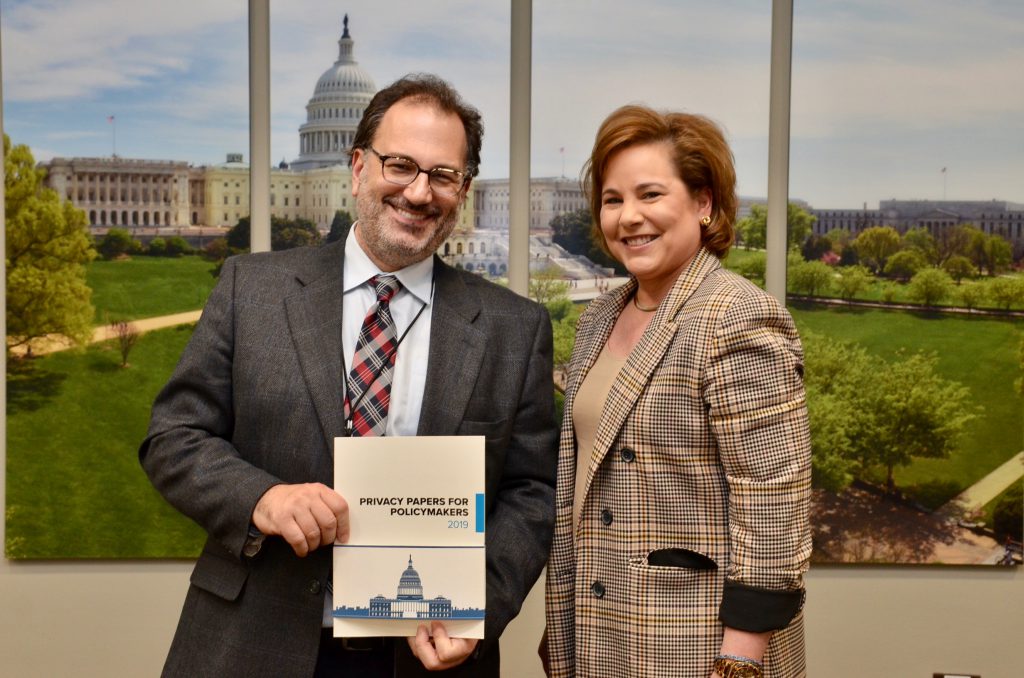
The Future of Privacy Forum’s 10th annual Privacy Papers for Policymakers event was a hit! This year’s event featured a keynote speech by FTC Commissioner Christine S. Wilson and facilitated discussions between the winning authors – Ignacio Cofone, Neil Richards, Margot Kaminski, Gianclaudio Malgieri, Arunesh Mathur, and Paul Ohm – and policy and regulatory staff, including Lisa Goldman, Jared Bomberg, Nasreen Djouini, Morgan Kennedy, and Michelle Richardson, followed by a reception.
During her opening remarks, FTC Commissioner Christine S. Wilson spoke on the importance of implementing federal privacy legislation: “We’ve arrived at a tipping point for privacy… All eyes are on Congress at this defining moment.” Commissioner Wilson cited the need for certain characteristics to be incorporated in the development of federal privacy legislation, including:
The United States’ “traditional harm-focused, risk-based approach to privacy protections”
Requirements for accountability for “both privacy and data security practices on the part of entities that handle data”
The notion that “transparency empowers individuals to make informed choices”
An awareness of potential effects on markets and competition.
Summaries of each of the presenters’ papers can be accessed below.
Ignacio Cofone, Assistant Professor, McGill University Faculty of Law. Antidiscriminatory Privacy.
Neil Richards, Koch Distinguished Professor of Law and Director, Cordell Institute Washington University School of Law. Privacy’s Constitutional Moment.
Margot Kaminski and Gianclaudio Malgieri, Associate Professor of Law, University of Colorado Law; Doctoral Researcher at LSTS, Vrije Universiteit Brussels. Algorithmic Impact Assessments Under the GDPR: Producing Multi-Layered Explanations.
Arunesh Mathur, Graduate Student, Princeton University. Dark Patterns at Scale: Findings from a Crawl of 11K Shopping Websites.
Paul Ohm, Professor of Law and Associate Dean, Georgetown University Law Center. The Many Revolutions of Carpenter.
In addition to the presentations and reception, we recorded short video interviews with each of the presenting authors. We will add new videos to this post every week. Check them out below:
Paul Ohm
Neil Richards
Ignacio Cofone
Margot Kaminski
Arunesh Mathur
Gianclaudio Malgieri
The goal of the Privacy Papers for Policymakers project is to put diverse academic perspectives in front of policymakers to inform the development of privacy legislation. You can view all of this year’s award-winning papers on our website.
Call for Public Comments: Resources for Companies Sharing Personal Data with Academic Researchers
In June 2019, FPF launched the Corporate-Academic Data Stewardship Research Alliance, a peer-to-peer network of private companies that share the goal of facilitating privacy-protective data sharing between businesses and academic researchers. The Alliance has worked to support data sharing efforts, help address and mitigate challenges that create barriers to sharing, and promote responsible and privacy-protective practices that enable more data sharing between industry and academic researchers.
FPF Senior Fellow Mike Hintze has been leading the project, working with 25 prominent organizations to develop usable, privacy-focused resources for companies that share personal data with academic researchers.
Today, FPF releases two resources in working form:
Contract guidelines to help establish meaningful safeguards and set clear responsibilities between companies and researchers.
In the spirit of openness and collaboration, FPF invites public comments from companies, researchers, privacy experts, and all other interested individuals and stakeholders regarding these resources.
Following the comment period, FPF will publish revised versions of these two documents so that companies and researchers can use them to help facilitate responsible and protective data sharing.
How to Comment:
Please email your feedback to: [email protected]. Please submit your feedback no later than Thursday, April 30, 2020.
FPF Submits Written Statement to the U.S. House Committee on Financial Services Task Force on AI
This week, Future of Privacy Forum (FPF) Senior Counsel and Director of AI & Ethics Brenda Leong submitted a written statement on the use of artificial intelligence and machine learning-based applications in financial products and services. Addressed to the House Committee on Financial Services Task Force on Artificial Intelligence, the statement explores how to protect AI and ML-based financial systems from the impact of undesired or unintended bias.
“Financial services organizations have the responsibility, both legally and ethically, to treat their customers, whether other businesses or individuals, fairly and equally,” wrote Leong. “As more players in this industry employ AI systems in more use cases, it is incumbent on them to ensure that their algorithms are fair and explainable.”
In the statement, Leong describes beneficial ways that financial institutions are currently using AI, such as combating fraud or extending credit to traditionally underserved individuals. She also identifies a few factors that can present fairness and equity concerns that are unique to or heightened by processing within an AI or ML-based system; and identifies the technical, policy, regulatory and legislative actions that can help mitigate risk and bias from the use of these systems.
“While ML and AI are technologies thought of as completely ‘other’ from human thinking, they are so far still always based on algorithms and models created by people,” wrote Leong. “Thus, these algorithms are prone to incorporating the biases of their designers, as well as the biases of the systems they’re designed to serve, because the only data available to train them already reflects decades or even centuries of inequality.”
She prompts legislators to take caution when taking new action to legislate AI, since existing laws and regulations already apply, including legislation protecting consumers from unfair or misleading trade practices, labor and employment laws, applicable privacy laws, and the entire regulatory structure around financial services.
As Congress continues to work toward drafting and passing a comprehensive national privacy law, state legislators are not slowing down. In Washington State, a new comprehensive privacy law is moving quickly: last week, the Washington Privacy Act (SSB 6281) was voted out of the Washington Senate Ways & Means Committee, and appears likely to be voted on by the Senate. If approved, it will reach the House, which is currently considering (and amending) an almost identical companion bill. The deadline for the bill to be voted on by both Senate and House (including, if applicable, resolving any differences) is March 12, 2020.
FPF commented at a recent public hearing that, if passed into law, the Washington Privacy Act (as represented by Senator Carlyle’s SSB-6281) would be a significant achievement for US privacy legislation. We have previously noted that the WPA would incorporate protections that go beyond those in the California Consumer Privacy Act, the only existing comprehensive consumer privacy law in the United States.
Is the Washington Privacy Act a good model for U.S. legislation? Lawmakers should consider:
How well do its provisions align with the EU’s General Data Protection Regulation (GDPR), the current “gold standard” for global privacy law?
How well does it align with, or go beyond, the California Consumer Privacy Act (CCPA)?
How well does it align with this year’s new California Ballot Initiative? The upcoming California Privacy Rights Act of 2020 (CPRA), if certified for the 2020 ballot in California, would significantly raise the bar for federal and state privacy protections.
Finally, how strong are the provisions of the 2020 Washington Privacy Act compared to last year’s 2019 version in Washington that narrowly failed to pass? Lawmakers should consider the extent to which the bill addresses (or does not address) significant weaknesses in last year’s 2019 Washington Privacy Act (including in the scope of individual rights, protections for sensitive data, and facial recognition provisions).
FPF has created the following charts to compare key elements of the current California Consumer Privacy Act (CCPA); the upcoming 2020 California Ballot Initiative (CPRA); the EU General Data Protection Regulation (GDPR); the WPA of 2019 (Senate Bill 5376); and the WPA of 2020 (Substitute Senate Bill 6281). The following charts take into account the following key features of all laws: (1) jurisdictional scope; (2) definitions and structure; (3) pseudonymous data; (4) individual rights; (5) obligations on companies; (6) facial recognition provisions; and (7) preemption and enforcement.
The 2020 Washington Privacy Act (SSB-6281) would govern legal entities in Washington that collect data from Washington residents. Although narrower in scope than the GDPR, the WPA contains a significantly broader scope and territorial reach than the CCPA. Unlike the CCPA (which governs for-profit businesses), the WPA would also govern non-profit organizations, including public charities and foundations. In some cases, the WPA would even govern entities that do not “conduct business” in Washington, if they produce products or services “targeted to” residents of Washington.
EU GDPR
CCPA
CA Ballot Initiative
WPA 2019
WPA 2020
Who can exercise rights?
Natural persons (“data subjects”)
California residents
California residents
Washington residents
Washington residents
Who has obligations?
All govt and non-govt legal entities and individuals established in the EU or offering goods or services to EU residents
For-profit businesses that “[do] business in the State of California” and meet thresholds (below)
For-profit businesses that “[do] business in the State of California” and meet thresholds (below)
Non-govt legal entities that “conduct business in Washington or produce products or services that are intentionally targeted to residents of Washington.”
Non-gov’t legal entities that “conduct business in Washington or produce products or services that are targeted to residents of Washington.”
Thresholds
None. However, there is a limited small-business exemption for certain obligations (see e.g. Art. 30(5))
$25 million annual revenue; or 50,000+ consumers; or 50% of annual revenue derived from selling consumers personal data
$25 million annual revenue; or 100,000+ consumers; or 50% of annual revenue derived from selling or sharing consumers’ personal data
100,000+ consumers; or derives 50%+ annual revenue from the sale of personal data and processes or controls personal data of 25,000+ consumers
100,000+ consumers during a calendar year; or derives 50%+ annual revenue from the sale of personal data and processes or controls personal data of 25,000+ consumers
2. DEFINITIONS AND STRUCTURE
The 2020 Washington Privacy Act (SSB-6281) contains key terms and an overall structure that closely aligns with the GDPR. It would define personal data broadly as “any information that is linked or reasonably linkable to an identified or identifiable natural person.” This definition is in line with long-standing global norms; for example, personal data was defined similarly as early as 1981 in the text of Convention 108, the first binding international data protection agreement. The 2020 WPA also contains different obligations for “controllers” and “processors,” with narrow CCPA-like exemptions for “de-identified” data and “publicly available information.”
EU GDPR
CCPA
CA Ballot Initiative
WPA 2019
WPA 2020
Broad definition of covered data
Y
Y
Y
Y
Y
“Controllers” & “Processors”
Y
Y (“businesses” and “service providers”)
Y (“businesses” and “service providers”)
Y
Y
Excludes “de-identified” data
Y *
Y
Y
Y
Y
Excludes “publicly available information”
N
Y
Y
Y
Y
* The GDPR defines personal data very broadly. (Art. 4(1)). Its provisions do not apply to data which does not relate to an “identified or identifiable person” or to personal data “rendered anonymous in such a manner that the data subject is no longer identifiable.” (Recital 26).
3. PSEUDONYMOUS DATA
The 2020 Washington Privacy Act treats “pseudonymous data” differently than other covered data. Under the WPA, pseudonymous data – data that “cannot be attributed to a specific consumer without the use of additional information” – is exempted from access, deletion, and correction rights, but not from opt-outs of sale, profiling, or targeted advertising. This provides flexibility for companies processing data that is less identifiable (and therefore harder to associate with individuals in order to fulfill their requests) but still carries some risks to privacy or autonomy. For example, pseudonyms are frequently used in large datasets to conduct scientific research (e.g., in a HIPAA Limited Dataset, John Doe = 5L7T LX619Z).
In contrast, other U.S. laws do not explicitly codify different obligations for pseudonymous data. In practice, however, there is a growing consensus that U.S. privacy law will need to reflect the practical challenges of dealing with data that falls along a spectrum of identifiability. For example, in practice under the CCPA, individual rights to access, delete, or correct their data are almost always more limited for pseudonymous data due to the challenges with (1) linking the request to the data the company holds; and (2) verifying that the request is authentic and that disclosure or deletion is being conducted on behalf of the right person. (For more, see the California Attorney General’s ongoing CCPA rulemaking efforts).
In the EU, the GDPR explicitly recognizes that pseudonymization of personal data decreases risks to the rights and freedoms of individuals (see Recital 28). The GDPR also exempts controllers from complying with individual requests to exercise rights of access and deletion (erasure) when identification in a dataset would require the controller to acquire additional information, unless the individuals themselves provide additional information to help re-identification (see Article 11). Pseudonymization is also considered an important safeguard for the GDPR’s “privacy by design” requirements in Article 25 and for data security measures in Article 32.
EU GDPR
CCPA
CA Ballot Initiative
WPA 2019
WPA 2020
Recognizes pseudonymous data
Y *
Indirect **
Indirect **
N
Y
* More precisely, the GDPR recognizes “pseudonymization” as a method to decrease privacy risks and comply with certain obligations (see description above). ** Indirectly, individual rights to access and delete pseudonymous data in California may be limited in practice due to challenges with verifying consumer requests (see description above).
4. INDIVIDUAL RIGHTS
The WPA would codify individual rights for residents of Washington that go beyond both CCPA and the bill introduced in Washington in 2019. For instance, it would offer consumers a right to correct inaccurate data and to exercise broader rights to opt out of not only “sale” but also “profiling” and “targeted advertising.” In comparison, the CCPA does not require an opt out of certain targeted advertising practices if they can be conducted without “selling” data (a limitation that would be eliminated in the Ballot Initiative). Last year’s Washington bill contained a right to object to processing for targeted advertising, but would have allowed other kinds of data processing if outweighed by the interests of the company. The WPA would also grant consumers additional protections by requiring companies to establish internal appeals processes, paralleling certain procedural elements of the GDPR.
Finally, the WPA would require opt-in consent for collection of “sensitive information.” This includes, for example, racial or ethnic origin, biometric data, sexual orientation, or mental or physical health condition or diagnosis. Heightened protection for sensitive data largely aligns with the Ballot Initiative and the GDPR, which requires either “explicit consent” or a very narrow and specifically prescribed justification to process “special categories of data” (see Article 9). Notably, the 2020 WPA also includes “specific geolocation”as a type of sensitive data that requires opt-in consent. This aligns with the Ballot Initiative, but in comparison, under the GDPR, geolocation data can be processed in some situations without consent where other strong safeguards apply (see e.g. guidance on location data collected through Wi-Fi Analytics). In other cases, EU privacy laws like the ePrivacy Directive may apply.
EU GDPR
CCPA
CA Ballot Initiative
WPA 2019
WPA 2020
Right to Access
Y
Y
Y
Y
Y
Right to Correct
Y
N
Y
Y
Y
Right to Delete
Y
Y
Y
Y
Y
Right to Portability
Y
Y
Y
Y
Y
Internal Appeals Processes
Y *
N
N
N
Y
Opt out of “Sale”
Y **
Y
Y
N
Y
Out Out for “Targeted Advertising”
N ***
Y
Y
Y
Opt Out of “Profiling”
N
N
N
Y
Opt In Consent for Sensitive Data
Y
N
Y
N ****
Y
* Companies engaged in high-volume or high-risk processing must appoint a Data Protection Officer (DPO) who handles requests, communications, and appeals (Article 37, Article 38, and Article 39). ** An individual can object to any processing of their personal data conducted pursuant to certain lawful bases, at which point the controller may no longer process the data unless it demonstrates “compelling legitimate grounds” to override that person’s interests, rights, and freedoms (Article 21). If such processing is conducted with consent, the consent must be easy to withdraw at any time (Article 7.3). Finally, the GDPR includes an absolute right to object to “direct marketing.” (Article 21.2). *** The CCPA does not restrict targeted advertising if it can be conducted without “selling” data. In contrast, the Ballot Initiative contains a broader opt-out provision (of both “sale” and “sharing”) and specifically limits service providers from engaging in any “cross-context behavioral advertising.” **** Except where consent could be used as a way for a company to engage in “high risk” processing, as determined by risk assessments. (s8(3)).
5. OBLIGATIONS ON COMPANIES
After the CCPA passed in 2018, it was widely criticized by privacy advocates for placing most of the burden on consumers to exercise their rights, without containing strong restrictions on the collection or uses of data. The California Ballot Initiative would go significantly further than CCPA by incorporating additional consumer rights and restrictions on the collection and use of “sensitive data.” The WPA similarly places additional obligations on companies to act as responsible stewards of information, including mandated risk assessments for high-risk activities. Neither would go as far as the GDPR, which requires that companies have a “lawful basis” to collect data at all, where a “lawful basis” can include, for example, consent, fulfillment of a contract, or “legitimate interests” (for more, see FPF’s report: Deciphering Legitimate Interests).
Both the California Ballot Initiative and the 2020 Washington Privacy Act incorporate elements of data minimization, purpose limitation, and avoidance of “secondary uses.” Neither is as restrictive as the provisions in the GDPR’s Article 5. However, the Ballot Initiative would require that a business’s collection and use of data be “reasonably necessary and proportionate to achieve the purposes for which [it was] collected or processed . . . and not further processed in a manner that is incompatible with those purposes.” (1798.100c). In comparison, the 2020 Washington Privacy Act would require that data collection be “limited to what is reasonably necessary” as well as “adequate, relevant, and limited” in relation to “the purposes for which such data are processed, as disclosed to the consumer,” and prohibit further processing that is not “compatible with” those purposes (absent consent) (Section 8).
EU GDPR
CCPA
CA Ballot Initiative
WPA 2019
WPA 2020
Lawful Bases for Collection
Y
N
N
N
N
Privacy Policies
Y
Y
Y
Y
Y
Risk Assessments for High-Risk Activities
Y
N
N
Y
Y
Data Minimization
Y (strongest)
N
Y
N
Y
Purpose Limitation
Y (strongest)
N
Y
N
Y
Duty to Avoid Secondary Use
Y (strongest)
N
Y
N
Y
Security Requirements
Y
Y
Y
Y
Y
Non-Discrimination
Y (Indirectly)*
Y
Y
N
Y
* The GDPR does not include an explicit provision stating that a data subject must not be discriminated against on the basis of their choices to exercise rights. However, it is implicit from other principles of the GDPR that individuals must be protected from discrimination on these grounds. (Article 5, Article 13, Article 22, and elements of “freely given” consent and fair processing).
6. FACIAL RECOGNITION PROVISIONS
The current version of the WPA contains special provisions for commercial uses of facial recognition technologies. Such provisions do not directly exist in the GDPR or other comprehensive privacy laws. However, other laws in the US and EU govern facial recognition technologies, whether as category of “sensitive data” (e.g. the Ballot Initiative would require consent for uses of biometric data), or as a form of sensitive data or automated profiling (under the GDPR).
Specifically, the GDPR regulates facial recognition technologies through several provisions. When facial recognition is used for identification purposes, “explicit consent” is required under Article 9, unless a narrow overriding justification applies, like a substantial public interest provided by law. In addition, GDPR imposes obligations for companies engaged in “solely automated decision-making and profiling” (Article 22), both of which can be part of real-world facial recognition use cases (see, e.g., EU guidance on collecting data through video).
Compared to the facial recognition provisions in 2019, the 2020 WPA provisions are significantly stronger. In 2019, the bill that passed the Washington Senate allowed for implied consent for facial recognition: “The placement of conspicuous notice in physical premises . . . [shall] constitute a consumer’s consent to the use of such facial recognition services . . . (Section 14). In contrast, the 2020 version does not permit this – instead, it would require businesses to obtain affirmative opt in consent from consumers prior to their enrollment in a facial recognition system (with narrow, limited exceptions). The 2020 WPA would also require covered entities to enable third-party auditing, and to address inaccuracies identified related to bias and discrimination.
EU GDPR
CCPA
CA Ballot Initiative
WPA 2019
WPA 2020
Protections for Commercial Uses of Facial Recognition
Y (indirectly)
N
Indirectly
Y (limited)
Y (stronger)
7. PREEMPTION AND ENFORCEMENT
The WPA aligns with other privacy laws in that it would preempt local regulations that would govern the same data processing activities. As a result, it would be likely to preempt local regulations for commercial uses of data that fall within the same jurisdictional scope of the law, but might not preempt local regulations of government or municipal entities.
The current WPA would be enforced by the Washington Attorney General. Similarly, the CCPA is enforced by the California Attorney General, whose office is currently engaged in regulatory rulemaking (see California’s draft regulations). The CCPA does not allow for civil enforcement of most of the law’s provisions, but contains a limited private right of action for data breaches. The GDPR allows individuals to exercise rights to “individual redress,” in addition to each EU Member State having their own well-funded Data Protection Authority.
EU GDPR
CCPA
CA Ballot Initiative
WPA 2019
WPA 2020
Preemption
Y
Y
Y
Y
Y
Enforcement by State AG or Government Body (DPA)
Y
Y
Y
Y
Y
Enforcement by Individuals
Y (mix of EU judicial rights & individual redress from regulators)
N (exception for security breaches)
N (exception for security breaches)
N
N *
* Unlike the 2019 WPA, the 2020 WPA has been amended to clarify that it does not override the existing rights of Washington residents to bring actions under Washington State’s Consumer Protection Act (chapter 19.86 RCW) for conduct or behavior that would amount to an unfair or deceptive practice (Section 11). Similarly, residents of California (and many other states) have the ability to bring lawsuits to challenge privacy violations when they violate unfair and deceptive practices (UDAP) state laws.
CONCLUSION
The Senate sponsor of the 2020 WPA, Senator Reuven Carlyle, recently noted: “I don’t think that we’re ever going to be done dealing with the regulatory framework of consumer data and the issue of privacy. We’re living in a new era.” We agree. The United States needs a comprehensive, baseline federal privacy law to set uniform standards and create clarity for companies and strong rights for individuals. In the absence of such a law, the Washington Privacy Act could serve as a useful regulatory model for other states and for Congress that improves upon the CCPA, provides rights to Washington residents, and helps companies build effective data protection programs.
Did we miss anything? Let us know at [email protected] or [email protected] as we continue tracking state and federal developments in privacy legislation.