
Showing results for mbines bet bonus code create xped bangladesh dka
Paradigm Shift in the Palmetto State: A New Approach to Online Protection-by-Design
[…] litigation progresses. However, with an unclear litigation timeline, several newly effective legal obligations, and significant enforcement provisions carrying personal liability for employees, compliance teams may be stuck between two high-stakes options: (1) a risk of insufficient action and consequential liability if entities are slower to come into compliance while monitoring litigation outcomes; or, (2) […]

From Chatbot to Checkout: Who Pays When Transactional Agents Play?
[…] complete more complex, multi-step tasks, and exhibit greater autonomy over how to achieve user goals. As these systems have advanced, technology providers have been exploring the nexus between AI technologies and online commerce, with many launching purchase features and partnering with established retailers to offer shopping experiences within generative AI platforms. In doing so, […]
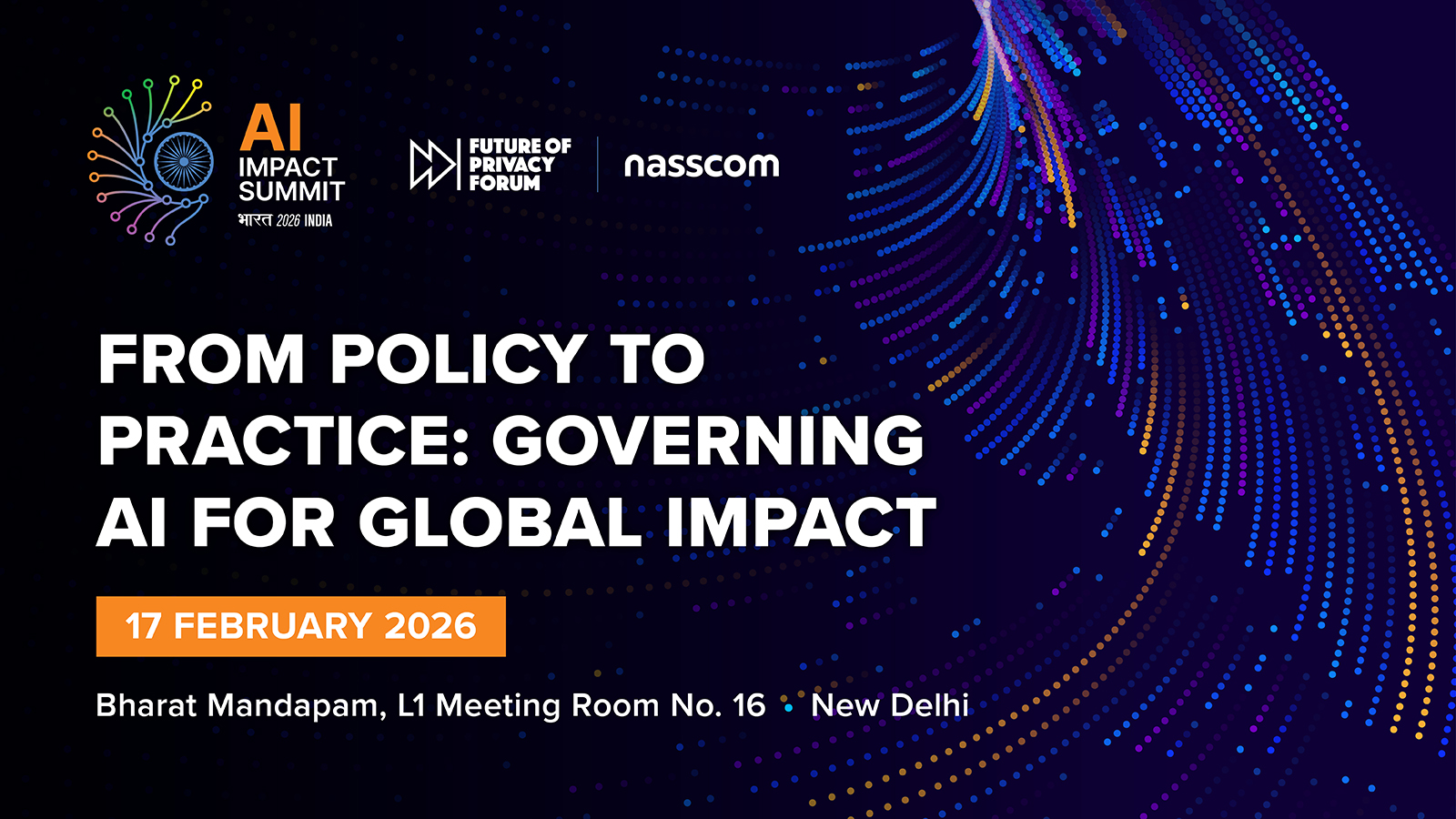
AI IMPACT SUMMIT 2026
[…] an increasingly complex and evolving geopolitical order. For developing countries, AI offers an unprecedented opportunity to leapfrog traditional developmental pathways. The multi-modal and multi-lingual capabilities of AI create new possibilities through which access to benefits can be made available at scale. As a result, AI is seen not merely as a technological advancement but […]

2026: A Year at the Crossroads for Global Data Protection and Privacy
[…] a surprise, without much debate or public consultation, if any. It passed its periodic evaluation in the summer of 2024 with a recommendation for more guidance and better implementation to suit SMEs and harmonization across the EU, as opposed to re-opening or amending it. Moreover, exactly one year ago, in January 2025, at CPDP-Data […]

6 Privacy Tips for the Generative AI Era
[…] topics! Data Privacy Day is a reminder that privacy is a shared responsibility. By bringing together FPF’s expertise in privacy research and policy with Snap’s commitment to building products with privacy and safety in mind, this collaboration aims to help people better understand how AI works and how to use it thoughtfully. snap lens 2026

The RAISE Act vs. SB 53: A Tale of Two Frontier AI Laws
[…] compliance regimes on opposite coasts. Most notably, the original RAISE Act applied only to “large developers,” defined by annual compute spending above $100 million, rather than distinguishing between frontier developers and large frontier developers as SB 53 does. That threshold would have captured a different (and potentially broader) set of companies than the enacted […]

FPF Year in Review 2025
[…] collaboration with Ohio State University, Baylor University, Northeastern University, and Rutgers University. Check out some other highlights of FPF’s AI work this year: Defined the key distinction between two trends emerging in hyperpersonalizing conversational AI technologies through a four-part blog series and accompanying issue brief discussing “personalization” and “personality.” Produced a comprehensive brief breaking […]
Abstract,Big,Data,Visualization.,Big,Data,Code,Representation.,Futuristic,Network
abstract,big,data,visualization.,big,data,code,representation.,futuristic,network

Five Big Questions (and Zero Predictions) for the U.S. Privacy and AI Landscape in 2026
Introduction For better or worse, the U.S. is heading into 2026 under a familiar backdrop: no comprehensive federal privacy law, plenty of federal rumblings, and state legislators showing no signs of slowing down. What has changed is just how intertwined privacy, youth, and AI policy debates have become, whether the issue is sensitive data, […]
FPF Youth Privacy in Australia
[…] PRIVACY IN AUSTRALIA: INSIGHTS FROM NATIONAL POLICY DIALOGUES 1 I. INTRODUCTION _____________________________________________ 2 II. BACKGROUND _____________________________________________ 3 III. KEY THEMES AND TAKEAWAYS _______________________________ 4 1. Bridging Divides Between Privacy, Safety, and Security _____________ 4 2. Learning from Past Technologies to Inform Emerging Ones ___________ 4 3. Encryption, Identity, and the Unintended Consequences of Safety […]