

Contextualizing the Kids Online Safety and Privacy Act: A Deep Dive into the Federal Kids Bill
Co-authored by Nick Alereza, FPF Policy Intern and student Boston University School of Law. With contributions from Jordan Francis. On July 30, 2024, the U.S. Senate passed the Kids Online Safety and Privacy Act (KOSPA) by a vote of 91-3. KOSPA is a legislative package that includes two bills that gained significant traction in the […]
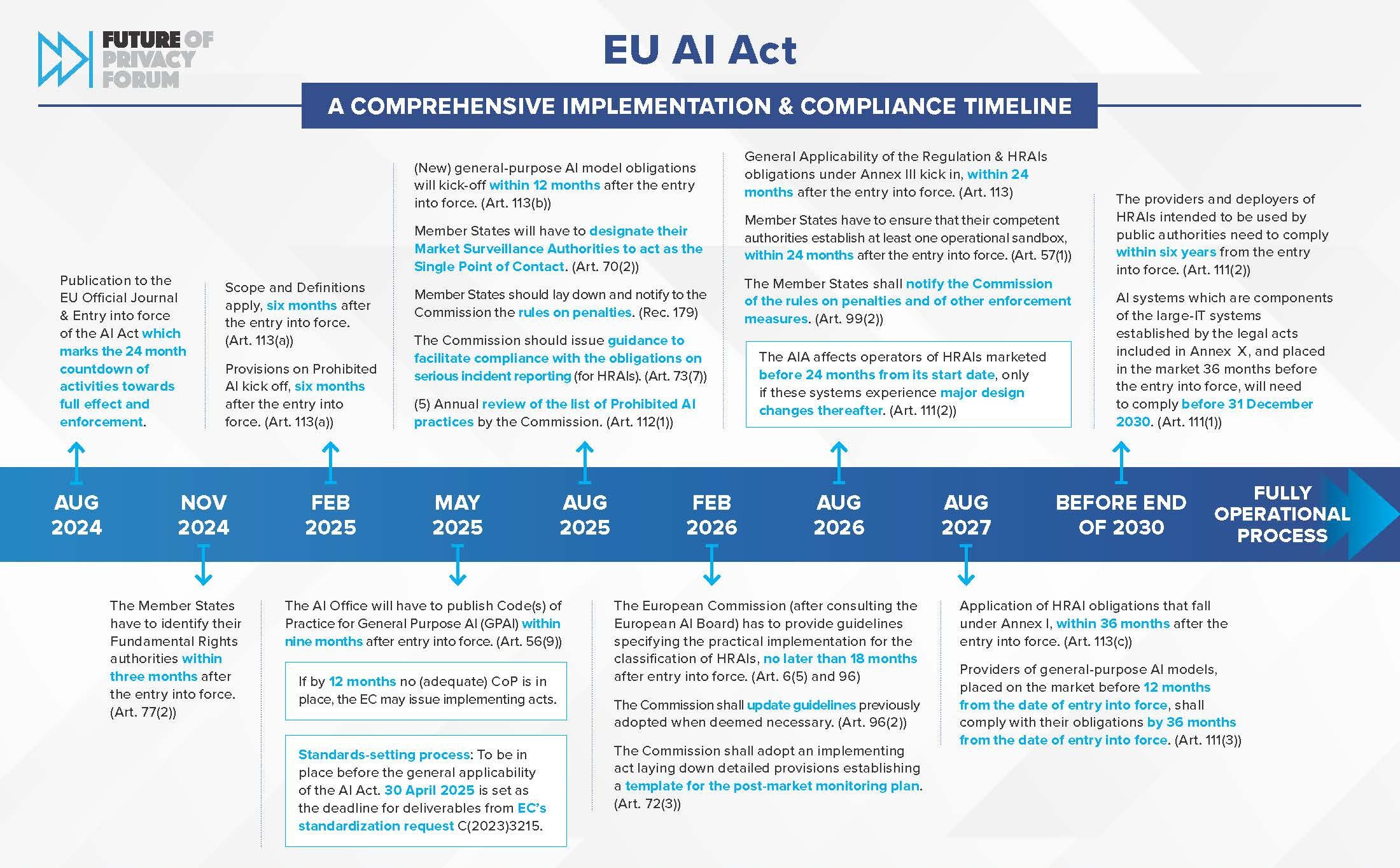
EU AI Act: A Comprehensive Implementation & Compliance Timeline
The EU AI Act is expected to play a crucial role in global development of AI Governance frameworks. We are continually updating a timeline and a list of FPF Resources dedicated to the EU AI Act, as well as to its relationship to the EU GDPR and other privacy and data protection law.

Video-Based Vehicle Safety Systems: Lessons Learned from Commercial Fleets
Recent years have seen an increasing deployment of onboard video-based safety systems in vehicles. While video technologies have been seen already in passenger vehicles, these systems have been even more prominent in the commercial fleet industry (e.g., trucking, delivery, and rental vehicles). Fleet operators have substantial regulatory, financial, and other incentives to implement safety programs, […]

FPF Samsara Video-Based VSS Whitepaper PRINT R1 wBleed
VIDEO-BASED VEHICLE SAFETY SYSTEMS: Lessons Learned from Commercial Fleets J U LY 2 0 2 4 FUTURE OF PRIVACY FORUM | J U LY 2 0 2 4 1 The Future of Privacy Forum (FPF) is a non-profit organization that serves as a catalyst for privacy leadership and scholarship, advancing principled data practices in support […]
Repository for Privacy Enhancing Technologies (PETs)
FPF has long supported the use of technologies as well as research to help better understand what data protection and privacy opportunities and challenges they present. When used appropriately, privacy-enhancing technologies can mitigate individuals’ privacy risks while promoting fairness and enabling socially beneficial data use. Broad adoption of these technologies is only possible if they […]
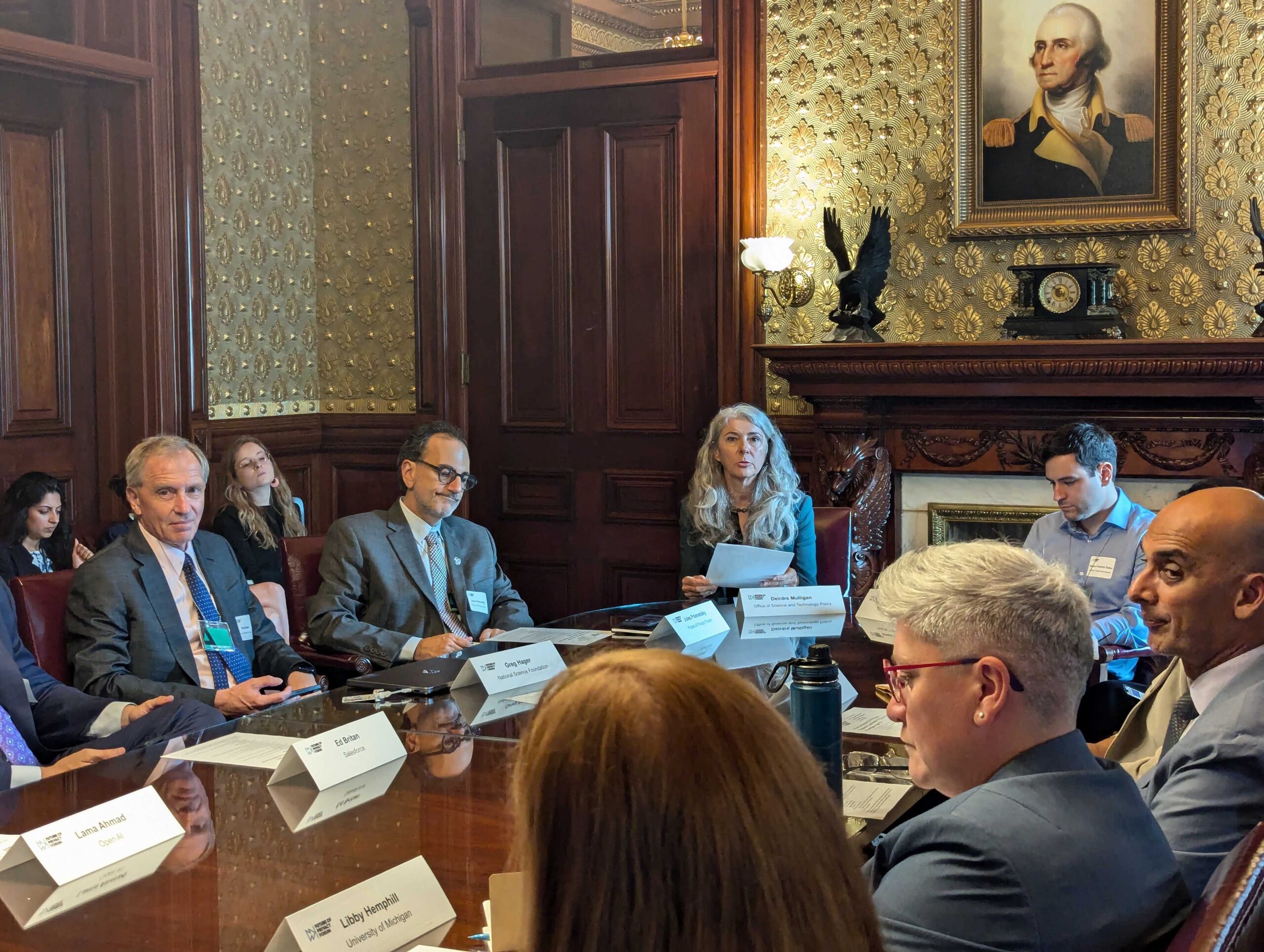
Connecting Experts to Make Privacy-Enhancing Tech and AI Work for Everyone
The Future of Privacy Forum (FPF) launched its Research Coordination Network (RCN) for Privacy-Preserving Data Sharing and Analytics on Tuesday, July 9th. Industry experts, policymakers, civil society, and academics met to discuss the possibilities afforded by Privacy Enhancing Technologies (PETs), the inherent regulatory challenges, and how PETs interact with rapidly developing AI systems. FPF experts […]

Confidential Computing And Privacy: Policy Implications of Trusted Execution Environments
Confidential computing leverages two key technologies: trusted execution environments and attestation services. The technology allows organizations to restrict access to personal information, intellectual property, or sensitive or high-risk data through a secure hardware-based enclave or “trusted execution environment” (TEE). Economic sectors that have led the way in adopting confidential computing include financial services, healthcare, and […]
NEW FPF REPORT: Confidential Computing and Privacy: Policy Implications of Trusted Execution Environments
Written by Judy Wang, FPF Communications Intern Today, the Future of Privacy Forum (FPF) published a paper on confidential computing, a privacy-enhancing technology (PET) that marks a significant shift in the trustworthiness and verifiability of data processing for the use cases it supports, including training and use of AI models. Confidential computing leverages two key […]
FPF Confidential Computing R3
J U LY 2 0 2 4 CONFIDENTIAL COMPUTING AND PRIVACY Policy Implications of Trusted Execution Environments The Future of Privacy Forum (FPF) is a non-profit organization that serves as a catalyst for privacy leadership and scholarship, advancing principled data practices in support of emerging technologies. Learn more about FPF by visiting fpf.org. Samuel Adams […]

A First for AI: A Close Look at The Colorado AI Act
Colorado made history on May 17, 2024 when Governor Polis signed into law the Colorado Artificial Intelligence Act (“CAIA”), the first law in the United States to comprehensively regulate the development and deployment of high-risk artificial intelligence (“AI”) systems. The law will come into effect on February 1, 2026, preceding the March, 2026 effective date […]