
Biometric technology has long been used for security and law enforcement purposes such as national security watch lists, passport controls, criminal fingerprint databases, and immigration processing. Now, however, the private sector increasingly uses these systems as a verification method for authentication that previously required a PIN or password. Apple’s decision to include a fingerprint scanner in the iPhone in 2013 brought new public awareness to possible non-law-enforcement applications of biometric technologies, and the company’s shift to facial recognition access in the most recent models further normalized the concept. Biometric technology continues to be adopted in many sectors, including financial services, transportation, health care, computer systems and facility access, and voting. In many cases, this technology is more efficient, less expensive, and easier to use than traditional alternatives, while also eliminating the need for passwords, which are broadly recognized as an insufficiently secure safeguard for user data. However, as with any digital system, there are privacy concerns around the collection, use, storage, sharing, and analysis of the data that are generated by these systems.


Regulatory Strategies of Data Protection Authorities in the Asia-Pacific Region: 2024, and Beyond
The Asia-Pacific (APAC) region has emerged as a dynamic and rapidly evolving landscape for data protection regulation. As digital economies flourish and cross-border data flows intensify, data protection authorities (DPAs) across the region are grappling with complex challenges posed by technological advancements, changing business practices, and evolving societal expectations regarding privacy. This Report provides a […]
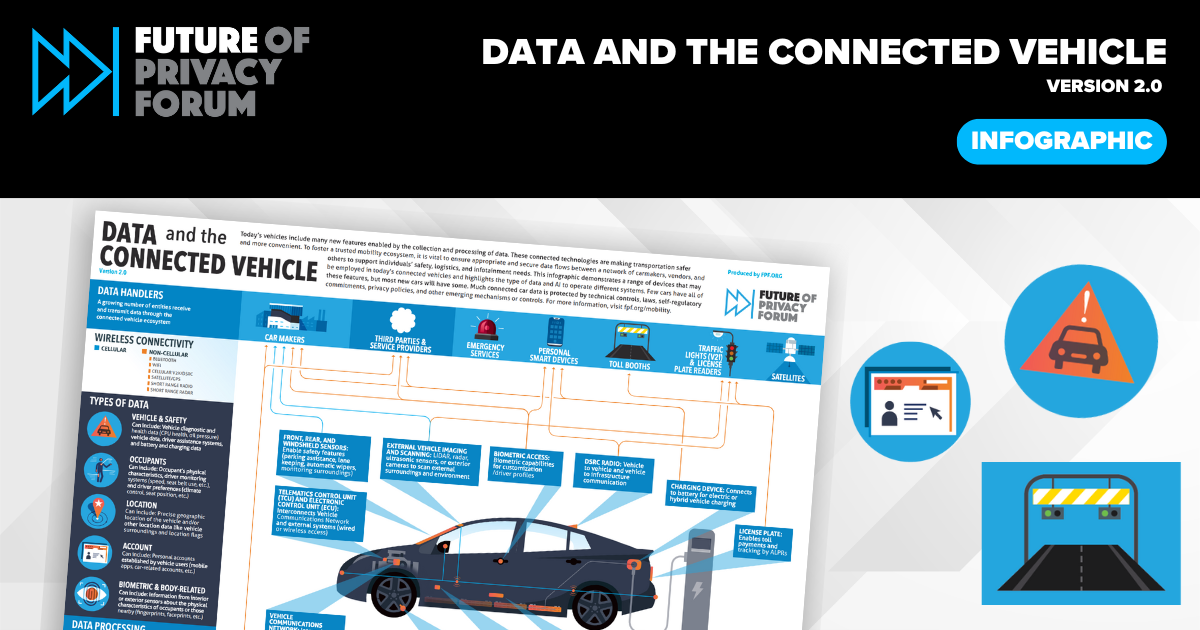
Updated FPF Infographic Explores Data in Connected Vehicles
Today, The Future of Privacy Forum is launching the Data and the Connected Vehicle Infographic 2.0, including new updates to account for the types of data associated with connected vehicles, features in and outside of the vehicle, and data handlers who receive and process data. Lawmakers, manufacturers, privacy professionals, and consumers are actively engaged in […]

Top Six Major Privacy Enforcement Trends: A U.S. Legislation Retrospective
Enforcement activity intensifies as U.S. consumer privacy laws continue to evolve and come into effect. In 2023 and 2024 alone, there have been dozens of enforcement actions at the U.S. federal and state levels, some of which reveal or touch on significant throughlines for privacy policy issues, such as what constitutes a privacy violation or […]
Peak Privacy: Vermont’s Summit on Data Privacy
On June 13, 2024, Governor Phil Scott vetoed H. 121. This marked the first governor veto of a comprehensive privacy bill passed by the state legislature. Immediately prior to the close of the state legislative session on May 10, 2024, the Vermont legislature passed H. 121, “An act relating to enhancing consumer privacy and the […]
The Old Line State Does Something New on Privacy
On April 6, the Maryland Senate concurred with House amendments to SB 541, the Maryland Online Data Privacy Act (MODPA), sending the bill to Governor Moore for signature. If enacted, MODPA could be a paradigm-shifting addition to the state privacy law landscape. While recent state comprehensive privacy laws generally have added to the existing landscape […]

Youth Privacy in Immersive Technologies: Regulatory Guidance, Lessons Learned, and Remaining Uncertainties
As young people adopt immersive technologies like extended reality (XR) and virtual world applications, companies are expanding their presence in digital spaces, launching brand experiences, advertisements, and digital products. While virtual worlds may in some ways resemble traditional social media and gaming experiences, they may also collect more data and raise potential manipulation risks, particularly […]
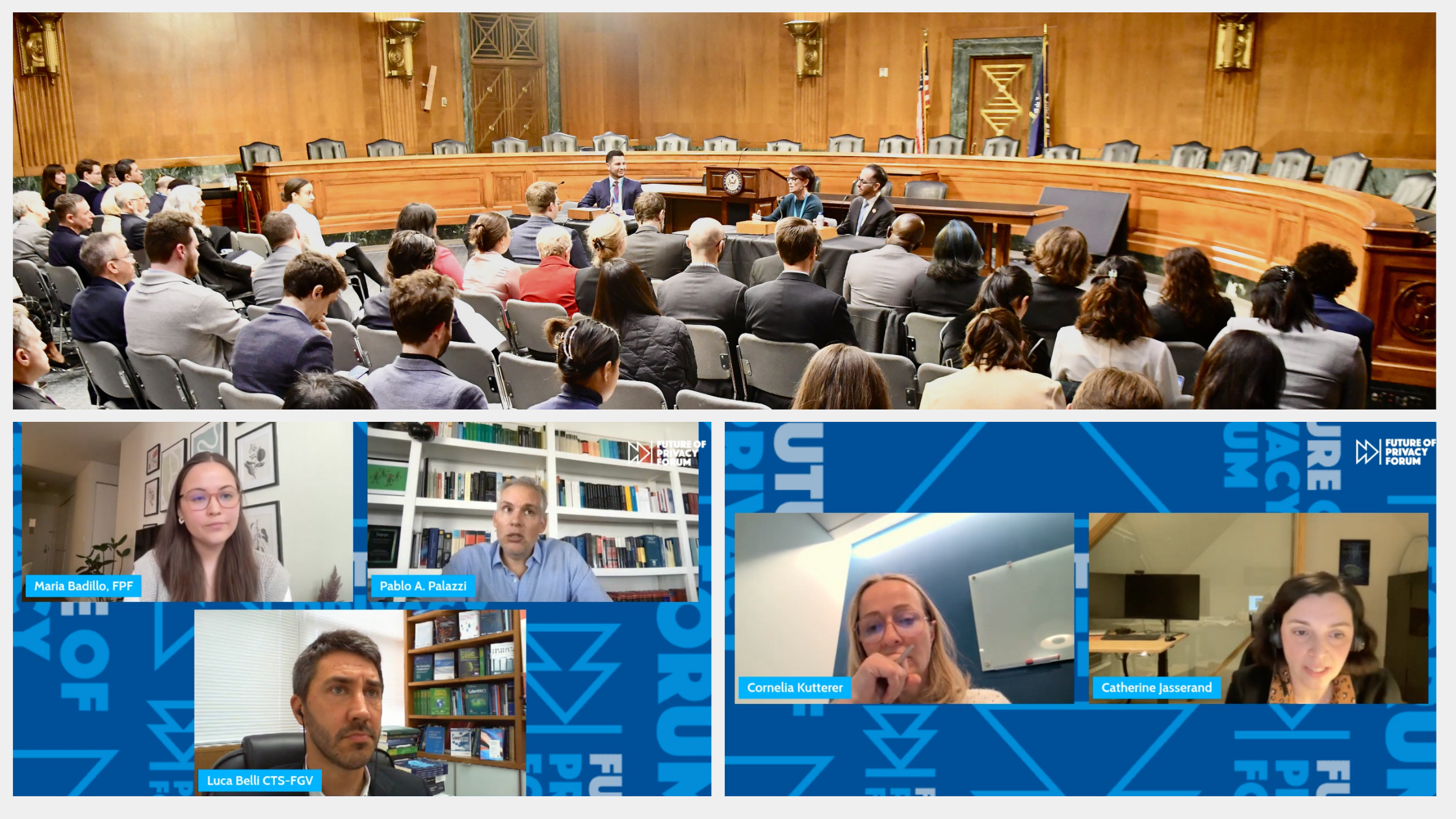
AI Audits, Equity Awareness in Data Privacy Methods, and Facial Recognition Technologies are Major Topics During This Year’s Privacy Papers for Policymakers Events
Author: Judy Wang, Communications Intern, FPF The Future of Privacy Forum (FPF) hosted two engaging events honoring 2023’s must-read privacy scholarship at the 14th Annual Privacy Papers for Policymakers ceremonies. On Tuesday, February 27, FPF hosted a Capitol Hill event featuring an opening keynote by U.S. Senator Peter Welch (D-VT) as well as facilitated discussions […]
Little New About Hampshire
On March 6, 2024, Governor Sununu signed SB 255 into law, making New Hampshire the fourteenth U.S. State to adopt a comprehensive privacy law to govern the collection, use, and transfer of personal data. SB 255 is the second comprehensive privacy law enacted in 2024, the first having been New Jersey’s S332, which was also […]

Event Recap: FPF X nasscom Webinar Series – Breaking Down Consent Requirements under India’s DPDPA
Following the enactment of India’s Digital Personal Data Protection Act 2023 (DPDPA), the Future of Privacy Forum (FPF) and nasscom (National Association of Software and Service Companies), India’s largest industry association for the information technology sector, co-hosted a 2-part webinar series focused on the consent-centric regime under the DPDP Act. Spread across two days (November […]
The Garden State Joins the Comprehensive Privacy Grove
On January 16, 2024, Governor Murphy signed S332 into law, making New Jersey the thirteenth U.S. State to adopt a comprehensive privacy law to govern the collection, use, and transfer of personal data. S332 endured a long and circuitous route to enactment, having been introduced in January 2022 and amended six times before being passed […]