
Research often requires using sensitive data to answer important questions. The ethical collection and analysis of personal information can be challenging to do while still protecting the privacy of the implicated individuals, honoring informed consent, and complying with other legal obligations. The technology, policies, and ethical considerations for researchers are constantly shifting, sometimes making it difficult to keep up. That’s why FPF engages stakeholders across academia and industry to produce recommendations, best practices, and ethical review structures that promote responsible research. Our work is centered around streamlining, encouraging, and promoting responsible research that respects essential privacy and ethical considerations throughout the research lifecycle. FPF works with policymakers to develop legislative protections that support effective, responsible research with strong privacy safeguards, including hosting events that allow policymakers and regulators to engage directly with practitioners from academia, advocacy, and industry.




FPF Files Comments on CPRA Initial Rulemaking
Yesterday, the Future of Privacy Forum filed comments with the California Privacy Protection Agency on the initial rulemaking under the California Privacy Rights Act (CPRA). The CPRA, which comes into effect in 2023, provides protections for sensitive personal information, expands the California Consumer Privacy Act’s opt-out rights, and requires businesses to provide mechanisms for individuals […]

Data Sharing … By Any Other Name
There are many different uses of the term “data sharing” to describe a relationship between parties who share data from one organization to another organization for a new purpose. Some uses of the term data sharing are related to academic and scientific research purposes, and some are related to transfer of data for commercial or government purposes. ..it is imperative that we are more precise which forms of sharing we are referencing so that the interests of the parties are adequately considered, and the various risks and benefits are appropriately contextualized and managed.

Five Things Lawyers Need to Know About AI
Lawyers are trained to respond to risks that threaten the market position or operating capital of their clients. However, when it comes to AI, it can be difficult for lawyers to provide the best guidance without some basic technical knowledge. This article shares some key insights from our shared experiences to help lawyers feel more at ease responding to AI questions when they arise.

Event Report: From “Consent-Centric” Frameworks to Responsible Data Practices and Privacy Accountability in Asia Pacific
On September 16, the Asia-Pacific office of the Future of Privacy Forum (FPF) held its first event following its launch in August 2021. This event was hosted by the Personal Data Protection Commission (PDPC) of Singapore during the very popular “Personal Data Protection week” (PDP Week 2021). The theme of the event was Exploring trends: […]

Brain-Computer Interfaces: Privacy and Ethical Considerations for the Connected Mind
BCIs are computer-based systems that directly record, process, analyze, or modulate human brain activity in the form of neurodata that is then translated into an output command from human to machine. Neurodata is data generated by the nervous system, composed of the electrical activities between neurons or proxies of this activity. When neurodata is linked, or reasonably linkable, to an individual, it is personal neurodata.
Call for Nominations: 12th Annual Privacy Papers for Policymakers
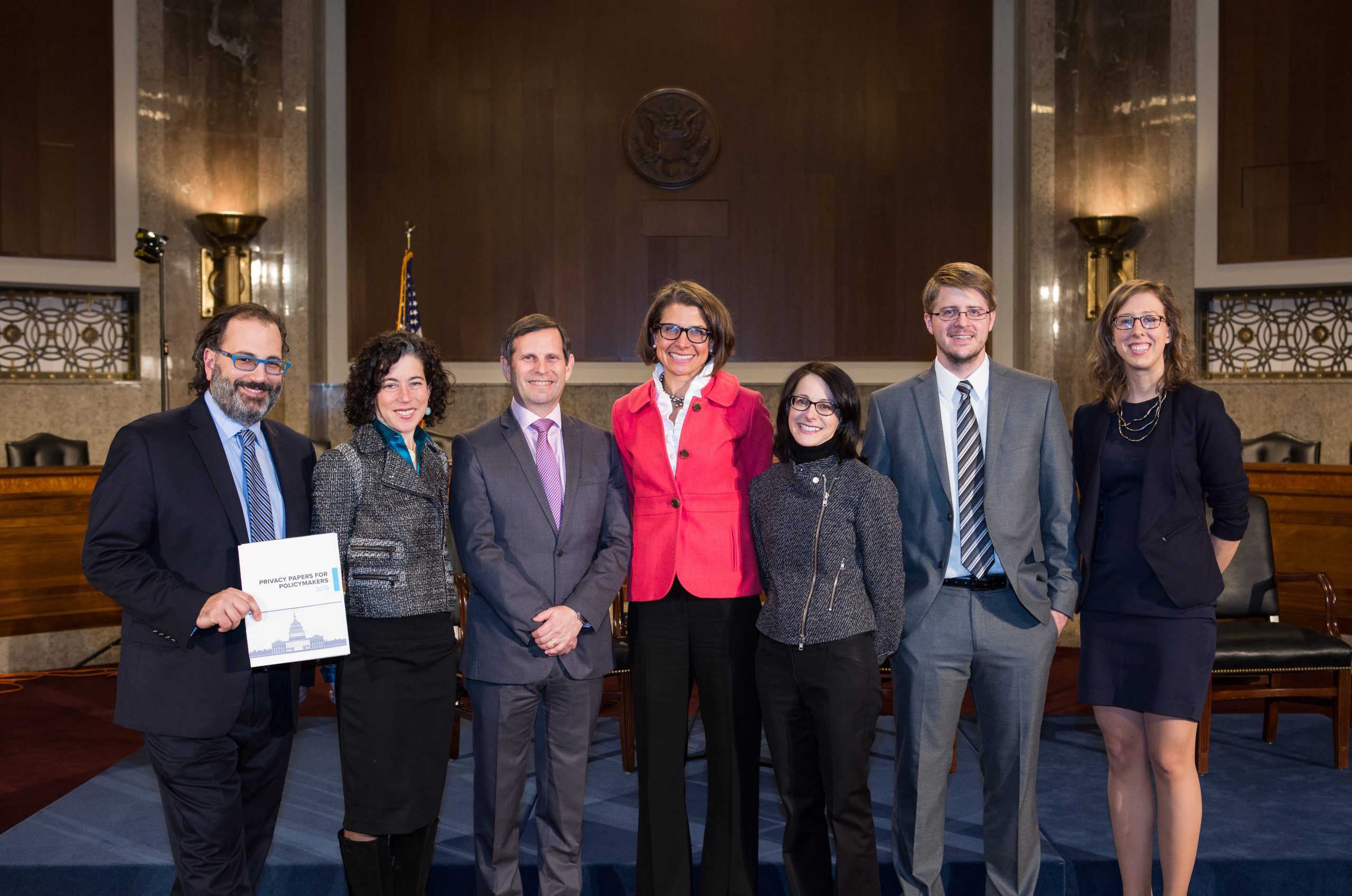
The Future of Privacy Forum invites privacy scholars and authors with an interest in privacy issues to submit finished papers to be considered for FPF’s 12th annual Privacy Papers for Policymakers Award. This award provides researchers with the opportunity to inject ideas into the current policy discussion, bringing relevant privacy research to the attention of the U.S. […]

Joint Project to Explore Limits of Consent in Asia-Pacific Data Privacy Regimes
The Future of Privacy Forum (FPF), a non-profit organization that serves as a catalyst for privacy leadership and scholarship, has partnered with the Asian Business Law Institute (ABLI), a subsidiary of the Singapore Academy of Law (SAL). With this partnership, FPF Asia Pacific and Singapore’s top legal think tank join forces to offer a unique […]

Blog Summary: Ethical Concerns and Challenges in Research using Secondary Data
Digital data is a strategic asset for business. It is also an asset for researchers seeking to answer socially beneficial questions using company held data. Research using secondary data introduces new challenges and ethical concerns for research administrators and research ethics committees, like IRBs. FPF Senior Researcher, AI & Ethics, Dr. Sara Jordan, analyzes some […]

FPF and Leading Health & Equity Organizations Issue Principles for Privacy & Equity in Digital Contact Tracing Technologies
With support from the Robert Wood Johnson Foundation, FPF engaged leaders within the privacy and equity communities to develop actionable guiding principles and a framework to help bolster the responsible implementation of digital contact tracing technologies (DCTT). Today, seven privacy, civil rights, and health equity organizations signed on to these guiding principles for organizations implementing […]

At the intersection of AI and Data Protection law: Automated Decision-Making Rules, a Global Perspective (CPDP LatAm Panel)
On Thursday, 15th of July 2021, the Future of Privacy Forum (FPF) organised during the CPDP LatAm Conference a panel titled ‘At the Intersection of AI and Data Protection law: Automated Decision Making Rules, a Global Perspective’. The aim of the Panel was to explore how existing data protection laws around the world apply to profiling and automated decision making practices.