
Across the United States, evolving data collection and processing practices and advances in artificial intelligence are driving new digital services, technologies, and socially beneficial research – while also raising new opportunities, risks, and questions for individuals and communities. In response, state and federal policymakers are considering new legislative and regulatory frameworks on three interconnected fronts: comprehensive consumer privacy laws that establish baseline rights and protections for personal data across the economy; frameworks that target specific sectors and practices such as automated decisionmaking, biometric identification, companion chatbots, data-driven pricing, data brokerage, frontier AI model safety, genetic data, and health data; and youth-specific privacy and online safety laws that set distinct rules for minors. These three tracks rarely stay in their lanes: a comprehensive privacy law may include AI provisions, an AI safety bill may carve out rules for minors, a youth online safety law may hinge on biometric age verification. Understanding the landscape requires understanding both the individual pieces and how they fit together.
FPF’s U.S. Legislation team provides expert, independent, pragmatic analysis of state and federal legislative and regulatory approaches to privacy, AI, and youth online safety – three distinct but increasingly intertwined issue areas. The team tracks emerging proposals, compares new laws against existing frameworks, analyzes implementation and compliance implications, and helps policymakers and stakeholders understand how legal requirements interact with current technologies, business practices, and data uses.
Through reports, blog posts, legislative and policy analyses, webinars, in-person and virtual peer-to-peer gatherings, and educational programs, FPF helps the broader technology policy and governance community understand the mechanisms and strategies available to protect privacy, promote responsible AI development and deployment, and advance youth online safety. FPF does not typically support or oppose particular bills. Instead, the U.S. Legislation team focuses on explaining the practical and legal implications of proposals – individually and as they interact with one another. This work helps ensure that privacy, AI, and youth safety compliance and policy strategies remain future-looking, adaptable, and workable for the continued, beneficial use of data and AI.
FPF’s U.S. Legislation team is led by Tatiana Rice, Senior Director.





A New Paradigm for Consumer Health Data Privacy in Washington State
The Washington ‘My Health, My Data’ Act (MHMD or the Act) establishes a fundamentally new legal framework within U.S. law to regulate the collection, use, and transfer of consumer health data. Signed into law by Governor Inslee on April 27, MHMD was introduced by request of the Washington Attorney General in response to the Supreme […]

FPF at the 2023 IAPP Global Privacy Summit
Earlier this month, IAPP held its annual Global Privacy Summit (GPS) in Washington, DC. FPF played a major role in bringing together a team of seven renowned privacy experts on 11 panel discussions and varying peer-to-peer roundtables ranging from U.S. privacy law to AI tech and regulation to regional contractual frameworks for data transfers. FPF […]

Tenn. Makes Nine? ‘Tennessee Information Protection Act’ Set to Become Newest Comprehensive State Privacy Law
On Friday April 21, Nashville lawmakers approved the Tennessee Information Protection Act (TIPA) following unanimous votes. Tennessee now joins Iowa, Indiana, and Montana as the four states in 2023 that have advanced baseline privacy legislation governing the collection, use, and transfer of consumer data. TIPA is closely modeled on the Virginia Consumer Data Protection Act […]

The ‘Montana Consumer Data Privacy Act’ Reminds us that Privacy is Bipartisan
On Friday, April 21st, the Montana State Legislature approved the ‘Montana Consumer Data Privacy Act’ (MCDPA) to be sent to the Governor’s desk. If enacted by Governor Gianforte, Montana would join the 6 states that have adopted comprehensive privacy frameworks. Notably, at almost every stage of the legislative process, the MCDPA received unanimous bipartisan support […]
Whither Indiana? Somewhere in the Middle for Consumer Privacy Protection
On April 13, 2023, Indiana Senate Bill 5 unanimously cleared the state legislature. If enacted by Governor Holcomb, Indiana will become the seventh state to enact a baseline consumer privacy law. To help stakeholders assess where Indiana fits into the expanding U.S. state privacy landscape, the Future of Privacy Forum has released a chart comparing […]
FPF CEO Jules Polonetsky Receives IAPP’s Prestigious Privacy Leadership Award
The Future of Privacy Forum (FPF) congratulates Jules Polonetsky on being named the recipient of the International Association of Privacy Professionals (IAPP) 2023 Privacy Leadership Award. Polonetsky received the award during the IAPP Global Privacy Summit 2023 in Washington, D.C. The IAPP Leadership Award is given annually to individuals who “demonstrate an ongoing commitment to […]
FPF Files Comments to Inform New California Privacy Rulemaking Process
On Monday March 27, the Future of Privacy Forum (FPF) filed comments with the California Privacy Protection Agency to inform the Agency’s forthcoming rulemaking to implement the California Privacy Rights Act amendments to the California Consumer Privacy Act’s provisions on cybersecurity audits, risk assessments, and automated decisionmaking. FPF’s comments are directed towards ensuring that individuals […]
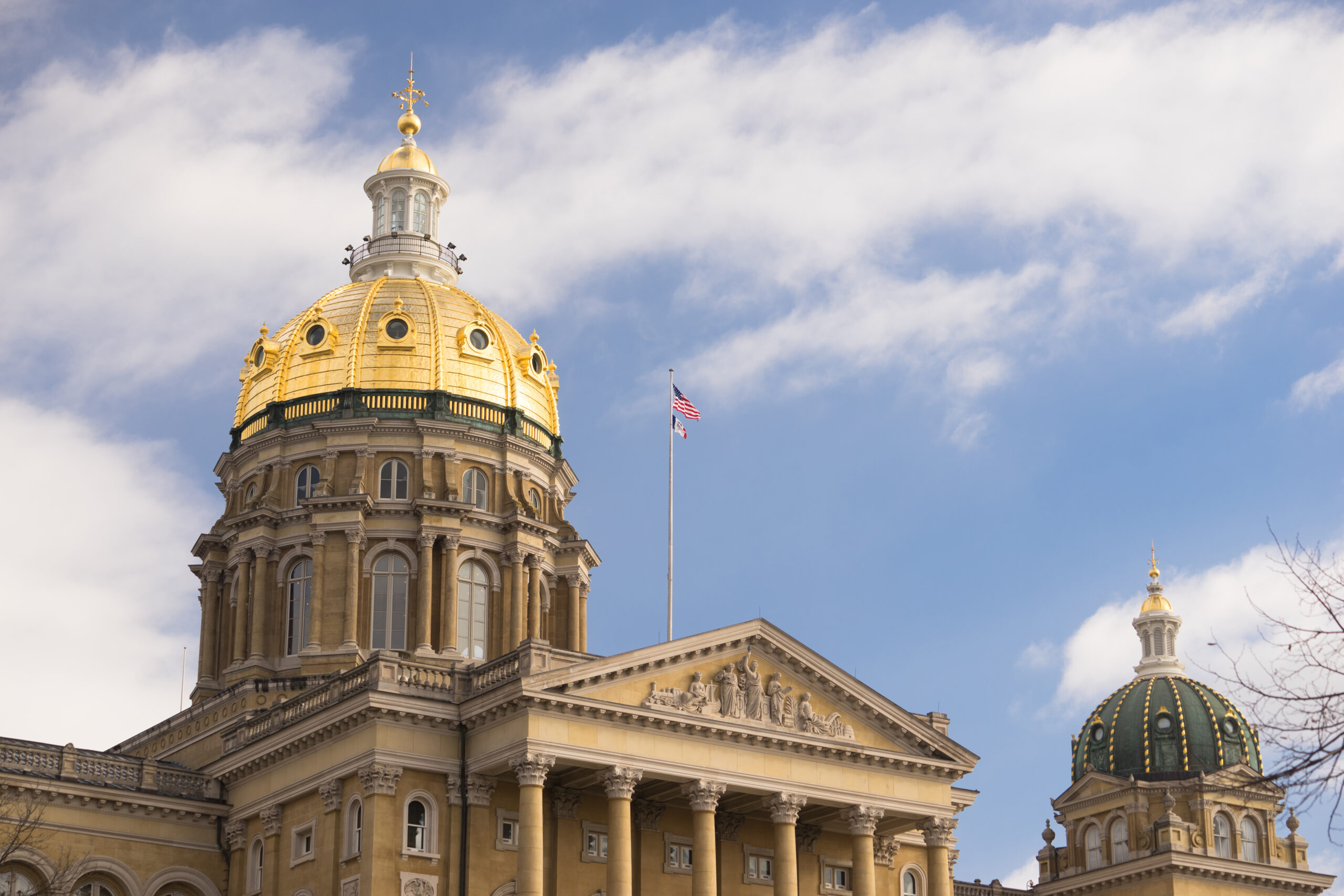
Iowa Senate Advances Comparatively Weak Consumer Privacy Bill
By Keir Lamont & Mercedes Subhani Update: On March 28, Governor Kim Reynolds signed SF 262 into law, making Iowa the 6th state to enact a baseline consumer privacy framework. Lawmakers in Iowa are considering the adoption of a new consumer privacy framework that would fall far short of comparable state privacy laws in terms of […]

FPF Files Comments with the National Telecommunications and Information Administration (NTIA) on Privacy, Equity, and Civil Rights
On March 6, the Future of Privacy Forum filed comments with the National Telecommunications and Information Administration (NTIA) in response to their request for comment on privacy, equity, and civil rights. NTIA’s “Listening Sessions on Privacy, Equity, and Civil Rights,” drew attention to the well-documented and ongoing history of data-driven discrimination in the digital economy. […]

New Report Highlights LGBTQ+ Student Views on School Technology and Privacy
The Future of Privacy Forum and LGBT Tech outline recommendations for schools and districts to balance inclusion and student safety in technology use. Today, the Future of Privacy Forum (FPF), a global non-profit focused on privacy and data protection, and LGBT Tech, a national, nonpartisan group of LGBT organizations, academics, and high technology companies, released […]