
Nothing to Hide: Tools for Talking (and Listening) About Data Privacy for Integrated Data Systems
Data-driven and evidence-based social policy innovation can help governments serve communities better, smarter, and faster. Integrated Data Systems (IDS) use data that government agencies routinely collect in the normal course of delivering public services to shape local policy and practice. They can use data to evaluate the effectiveness of new initiatives or bridge gaps between public services and community providers.
Future of Privacy Forum and Actionable Intelligence for Social Policy Release ‘Nothing to Hide: Tools for Talking (and Listening) About Data Privacy for Integrated Data Systems’
Washington, DC – Today, Future of Privacy Forum and Actionable Intelligence for Social Policy released Nothing to Hide: Tools for Talking (and Listening) About Data Privacy for Integrated Data Systems. Nothing to Hide provides governments and their partners working to integrate data for policy and program improvement with the necessary tools to lead privacy-sensitive, inclusive engagement efforts. In addition to a narrative step-by-step guide to communication and engagement on data privacy, the toolkit is supplemented with action-oriented appendices, including worksheets, checklists, exercises, and additional resources.
FPF Privacy Book Club – The Known Citizen: A History of Privacy in Modern America (December 5, 2018)
We are excited to share The Known Citizen: A History of Privacy in Modern America by Professor Sarah E. Igo was chosen as the popular favorite by our readers. We are also excited that Professor Igo will be joining us for the December book club to introduce her book and answer questions.

The Privacy Expert's Guide to AI And Machine Learning
Today, FPF announces the release of The Privacy Expert’s Guide to AI and Machine Learning. This guide explains the technological basics of AI and ML systems at a level of understanding useful for non-programmers, and addresses certain privacy challenges associated with the implementation of new and existing ML-based products and services.

Learning from Europe but looking beyond for privacy law
FPF’s CEO, Jules Polonetsky, recently published an opinion piece in The Hill that discussed the need for comprehensive federal privacy legislation.

FPF Perspective: Limit Law Enforcement Access to Genetic Datasets
Today, researchers published a paper detailing how governments can use public genetic databases to identify criminal suspects. These activities raise real questions about when it’s appropriate for law enforcement to analyze genetic information, and how best to protect individuals whose genetic data has been analyzed as part of a commercial service, but who are not accused of a crime.

Privacy Features of iOS 12 and MacOS Mojave
With much media attention focused on new Apple hardware, including new iPhones, Apple also released updated versions of its mobile and desktop operating systems for public download this week. The software upgrades (iOS 12 for iPhones, and macOS 10.14 Mojave for desktop Macs) bring many new features, such as Group FaceTime, options to customize notifications, and aesthetic changes such as an optional desktop “Dark Mode.
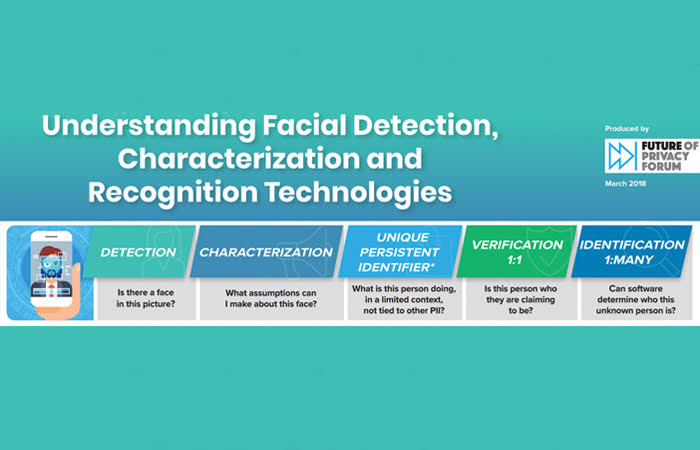
FPF Releases Understanding Facial Detection, Characterization, and Recognition Technologies and Privacy Principles for Facial Recognition Technology in Commercial Applications
These resources will help businesses and policymakers better understand and evaluate the growing use of face-based biometric technology systems when used for consumer applications. Facial recognition technology can help users organize and label photos, improve online services for visually impaired users, and help stores and stadiums better serve customers. At the same time, the technology often involves the collection and use of sensitive biometric data, requiring careful assessment of the data protection issues raised. Understanding the technology and building trust are necessary to maximize the benefits and minimize the risks.

FPF Launches Virtual Privacy Book Club
We are pleased to announce the launch of our Privacy Book Club! The FPF Privacy Book Club will provide members the opportunity to read a wide range of books — privacy, data, ethics, academic works, and other important data relevant issues — and have an open discussion of the selected literature.
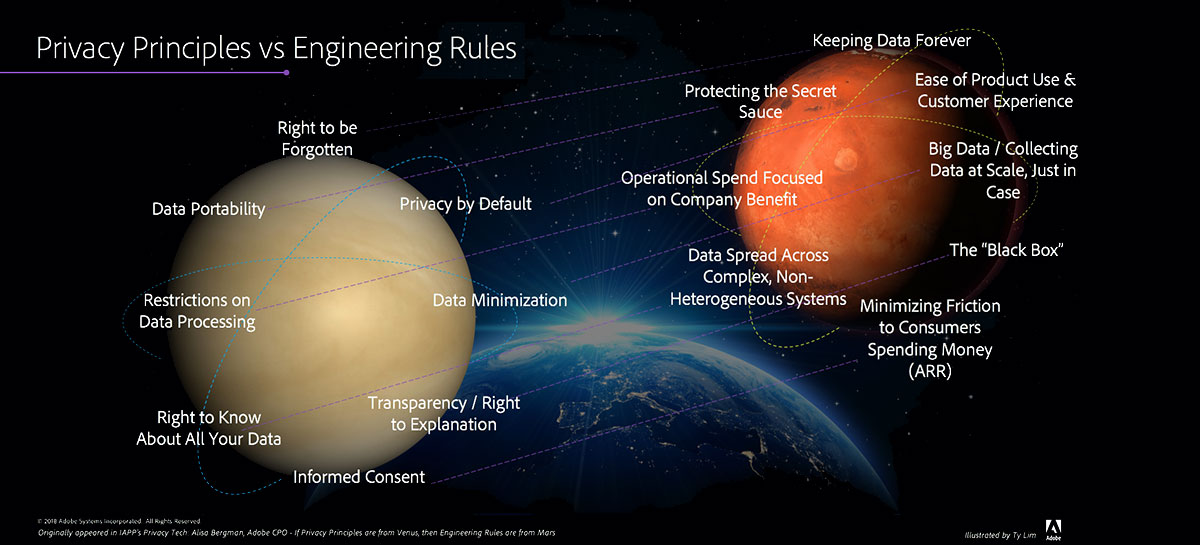
If privacy principles are from Venus, then engineering rules are from Mars
FPF Advisory Board member, Alisa Bergman, Vice President, Chief Privacy Officer at
Adobe Systems, recently wrote an article in the IAPP Tech Privacy Advisor that we think is very useful. The article started from a presentation Bergman did for Adobe engineers.