

FPF CHDPP Data Set Infographic
Consumer Health Privacy Notices by the Numbers MHMDA and NV SB370 require entities to maintain a privacy policy for health data. Organizations may be subject to either or both of these requirements, as well as related mandates found in other U.S. privacy laws. FPF has surveyed 185 company websites across various industries and sectors, focusing […]
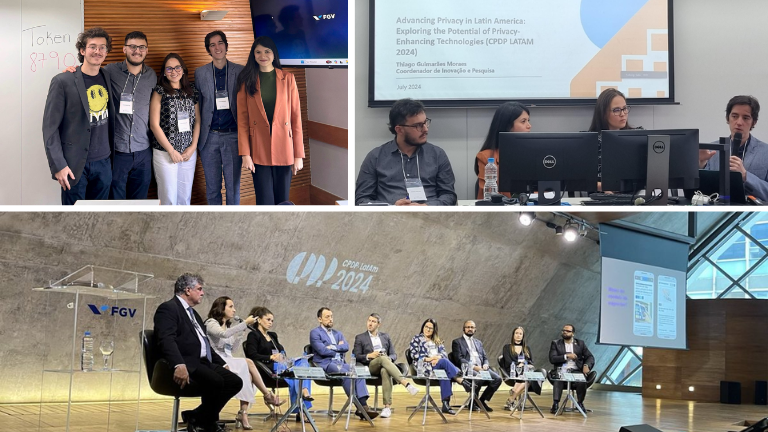
CPDP LatAm 2024: What is Top of Mind in Latin American Data Protection and Privacy? From data sovereignty, to PETs
On July 17-18, the fourth edition of the Computers, Privacy, and Data Protection Conference Latin America (CPDP LatAm) was held in Rio de Janeiro, Brazil. This year’s theme was on “Data Governance: From Latin America to the G20,” highlighting Brazil’s current presidency of the international cooperation forum. As in previous years, FPF participated on the […]

FPF Submits Comments to the California Civil Rights Council on Proposed Modifications to the Employment Regulations Regarding Automated-Decision Systems
FPF is pleased to submit comments to the California Civil Rights Council regarding their Proposed Modifications to the Employment Regulations Regarding Automated-Decision Systems. By modernizing the state’s current employment regulations, the California Civil Rights Council has an important opportunity to influence how existing civil rights laws will apply to emerging technologies like AI. Ideally, these […]

Contextualizing the Kids Online Safety and Privacy Act: A Deep Dive into the Federal Kids Bill
Co-authored by Nick Alereza, FPF Policy Intern and student Boston University School of Law. With contributions from Jordan Francis. On July 30, 2024, the U.S. Senate passed the Kids Online Safety and Privacy Act (KOSPA) by a vote of 91-3. KOSPA is a legislative package that includes two bills that gained significant traction in the […]
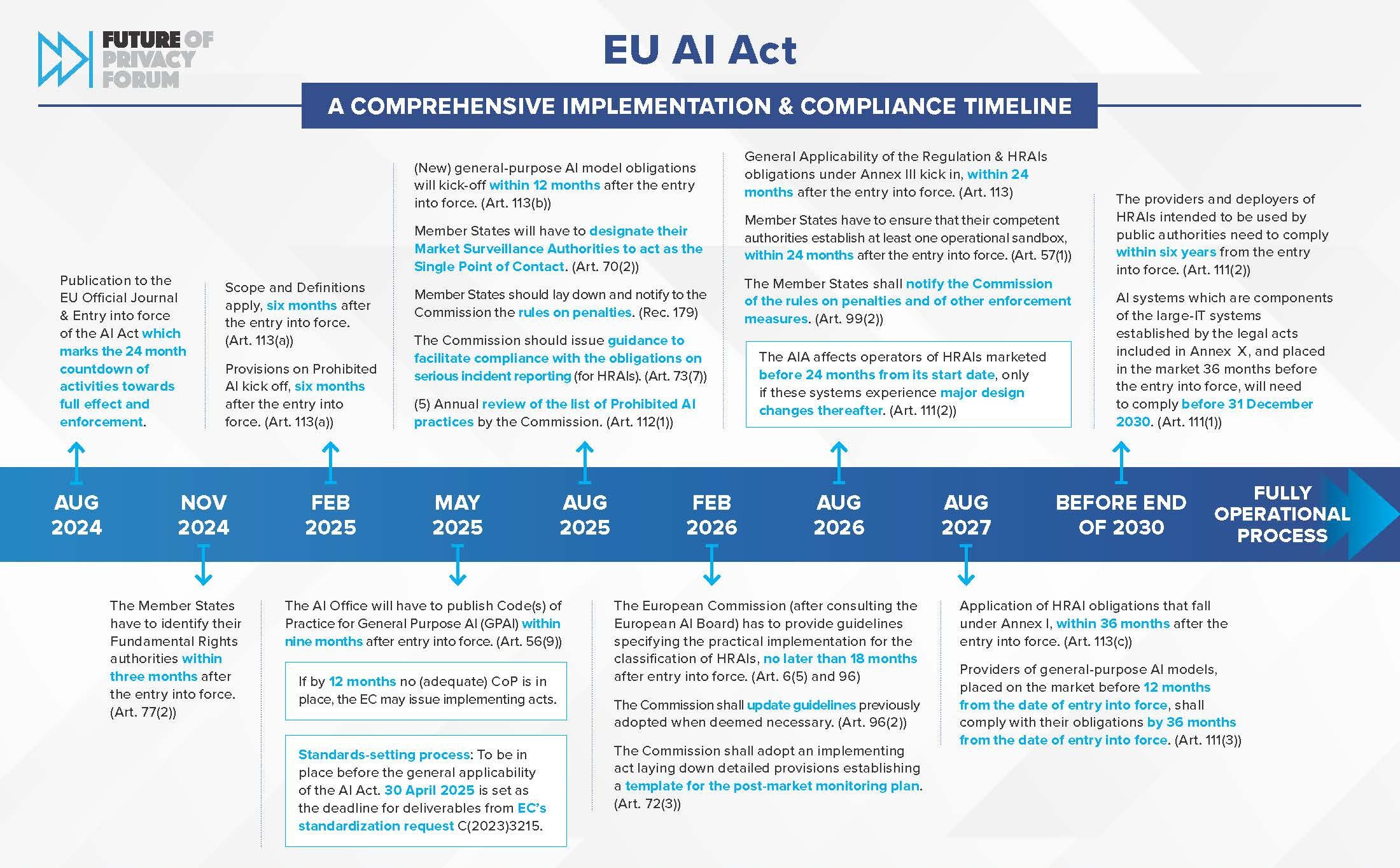
EU AI Act: A Comprehensive Implementation & Compliance Timeline
The EU AI Act is expected to play a crucial role in global development of AI Governance frameworks. We are continually updating a timeline and a list of FPF Resources dedicated to the EU AI Act, as well as to its relationship to the EU GDPR and other privacy and data protection law.

Video-Based Vehicle Safety Systems: Lessons Learned from Commercial Fleets
Recent years have seen an increasing deployment of onboard video-based safety systems in vehicles. While video technologies have been seen already in passenger vehicles, these systems have been even more prominent in the commercial fleet industry (e.g., trucking, delivery, and rental vehicles). Fleet operators have substantial regulatory, financial, and other incentives to implement safety programs, […]
FPF Samsara Video-Based VSS Whitepaper PRINT R1 wBleed
VIDEO-BASED VEHICLE SAFETY SYSTEMS: Lessons Learned from Commercial Fleets J U LY 2 0 2 4 FUTURE OF PRIVACY FORUM | J U LY 2 0 2 4 1 The Future of Privacy Forum (FPF) is a non-profit organization that serves as a catalyst for privacy leadership and scholarship, advancing principled data practices in support […]
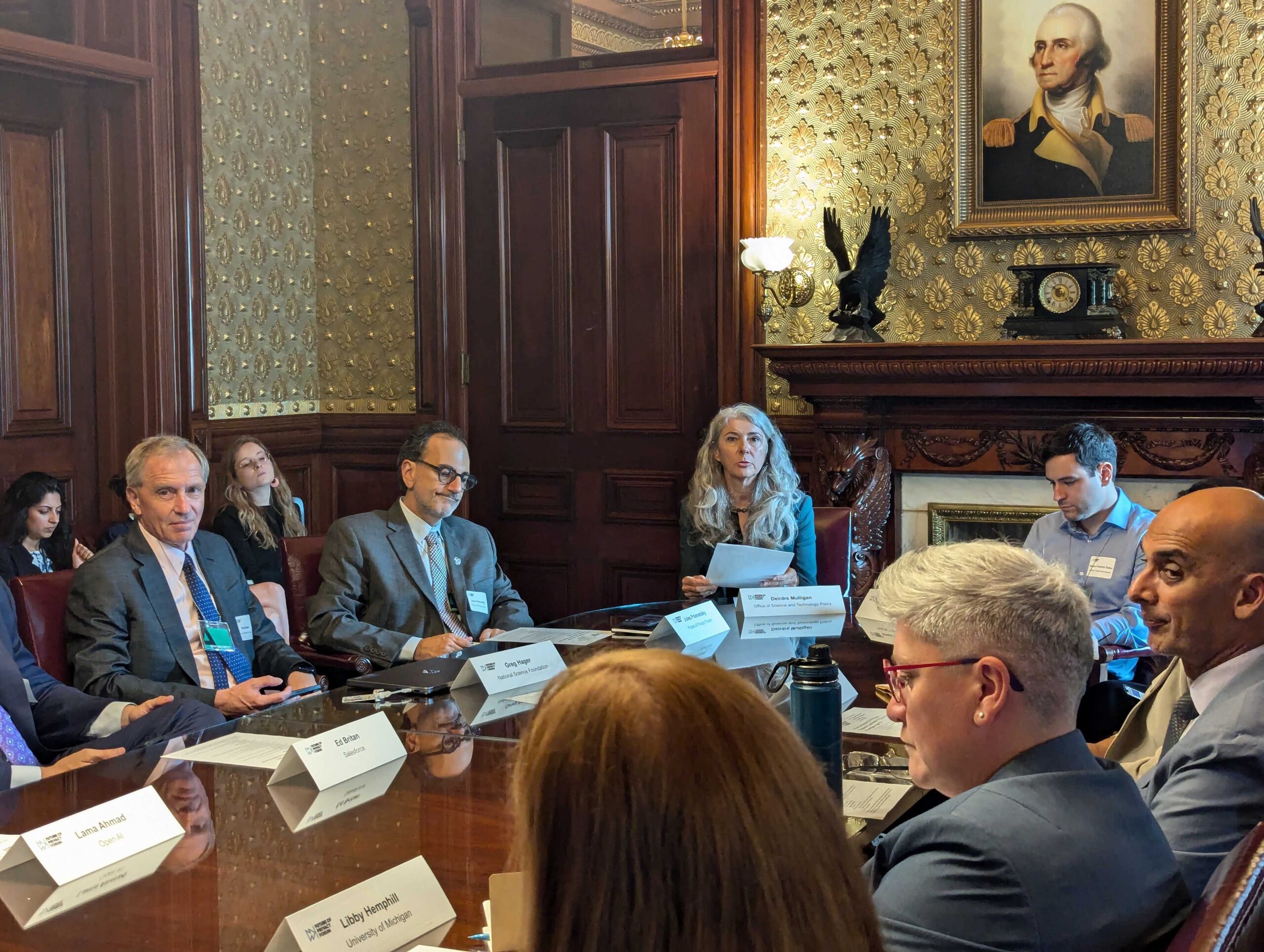
Connecting Experts to Make Privacy-Enhancing Tech and AI Work for Everyone
The Future of Privacy Forum (FPF) launched its Research Coordination Network (RCN) for Privacy-Preserving Data Sharing and Analytics on Tuesday, July 9th. Industry experts, policymakers, civil society, and academics met to discuss the possibilities afforded by Privacy Enhancing Technologies (PETs), the inherent regulatory challenges, and how PETs interact with rapidly developing AI systems. FPF experts […]

Confidential Computing And Privacy: Policy Implications of Trusted Execution Environments
Confidential computing leverages two key technologies: trusted execution environments and attestation services. The technology allows organizations to restrict access to personal information, intellectual property, or sensitive or high-risk data through a secure hardware-based enclave or “trusted execution environment” (TEE). Economic sectors that have led the way in adopting confidential computing include financial services, healthcare, and […]

Reflections on California’s Age-Appropriate Design Code in Advance of Oral Arguments
Co-authored with Isaiah Hinton, Policy Intern for the Youth and Education Team Update: On Wednesday, July 17th, the U.S. 9th Circuit Court of Appeals heard oral arguments for an appeal of the District Court’s preliminary injunction of the California Age-Appropriate Design Code Act (AADC). Judges Milan Smith Jr., Mark Bennett, and Anthony Johnstone appeared interested […]