

FPF Submits Comments with the National Telecommunications and Information Administration (NTIA) on Kids Online Health and Safety
On November 15, the Future of Privacy Forum filed comments with the National Telecommunications and Information Administration (NTIA) in response to their request for comment on Kids Online Health and Safety as part of the Biden-Harris Administration’s Interagency Task Force on Kids Online Health & Safety. Read the comments here. Young people increasingly engage with […]

FPF Submits Comments to the FTC on the Application for a New Parental Consent Method
Today, the Future of Privacy Forum (FPF) submitted comments to the Federal Trade Commission (FTC) regarding the use of “Privacy-Protective Facial Age Estimation” as a potential mechanism for verifiable parental consent (VPC) under the Children’s Online Privacy Protection Act (COPPA) Rule. FPF observes: In June, FPF published The State of Play: Is Verifiable Parental Consent […]
Shining a Light on the Florida Digital Bill of Rights
On May 4, 2023, the Florida ‘Digital Bill of Rights’ (SB 262) cleared the state legislature and now heads to the desk of the Governor for signature. SB 262 bears many similarities to the Washington Privacy Act and its progeny (specifically the Texas Data Privacy and Security Act). However, SB 262 is unique given its […]

Utah Considers Proposals to Require Web Services to Verify Users’ Ages, Obtain Parental Consent to Process Teens’ Data
Update: On March 23, Governor Spencer Cox signed SB 152 and HB 311. While amendments were made to both bills, the concerns raised in FPF’s analysis remain. SB 152 leaves critical provisions, such as methods to verify age or obtain parental consent, to be established in further rulemaking, but questions remain regarding whether these can […]
Event Report: FPF Side Event and Workshop on Privacy Enhancing Technologies (PETs) at the 2022 Global Privacy Assembly (GPA)
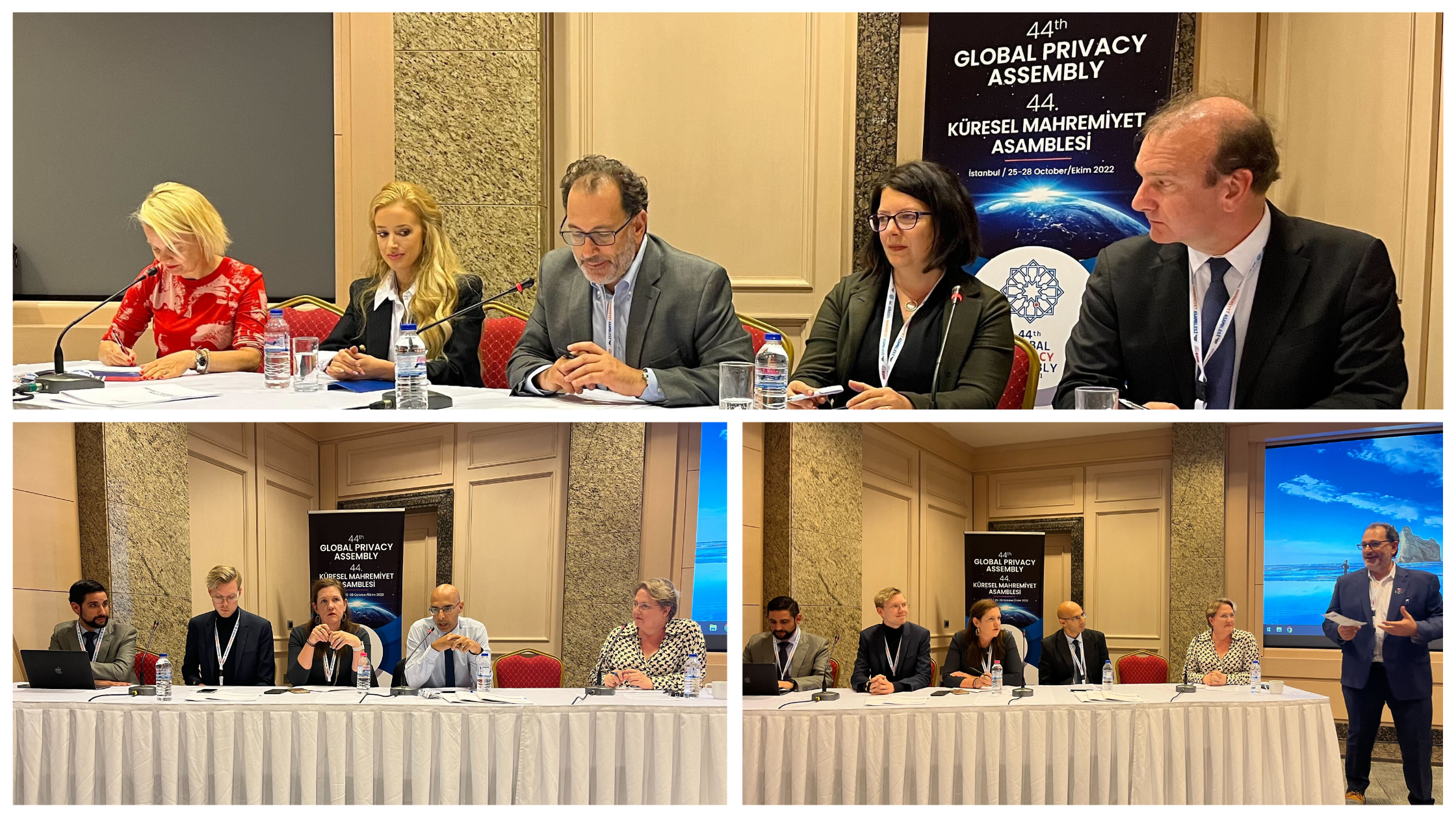
The 2022 Global Privacy Assembly (GPA) – which brings together most global data protection authorities (DPAs) every year since 1979, to share knowledge and establish common priorities among regulators – took place between October 25 and 28, in Istanbul (Türkiye). The Future of Privacy Forum (FPF) was invited by the organizers of the GPA (the […]

Federal Court deems university’s use of room scans within the home unconstitutional
I. Summary A federal court recently ruled that a public university’s use of room-scanning technology during a remotely proctored exam violated a student’s Fourth Amendment right to privacy. The decision in Ogletree v. CSU is the clearest indication to date of how courts will treat Fourth Amendment challenges to public higher education institutions’ use of […]

Meet David Sallay, FPF’s new Youth & Education Privacy Director
FPF is thrilled to announce the new Director of our Youth & Education Privacy Program, David Sallay. David comes to FPF from the Utah State Board of Education, where he previously served as the Chief Privacy Officer and the Student Privacy Auditor at the Utah State Board of Education, where he worked with schools and […]
FPF Releases Analysis of California’s New Age-Appropriate Design Code
FPF’s Youth & Education team is pleased to publish a new policy brief that builds on this first brief by providing a comparative analysis of the United Kingdom’s Age Appropriate Design Code (UK AADC) to the California AADC, which was modeled after the UK AADC. Learn more and download the UK and CA AADC Comparative policy brief here. […]

California Age-Appropriate Design Code Aims to Address Growing Concern About Children’s Online Privacy and Safety
Authors: Chloe Altieri, Kewa Jiang Kewa Jiang, CIPP/US, is a 2021 graduate of USC Gould School of Law and a Student Contractor with FPF’s Youth and Education Privacy team. On May 26, 2022, AB-2273, the California Age-Appropriate Design Code Act (ADCA) unanimously passed the California Assembly and moved to the Senate for consideration. California Assembly […]

FPF Releases Policy Brief Comparing Federal Child Privacy Bills
On Wednesday, July 27, 2022, the Senate Committee on Commerce, Science, and Transportation held a markup of two bills this resource highlights: The Kids Online Safety Act and the Children and Teens’ Online Privacy Protection Act (COPPA 2.0). The Committee advanced both bills with significant amendments. Both bills garnered bipartisan support, with the Kids Online Safety […]