
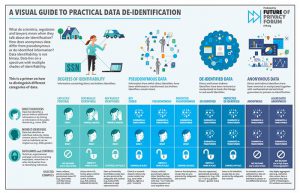
One key method for ensuring privacy while processing large amounts of data is de-identification. De-identified data refers to data through which a link to a particular individual cannot be established. This often involves “scrubbing” the identifiable elements of personal data, making it “safe” in privacy terms while attempting to retain its commercial and scientific value.
In the era of big data, the debate over the definition of personal information, de-identification and re-identification has never been more important. Privacy regimes often rely on data being considered Personal in order to require the application of privacy rights and protections. Data that is anonymous is considered free of privacy risk and available for public use.
Yet much data that is collected and used exists somewhere on a spectrum between these stages. FPF’s De-ID Project has examined practical frameworks for applying privacy restrictions to data based on the nature of data that is collected, the risks of de-identification, and the additional legal and administrative protections that may be applied.
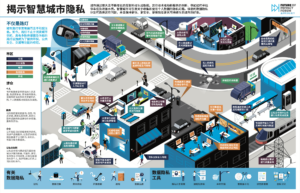

NEW FPF REPORT: Confidential Computing and Privacy: Policy Implications of Trusted Execution Environments
Written by Judy Wang, FPF Communications Intern Today, the Future of Privacy Forum (FPF) published a paper on confidential computing, a privacy-enhancing technology (PET) that marks a significant shift in the trustworthiness and verifiability of data processing for the use cases it supports, including training and use of AI models. Confidential computing leverages two key […]

FPF Launches Effort to Advance Privacy-Enhancing Technologies, Convenes Experts, and Meets With White House
FPF’s Research Coordination Network will support developing and deploying Privacy-Enhancing Technologies (PETs) for socially beneficial data sharing and analytics. JULY 9, 2024 — Today, the Future of Privacy Forum (FPF) is launching the Privacy-Enhancing Technologies (PETs) Research Coordination Network (RCN) with a virtual convening of diverse experts alongside a high-level, in-person workshop with key stakeholders […]

The North Star State Joins the State Privacy Law Constellation
On May 19, 2024, the Minnesota Legislature passed HF 4757, an omnibus budget bill that includes the Minnesota Consumer Data Privacy Act (MNCDPA). The bill now heads to Governor Walz for signature. Developed by State Representative Steve Elkins over nearly five years and multiple legislative sessions, the MNCDPA is among the strongest iterations of the […]

The Old Line State Does Something New on Privacy
On April 6, the Maryland Senate concurred with House amendments to SB 541, the Maryland Online Data Privacy Act (MODPA), sending the bill to Governor Moore for signature. If enacted, MODPA could be a paradigm-shifting addition to the state privacy law landscape. While recent state comprehensive privacy laws generally have added to the existing landscape […]

New Report Explores Privacy Implications of Driver Safety Systems
Report Offers Recommendations for Organizations Developing, Implementing, and Regulating Technologies Today, the Future of Privacy Forum (FPF) is releasing a new report explaining how safeguarding driver privacy and data protection will be critical to ensuring widespread acceptance of new safety technology in vehicles. This report comes as the National Highway Traffic Safety Administration (NHTSA) is […]

The DNA of Genetic Privacy Legislation: Montana, Tennessee, Texas, and Virginia Enter 2024 with New Genetic Privacy Laws Incorporating FPF’s Best Practices
In 2023, four states enacted new genetic privacy laws regulating direct-to-consumer genetic testing companies. This blog post provides details on what these new laws cover and how they compare to FPF’s widely-adopted Best Practices for Consumer Genetic Testing Services. Genetic privacy has been under increasing scrutiny at the state and federal levels, and regulators are […]
This Year’s Must-Read Privacy Papers to be Honored at Washington, D.C. Event
The Future of Privacy Forum’s 14th Annual Privacy Papers for Policymakers Award Recognizes Influential Privacy Research Today, the Future of Privacy Forum (FPF) — a global non-profit focused on data protection headquartered in Washington, D.C. — announced the winners of its 14th annual Privacy Papers for Policymakers (PPPM) Awards. The PPPM Awards recognize leading U.S. […]

FPF Files Comments with the Consumer Financial Protection Bureau Regarding Personal Financial Data Rights
On December 21st, 2023, the Future of Privacy Forum filed comments with the Consumer Financial Protection Bureau (CFPB) in response to the notice of proposed rulemaking (NPRM) regarding personal financial data rights. FPF’s comments focus on promoting privacy as a core tenet in the U.S. open banking ecosystem in order to protect individuals’ personal information […]

Optum & The Mayo Clinic Win the 2022 Award for Research Data Stewardship
Author: Randy Cantz, U.S. Policy Intern, Ethics and Data in Research and former Communications Intern at FPF On Wednesday, May 10, 2023, the Future of Privacy Forum (FPF) honored representatives from Optum and the Mayo Clinic for their outstanding corporate-academic research data-sharing partnership at the 3rd annual Awards for Research Data Stewardship. The awards honor […]
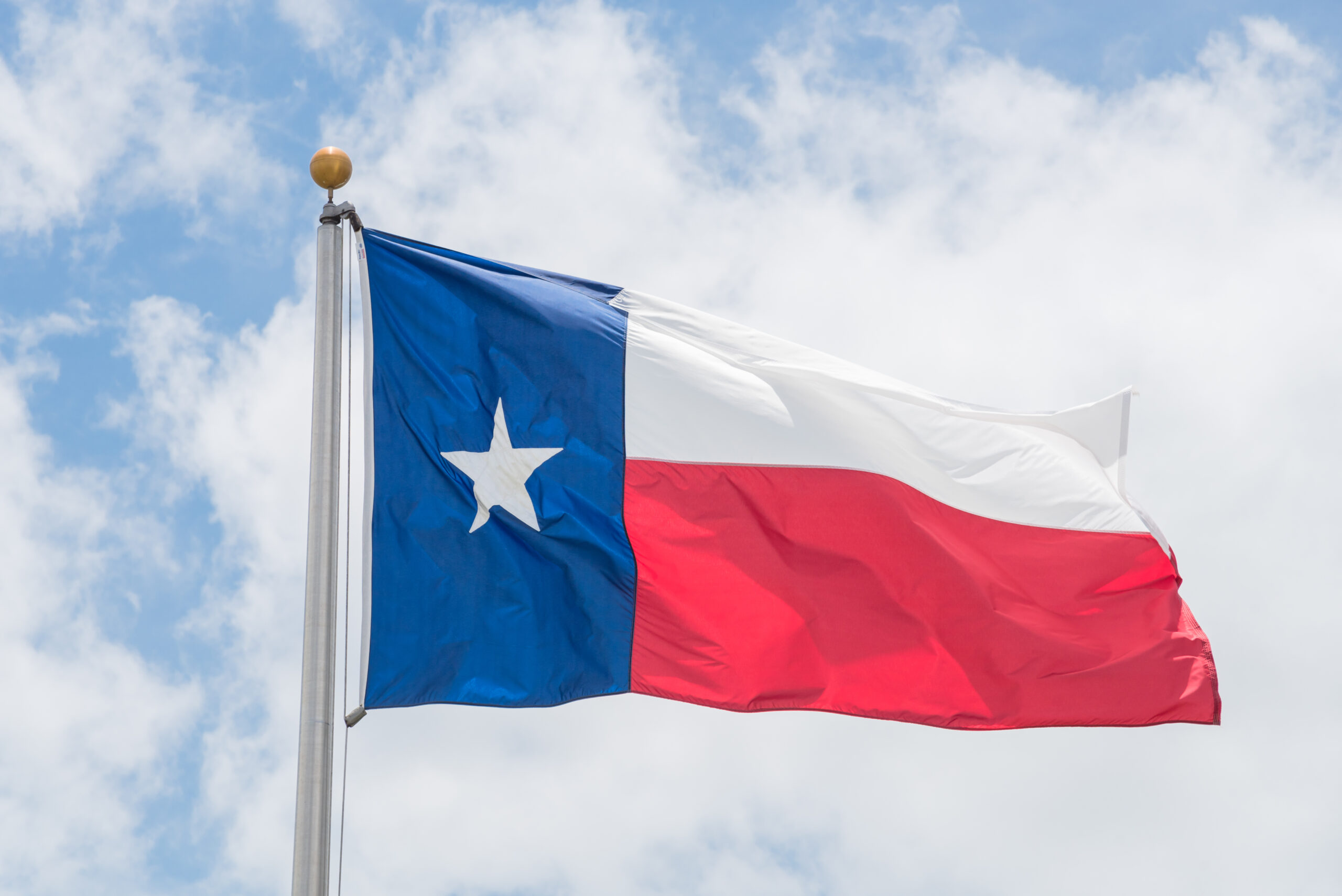
The Right to be Let a Lone Star State: Texas Passes Comprehensive Privacy Bill
Over Memorial Day weekend Texas lawmakers passed the Texas Data Privacy and Security Act (TDPSA) with unanimous votes in both the State House and Senate. If enacted by Governor Abbott, Texas will become the tenth U.S. state (and fifth in 2023) to enact broad-based data privacy legislation governing the collection, use, and transfer of consumer […]