
Research often requires using sensitive data to answer important questions. The ethical collection and analysis of personal information can be challenging to do while still protecting the privacy of the implicated individuals, honoring informed consent, and complying with other legal obligations. The technology, policies, and ethical considerations for researchers are constantly shifting, sometimes making it difficult to keep up. That’s why FPF engages stakeholders across academia and industry to produce recommendations, best practices, and ethical review structures that promote responsible research. Our work is centered around streamlining, encouraging, and promoting responsible research that respects essential privacy and ethical considerations throughout the research lifecycle. FPF works with policymakers to develop legislative protections that support effective, responsible research with strong privacy safeguards, including hosting events that allow policymakers and regulators to engage directly with practitioners from academia, advocacy, and industry.




FPF Comments on the California Consumer Privacy Act (CCPA)
On Friday, the Future of Privacy Forum submitted comments to the Office of the California Attorney General (AG), Xavier Becerra. Read FPF’s Full Comments (11-page letter) See Attachment 1: Comparing Privacy Laws: GDPR vs. CCPA See Attachment 2: A Visual Guide to Practical De-identification In FPF’s outreach to the AG, we commended the office for its […]

Consumer Genetic Testing: A Q&A with Carson Martinez
Carson Martinez is FPF’s Health Policy Fellow. She works on privacy challenges surrounding health data, particularly where it is not covered by HIPAA, as is the case with consumer-facing genetics companies, wearables, mobile health and wellness applications, and connected medical devices. Carson also leads the FPF Genetics Working Group and Health Working Group. How did […]

Artificial Intelligence: Privacy Promise or Peril?
Understanding AI and its underlying algorithmic processes presents new challenges for privacy officers and others responsible for data governance in companies ranging from retailers to cloud service providers. In the absence of targeted legal or regulatory obligations, AI poses new ethical and practical challenges for companies that strive to maximize consumer benefits while preventing potential harms.

Smart Communities: A Conversation with Kelsey Finch
One of FPF Policy Counsel Kelsey Finch’s areas of focus is Smart Communities, a field which draws from many of FPF’s issue areas. From her Seattle office, she has the opportunity to do hands-on work with cities in the Pacific Northwest. Last year, she worked with city officials on Seattle’s first Open Data Risk Assessment, […]

IoT Devices Should Deal with Privacy Impacts for People with Disabilities
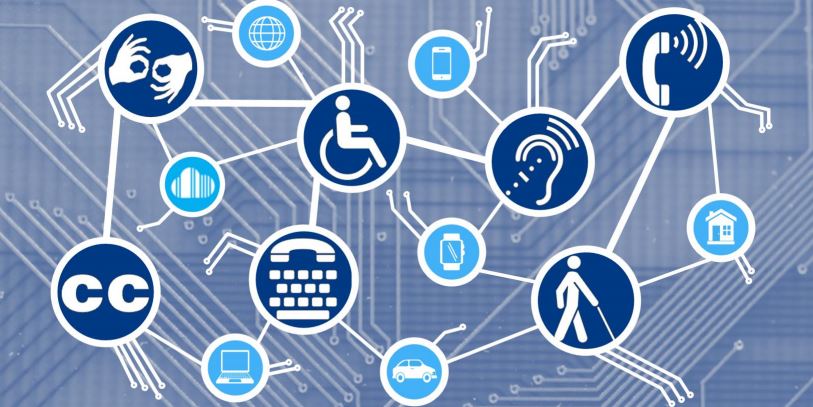
FOR IMMEDIATE RELEASE January 31, 2019 IoT Devices Should Deal with Privacy Impacts for People with Disabilities FPF Recommends Approaches to Incorporate Privacy, Accessibility by Design WASHINGTON, DC – The Future of Privacy Forum today released The Internet of Things (IoT) and People with Disabilities: Exploring the Benefits, Challenges, and Privacy Tensions. This paper explores […]
FPF Report: IoT Devices Should Deal with Privacy Impacts for People with Disabilities
FPF has released The Internet of Things (IoT) and People with Disabilities: Exploring the Benefits, Challenges, and Privacy Tensions. This paper explores the nuances of privacy considerations for people with disabilities using IoT services and provides recommendations to address privacy considerations, which can include transparency, individual control, respect for context, the need for focused collection […]
FPF, EFPIA, and CIPL Workshop Report Now Available: "Can GDPR Work for Health Scientific Research?"
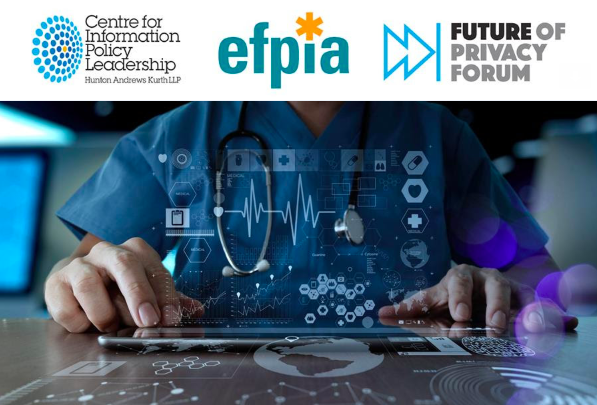
On October 22, 2018, the Future of Privacy Forum (FPF), the European Federation of Pharmaceutical Industries and Associations (EFPIA), and the Centre for Information Policy Leadership (CIPL) hosted a workshop in Brussels, “Can GDPR Work for Health Scientific Research?” to discuss the processing of personal data for scientific research purposes under the European Union’s General Data Protection Regulation (GDPR).

School Safety Report Neglects Privacy Concerns
Yesterday, the Federal Commission on School Safety released a report detailing its conclusions, after holding a series of meetings and hearings in the wake of school shootings. Nearly every aspect of the Commission’s report focuses on sharing data and, thus, has privacy implications for students, teachers, and the public.

Privacy Papers 2018
The winners of the 2018 PPPM Award are: Shattering One-Way Mirrors. Data Subject Access Rights in Practice by Jef Ausloos, Postdoctoral Researcher, University of Amsterdam’s Institute for Information Law; and Pierre Dewitte, Researcher, KU Leuven Centre for IT & IP Law Abstract: The right of access occupies a central role in EU data protection law’s arsenal […]
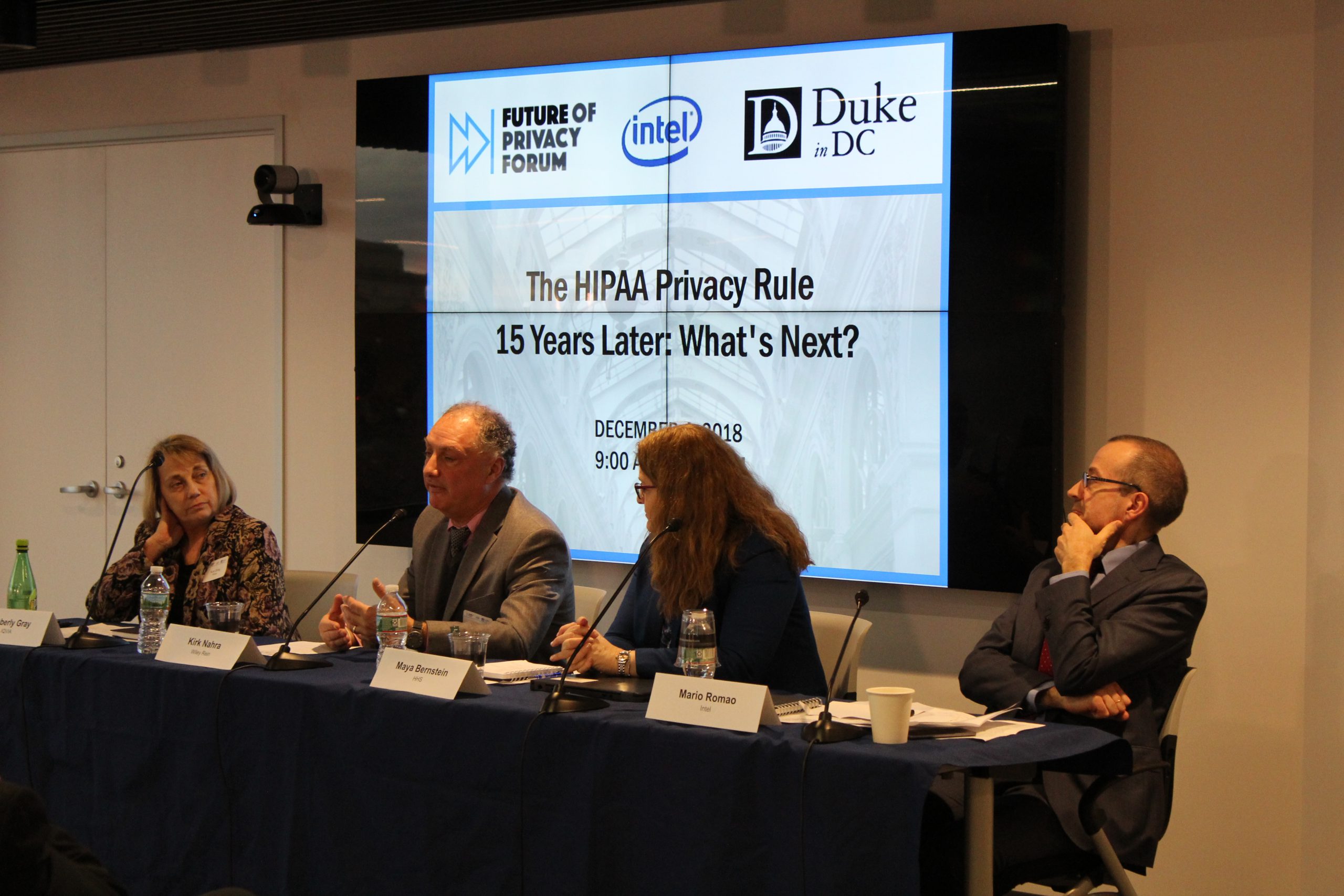
The HIPAA Privacy Rule 15 Years Later: What’s Next?
On December 4th, FPF, Intel, and Duke in DC hosted “The HIPAA Privacy Rule 15 Years Later: What’s Next?” The event brought together stakeholders across the health data ecosystem to explore the current challenges related to the Health Information Portability and Accountability Act (HIPAA) Privacy Rule. Specifically, the discussion focused on solutions to mitigate restrictions to data sharing in clinical care and research due to administrative burdens, while at the same time maintain the privacy of protected health information (PHI).