
Across the United States, evolving data collection and processing practices and advances in artificial intelligence are driving new digital services, technologies, and socially beneficial research – while also raising new opportunities, risks, and questions for individuals and communities. In response, state and federal policymakers are considering new legislative and regulatory frameworks on three interconnected fronts: comprehensive consumer privacy laws that establish baseline rights and protections for personal data across the economy; frameworks that target specific sectors and practices such as automated decisionmaking, biometric identification, companion chatbots, data-driven pricing, data brokerage, frontier AI model safety, genetic data, and health data; and youth-specific privacy and online safety laws that set distinct rules for minors. These three tracks rarely stay in their lanes: a comprehensive privacy law may include AI provisions, an AI safety bill may carve out rules for minors, a youth online safety law may hinge on biometric age verification. Understanding the landscape requires understanding both the individual pieces and how they fit together.
FPF’s U.S. Legislation team provides expert, independent, pragmatic analysis of state and federal legislative and regulatory approaches to privacy, AI, and youth online safety – three distinct but increasingly intertwined issue areas. The team tracks emerging proposals, compares new laws against existing frameworks, analyzes implementation and compliance implications, and helps policymakers and stakeholders understand how legal requirements interact with current technologies, business practices, and data uses.
Through reports, blog posts, legislative and policy analyses, webinars, in-person and virtual peer-to-peer gatherings, and educational programs, FPF helps the broader technology policy and governance community understand the mechanisms and strategies available to protect privacy, promote responsible AI development and deployment, and advance youth online safety. FPF does not typically support or oppose particular bills. Instead, the U.S. Legislation team focuses on explaining the practical and legal implications of proposals – individually and as they interact with one another. This work helps ensure that privacy, AI, and youth safety compliance and policy strategies remain future-looking, adaptable, and workable for the continued, beneficial use of data and AI.
FPF’s U.S. Legislation team is led by Tatiana Rice, Senior Director.






FPF Develops Checklist & Guide to Help Schools Vet AI Tools for Legal Compliance
FPF’s Youth and Education team has developed a checklist and accompanying policy brief to help schools vet generative AI tools for compliance with student privacy laws. Vetting Generative AI Tools for Use in Schools is a crucial resource as the use of generative AI tools continues to increase in educational settings. It’s critical for school […]

The Old Line State Does Something New on Privacy
On April 6, the Maryland Senate concurred with House amendments to SB 541, the Maryland Online Data Privacy Act (MODPA), sending the bill to Governor Moore for signature. If enacted, MODPA could be a paradigm-shifting addition to the state privacy law landscape. While recent state comprehensive privacy laws generally have added to the existing landscape […]

FPF Submits Comments to the Office of Management and Budget on AI and Privacy Impact Assessments
On April 1, 2024, the Future of Privacy Forum filed comments to the Office of Management and Budget (OMB) in response to the agency’s Request for Information on how privacy impact assessments (PIAs) may mitigate privacy risks exacerbated by AI and other advances in technology. The OMB issued the RFI pursuant to the White House’s […]

FPF Celebrates 15 Years! Spring Social Marks Board Transition as Data Protection Leaders Toast to FPF’s Success
Leaders in Data Protection Take Center Stage at FPF’s Spring Social The week started with FPF’s 15th Anniversary Spring Social, where FPF CEO Jules Polonetsky thanked FPF’s Board Chair and Founder Chris Wolf, who served for 15 years, and welcomed FPF’s new Board Chair, Alan Raul. Three leading data protection regulators lauded FPF’s effectiveness in […]

Consumer Acceptance, Transparency, and Unique Privacy Considerations at the Forefront of FPF’s Discussion on Privacy and Vehicle Safety Systems
On March 21, the Future of Privacy Forum (FPF) hosted a conversation on “Driving the Conversation on Privacy and Vehicle Safety Systems” to discuss the future of certain technologies in vehicles. The panel discussion was moderated by Adonne Washington, FPF Policy Counsel for Data, Mobility, and Location, and included Hilary Cain (Senior Vice President for […]

FPF Files COPPA Comments with the Federal Trade Commission
Today, the Future of Privacy Forum (FPF) filed comments with the Federal Trade Commission (Commission) in response to its request for comment on the Children’s Online Privacy Protection Act (COPPA) proposed rule. Read our comments in full. As technology evolves, so must the regulations designed to protect children online, and FPF commends the Commission’s efforts […]
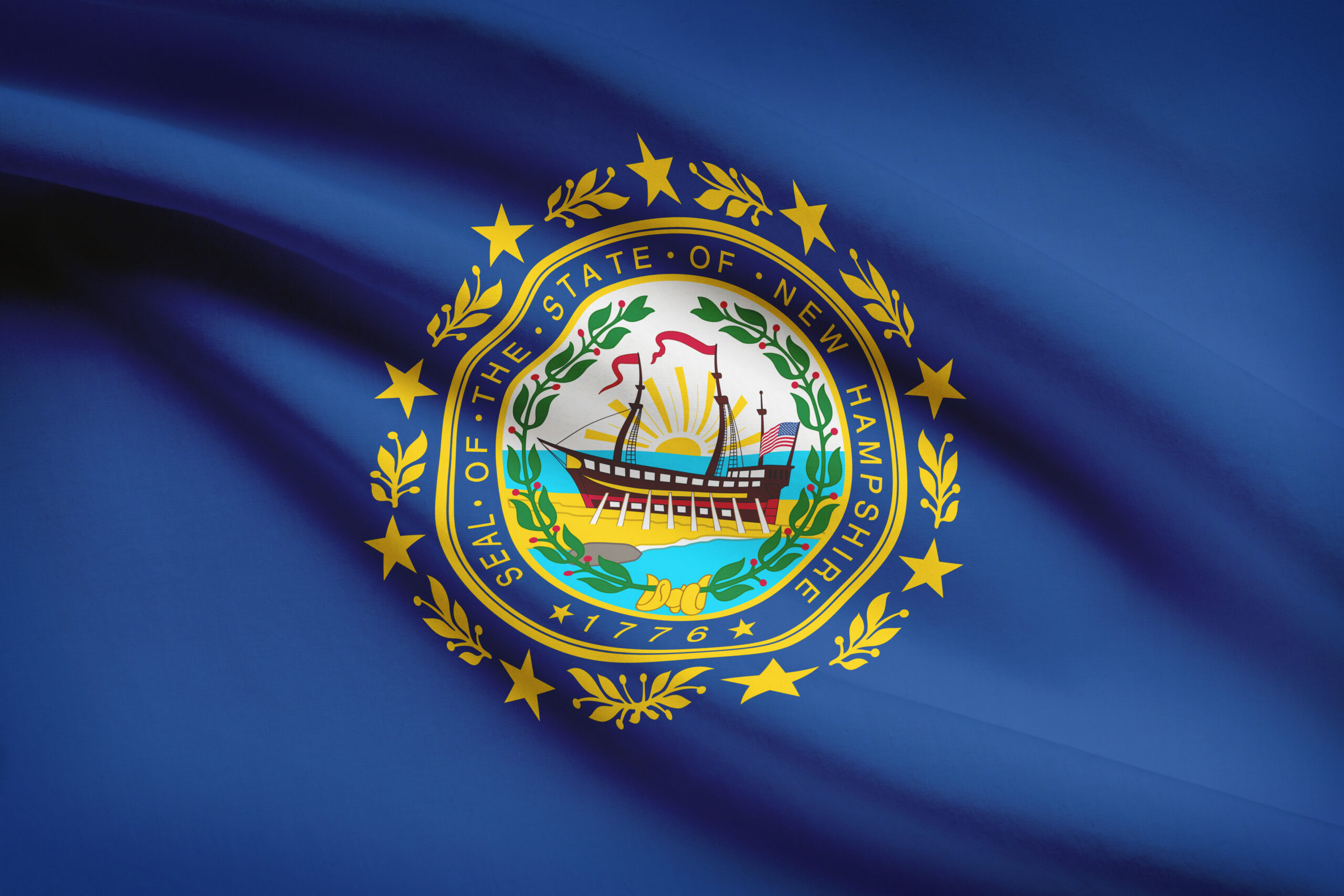
Little New About Hampshire
On March 6, 2024, Governor Sununu signed SB 255 into law, making New Hampshire the fourteenth U.S. State to adopt a comprehensive privacy law to govern the collection, use, and transfer of personal data. SB 255 is the second comprehensive privacy law enacted in 2024, the first having been New Jersey’s S332, which was also […]

The DNA of Genetic Privacy Legislation: Montana, Tennessee, Texas, and Virginia Enter 2024 with New Genetic Privacy Laws Incorporating FPF’s Best Practices
In 2023, four states enacted new genetic privacy laws regulating direct-to-consumer genetic testing companies. This blog post provides details on what these new laws cover and how they compare to FPF’s widely-adopted Best Practices for Consumer Genetic Testing Services. Genetic privacy has been under increasing scrutiny at the state and federal levels, and regulators are […]

Colorado’s Approval of Global Privacy Control: Implications for Advertisers and Publishers
The privacy laws of both Colorado and California require organizations to recognize Universal Opt-Out Mechanisms (UOOMs), a tool through which a person can invoke their opt out rights broadly across all the websites they visit. While California has required responding to certain UOOMs since July 2021, the Colorado Attorney General has only recently approved their […]

FPF Health & Wellness: Mapping the 2024 Health Privacy Landscape, A 2023 Retrospective
In 2024, health and wellness-focused companies are increasingly integrating AI to streamline their services–with the expansion of AI-enabled digital health, the universe of potential health inferences will also expand, triggering new concerns about patient and consumer privacy. At this intersection of reproductive health privacy and AI concerns, state legislators and federal regulators appear poised to […]