
Showing results for viiia20 2011va romote rwanda viiia20 2011va

FPF Submits Feedback and Comments on UNICEF’s Draft Policy Guidance on AI for Children
Last week, FPF submitted feedback and comments to the United Nations Children’s Fund (UNICEF) on the Draft Policy Guidance on Artificial Intelligence (AI) for Children, which seeks “to promote children’s rights in government and private sector AI policies and practices, and to raise awareness of how AI systems can uphold or undermine children’s rights.” The […]

A Look Back at the Role of Law and the Right To Privacy in LGBTQ+ History
By Katelyn Ringrose, Christopher Wolf Diversity Law Fellow at the Future of Privacy Forum, and Christopher Wood, Executive Director of LGBT Tech, with thanks to Connor Colson, FPF Policy Intern. LGBTQ+ rights are, and have always been, linked with privacy. Over the years, privacy-invasive laws, practices, and norms have been used to oppress LGBTQ+ individuals […]
Asia_Singapore_PDP Act Amendment Bill
Personal Data Protection (Amendment) Bill 2020 Bill No. /2020 . Read the first time on 2020 . A BILL i n t i t u l e d An Act to amend the Personal Data Protection Act 2012 (Act 26 of 2012) an d to make consequential and related amendments to certain other Acts. Be […]

Five Top of Mind Data Protection Recommendations for Brain-Computer Interfaces
By Jeremy Greenberg, [email protected] and Katelyn Ringrose [email protected]. Key FPF-curated background resources – policy & regulatory documents, academic papers, and technical analyses regarding brain-computer interfaces are available here. Recently, Elon Musk livestreamed an update for Neuralink—his startup centered around creating brain-computer interfaces (BCIs). BCIs are an umbrella term for devices that detect, amplify, and translate […]

FPF Webinar Explores the Future of Privacy-Preserving Machine Learning
On June 8, FPF hosted a webinar, Privacy Preserving Machine Learning: New Research on Data and Model Privacy. Co-hosted by the FPF Artificial Intelligence Working Group and the Applied Privacy Research Coordination Network, an NSF project run by FPF, the webinar explored how machine learning models as well as data fed into machine learning models […]
TEN QUESTIONS ON AI RISK
Artificial intelligence and machine learning (AI/ML) generate significant value when used responsibly – and are the subject of growing investment for exactly these reasons. But AI/ML can also amplify organizations’ exposure to potential vulnerabilities, ranging from fairness and security issues to regulatory fines and reputational harm.

Artificial Intelligence and the COVID-19 Pandemic
By Brenda Leong and Dr. Sara Jordan Machine learning-based technologies are playing a substantial role in the response to the COVID-19 pandemic. Experts are using machine learning to study the virus, test potential treatments, diagnose individuals, analyze the public health impacts, and more. Below, we describe some of the leading efforts and identify data protection […]

FPF Submits Written Statement to the U.S. House Committee on Financial Services Task Force on AI
This week, Future of Privacy Forum (FPF) Senior Counsel and Director of AI & Ethics Brenda Leong submitted a written statement on the use of artificial intelligence and machine learning-based applications in financial products and services. Addressed to the House Committee on Financial Services Task Force on Artificial Intelligence, the statement explores how to protect […]

Takeaways from the Understanding Machine Learning Masterclass
Yesterday, the Future of Privacy Forum provided bespoke training on machine learning as a side event during the Computers, Privacy and Data Protection Conference (CPDP2020) in Brussels. The Understanding Machine Learning masterclass is a training aimed at policymakers, law scholars, social scientists and others who want to more deeply understand the data-driven technologies that are front of mind for data protection […]
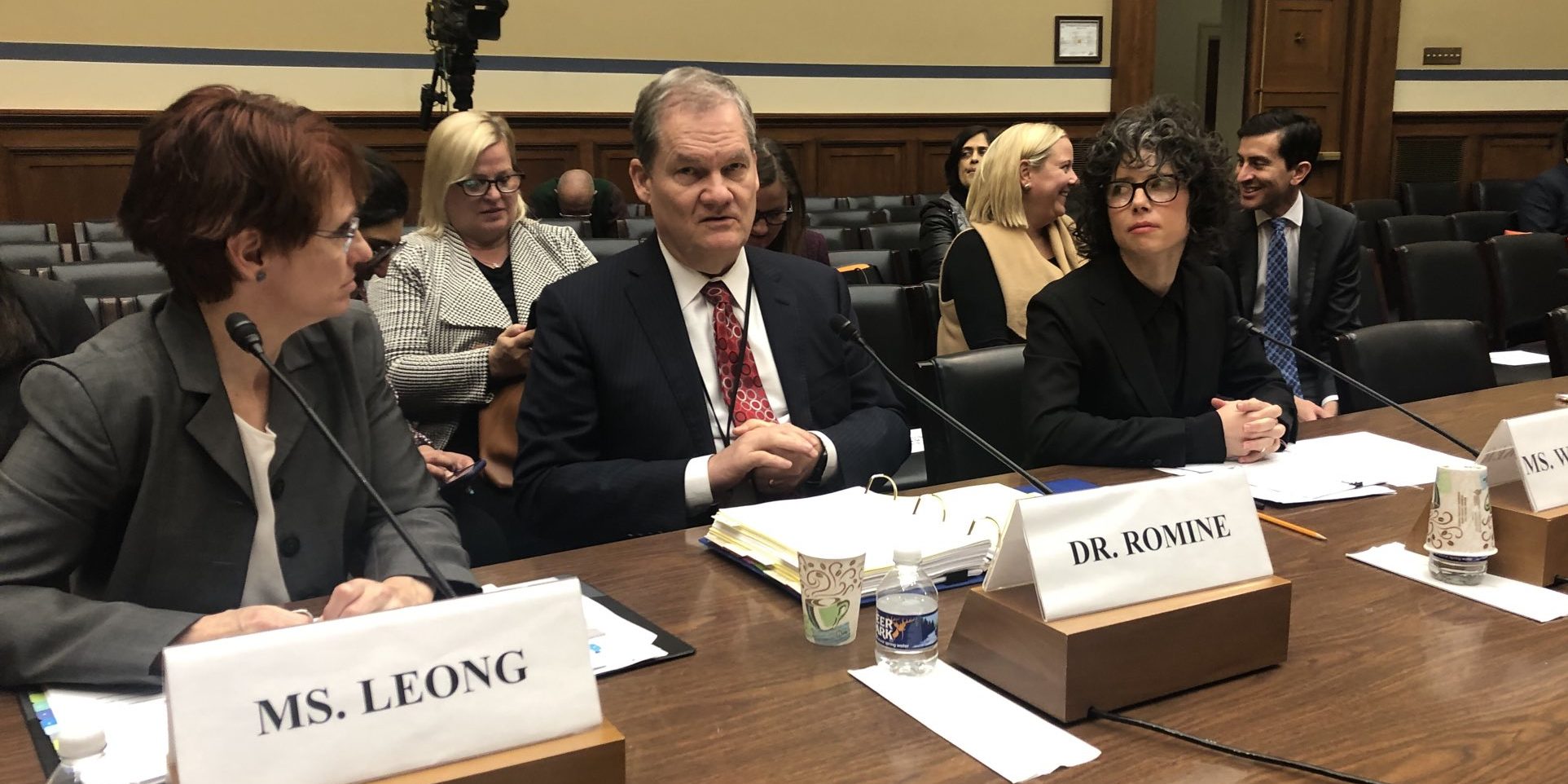
FPF Director of AI & Ethics Testifies Before Congress on Facial Recognition
FPF’s Brenda Leong calls on policymakers to balance privacy and ethical risks, and establish “opt-in” consent standard to protect consumer privacy.