
Biometric technology has long been used for security and law enforcement purposes such as national security watch lists, passport controls, criminal fingerprint databases, and immigration processing. Now, however, the private sector increasingly uses these systems as a verification method for authentication that previously required a PIN or password. Apple’s decision to include a fingerprint scanner in the iPhone in 2013 brought new public awareness to possible non-law-enforcement applications of biometric technologies, and the company’s shift to facial recognition access in the most recent models further normalized the concept. Biometric technology continues to be adopted in many sectors, including financial services, transportation, health care, computer systems and facility access, and voting. In many cases, this technology is more efficient, less expensive, and easier to use than traditional alternatives, while also eliminating the need for passwords, which are broadly recognized as an insufficiently secure safeguard for user data. However, as with any digital system, there are privacy concerns around the collection, use, storage, sharing, and analysis of the data that are generated by these systems.


This Year’s Must-Read Privacy Papers to be Honored at Washington, D.C. Event
The Future of Privacy Forum’s 14th Annual Privacy Papers for Policymakers Award Recognizes Influential Privacy Research Today, the Future of Privacy Forum (FPF) — a global non-profit focused on data protection headquartered in Washington, D.C. — announced the winners of its 14th annual Privacy Papers for Policymakers (PPPM) Awards. The PPPM Awards recognize leading U.S. […]

Understanding Body-Related Data Practices and Ensuring Legal Compliance in Immersive Technologies
Organizations are increasingly incorporating immersive technologies like extended reality (XR) and virtual worlds into their products and services, blurring the boundaries between the physical and digital worlds. Immersive technologies hold the potential to transform the way people learn, work, play, travel, and take care of their health, but may create new privacy risks as well. […]
FPF in 2023: A Year in Review
As 2023 comes to an end, we want to reflect on a year that saw the Future of Privacy Forum (FPF) continue to expand its presence globally and domestically while organizing engaging events, publishing thought-provoking analysis, providing the latest expert updates, and more. FPF continues to convene industry experts, academics, consumer advocates, and other experts […]

FPF Weighs In on the Responsible Use and Adoption of Artificial Intelligence Technologies in New York City Classrooms
Last week, Future of Privacy Forum provided testimony at a joint public oversight hearing before the New York City Council Committees on Technology and Education on “The Role of Artificial Intelligence, Emerging Technology, and Computer Instruction in New York City Public Schools.” Specifically, FPF urged the Council to consider the following recommendations for the responsible adoption […]

FPF Submits Comments to the FTC on the Application for a New Parental Consent Method
Today, the Future of Privacy Forum (FPF) submitted comments to the Federal Trade Commission (FTC) regarding the use of “Privacy-Protective Facial Age Estimation” as a potential mechanism for verifiable parental consent (VPC) under the Children’s Online Privacy Protection Act (COPPA) Rule. FPF observes: In June, FPF published The State of Play: Is Verifiable Parental Consent […]
Old Laws & New Tech: As Courts Wrestle with Tough Questions under US Biometric Laws, Immersive Tech Raises New Challenges
Extended reality (XR) technologies often rely on users’ body-based data, particularly information about their eyes, hands, and body position, to create realistic, interactive experiences. However, data derived from individuals’ bodies can pose serious privacy and data protection risks for people. It can also create substantial liability risks for organizations, given the growing volume of lawsuits […]

We’re On to Oregon: Sixth State Privacy Law of 2023 Creates New Consumer Rights and Protections
On June 22nd, lawmakers in Salem passed SB 619, the Oregon Consumer Privacy Act (“OCPA”). If enacted by Governor Kotek, Oregon will become the eleventh U.S. state (and sixth in 2023) to adopt broad-based data privacy legislation governing the collection, use, and transfer of consumer data. The bulk of OCPA’s requirements will take effect on […]
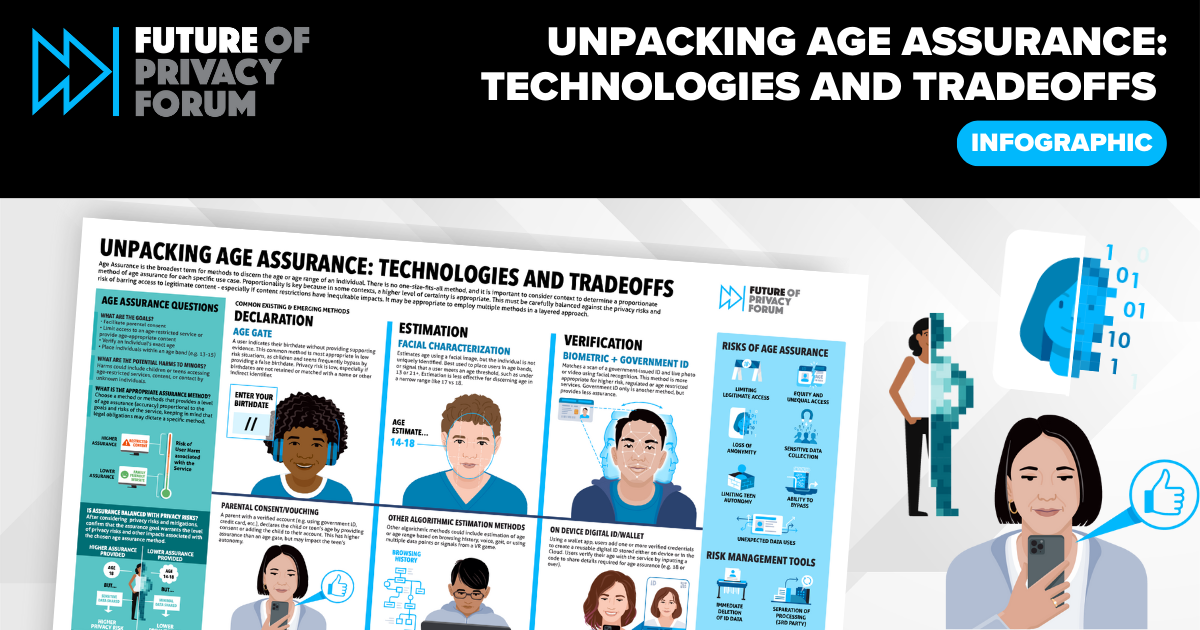
New FPF Infographic Analyzes Age Assurance Technology & Privacy Tradeoffs
As a growing number of federal and state children’s online privacy and safety proposals seek to age-restrict social media and other online experiences, FPF released a new infographic, Unpacking Age Assurance: Technologies and Tradeoffs. The infographic analyzes the risks and potential harms associated with attempting to discern someone’s age online, as well as potential mitigation […]
The Right to be Let a Lone Star State: Texas Passes Comprehensive Privacy Bill
Over Memorial Day weekend Texas lawmakers passed the Texas Data Privacy and Security Act (TDPSA) with unanimous votes in both the State House and Senate. If enacted by Governor Abbott, Texas will become the tenth U.S. state (and fifth in 2023) to enact broad-based data privacy legislation governing the collection, use, and transfer of consumer […]
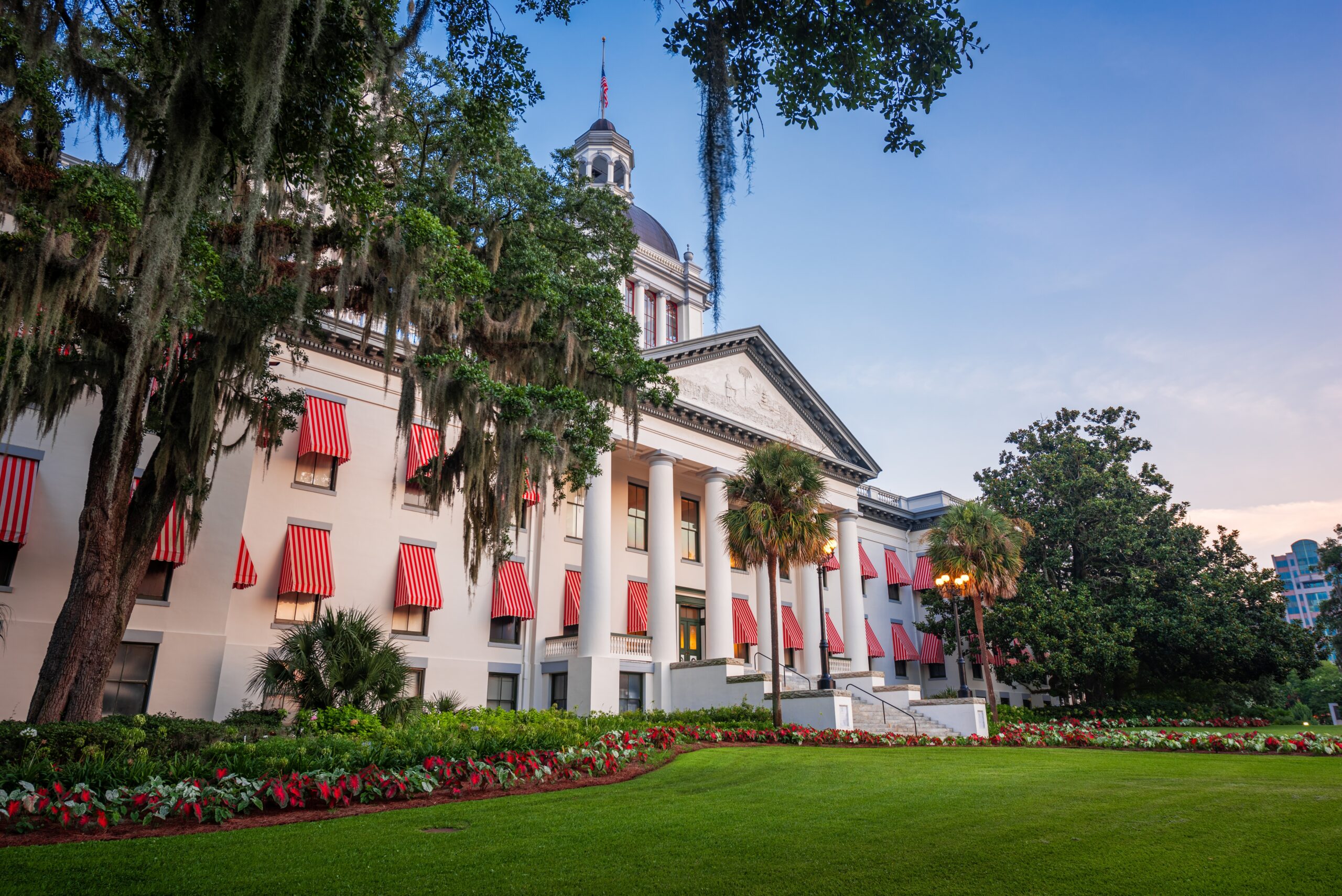
Shining a Light on the Florida Digital Bill of Rights
On May 4, 2023, the Florida ‘Digital Bill of Rights’ (SB 262) cleared the state legislature and now heads to the desk of the Governor for signature. SB 262 bears many similarities to the Washington Privacy Act and its progeny (specifically the Texas Data Privacy and Security Act). However, SB 262 is unique given its […]