
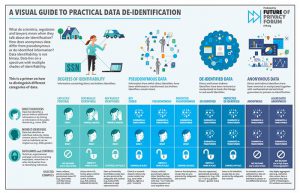
One key method for ensuring privacy while processing large amounts of data is de-identification. De-identified data refers to data through which a link to a particular individual cannot be established. This often involves “scrubbing” the identifiable elements of personal data, making it “safe” in privacy terms while attempting to retain its commercial and scientific value.
In the era of big data, the debate over the definition of personal information, de-identification and re-identification has never been more important. Privacy regimes often rely on data being considered Personal in order to require the application of privacy rights and protections. Data that is anonymous is considered free of privacy risk and available for public use.
Yet much data that is collected and used exists somewhere on a spectrum between these stages. FPF’s De-ID Project has examined practical frameworks for applying privacy restrictions to data based on the nature of data that is collected, the risks of de-identification, and the additional legal and administrative protections that may be applied.

What to Expect from the Review of Australia’s Privacy Act
The author thanks Anna Johnston and Alex Kotova (Salinger Privacy) for their review and comments and Gabriela Zanfir-Fortuna, Josh Lee Kok Thong, Lee Matheson, and Isabella Perera (FPF) for their support with editing this post. On February 16, 2023, Australia’s Attorney-General’s Department (AGD) released a final report (Review Report) on its multi-year review of Australia’s […]

The African Union’s Data Policy Framework: Context, Key Takeaways, and Implications for Data Protection on the Continent
Authors: Mercy King’ori, Ulric Quee, Hunter Dorwart On July 28, 2022, the African Union (AU) released its Data Policy Framework (Framework) following extensive multi-stakeholder engagements. The Framework aims to provide a multi-year blueprint for how the AU will accomplish its goals for Africa’s digital economy. It also sets forth the AU’s vision, scope, and priorities […]

Knowledge is Power: The Future of Privacy Forum launches FPF Training Program
“An investment in knowledge always pays the best interest”–Ben Franklin Let’s make 2023 the year we invest in ourselves, our teams, and the knowledge needed to best navigate this dynamic world of privacy and data protection. I am fortunate to know many of you who will read this blog post, but for those who I […]
Evolving Enforcement Priorities in Times of Debate – Overview of Regulatory Strategies of European Data Protection Authorities for 2023 and Beyond
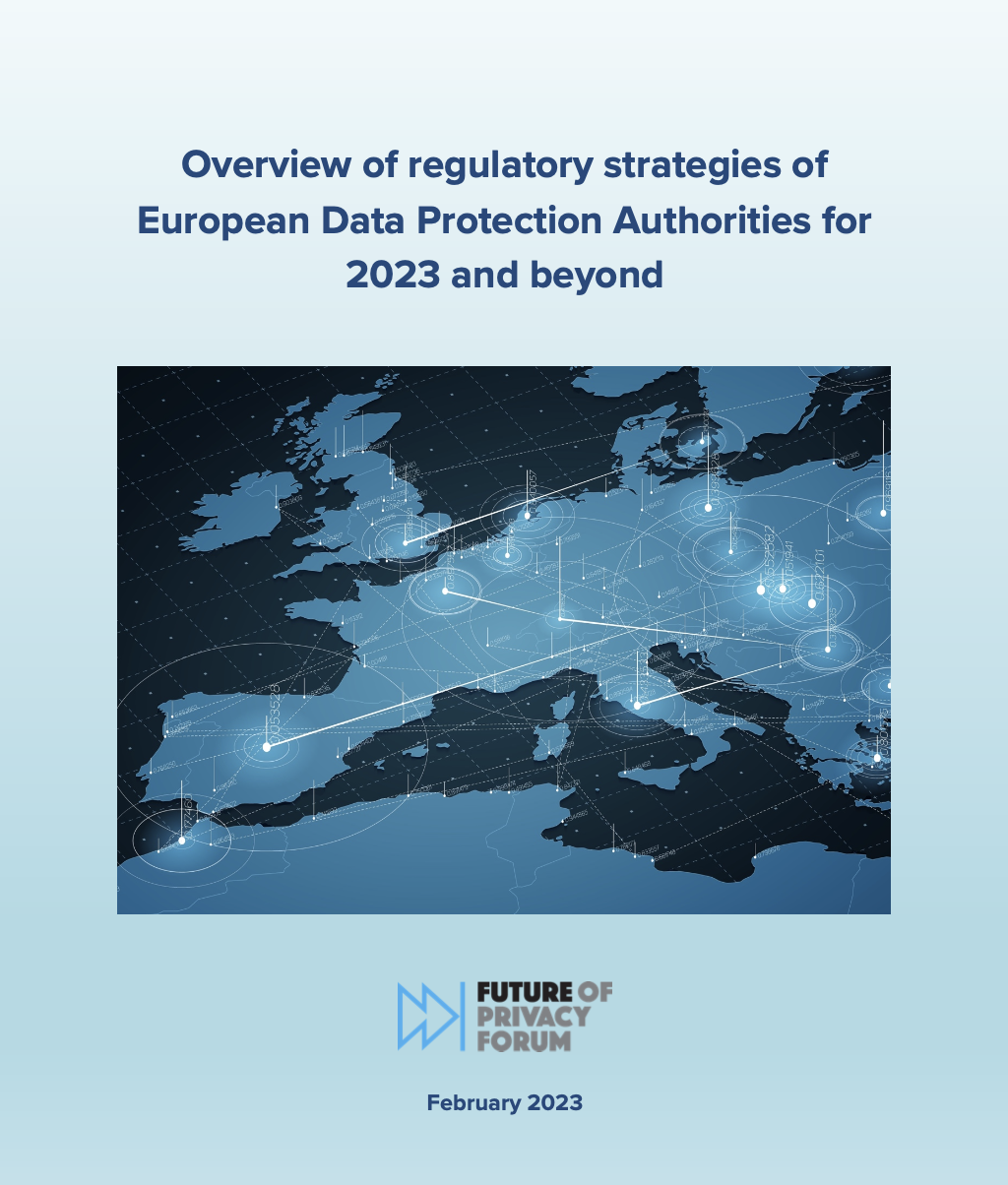
Today, the Future of Privacy Forum released a report that explores “Evolving enforcement priorities in times of debate – Overview of regulatory strategies of European Data Protection Authorities for 2023 and beyond.” It is the third in a series that explores European DPAs’ evolving regulatory priorities, following the 2021 Report “Insights into the Future of […]

Workplace Discrimination and Equal Opportunity
Why monitoring cultural diversity in your European workforce is not at odds with GDPR Author: Prof. Lokke Moerel* The following is a guest post to the FPF blog from Lokke Moerel, Professor of Global ICT Law at Tilburg University and a lawyer with Morrison & Foerster (Brussels). The guest blog reflects the opinion of the […]

Understanding Extended Reality Technology & Data Flows: Privacy and Data Protection Risks and Mitigation Strategies
This post is the second in a two-part series. Click here for FPF’s XR infographic. The first post in this series focuses on the key functions that XR devices may feature, and analyzes the kinds of sensors, data types, data processing, and transfers to other parties that power these functions. I. Introduction Today’s virtual (VR), […]
Event Report: FPF Side Event and Workshop on Privacy Enhancing Technologies (PETs) at the 2022 Global Privacy Assembly (GPA)
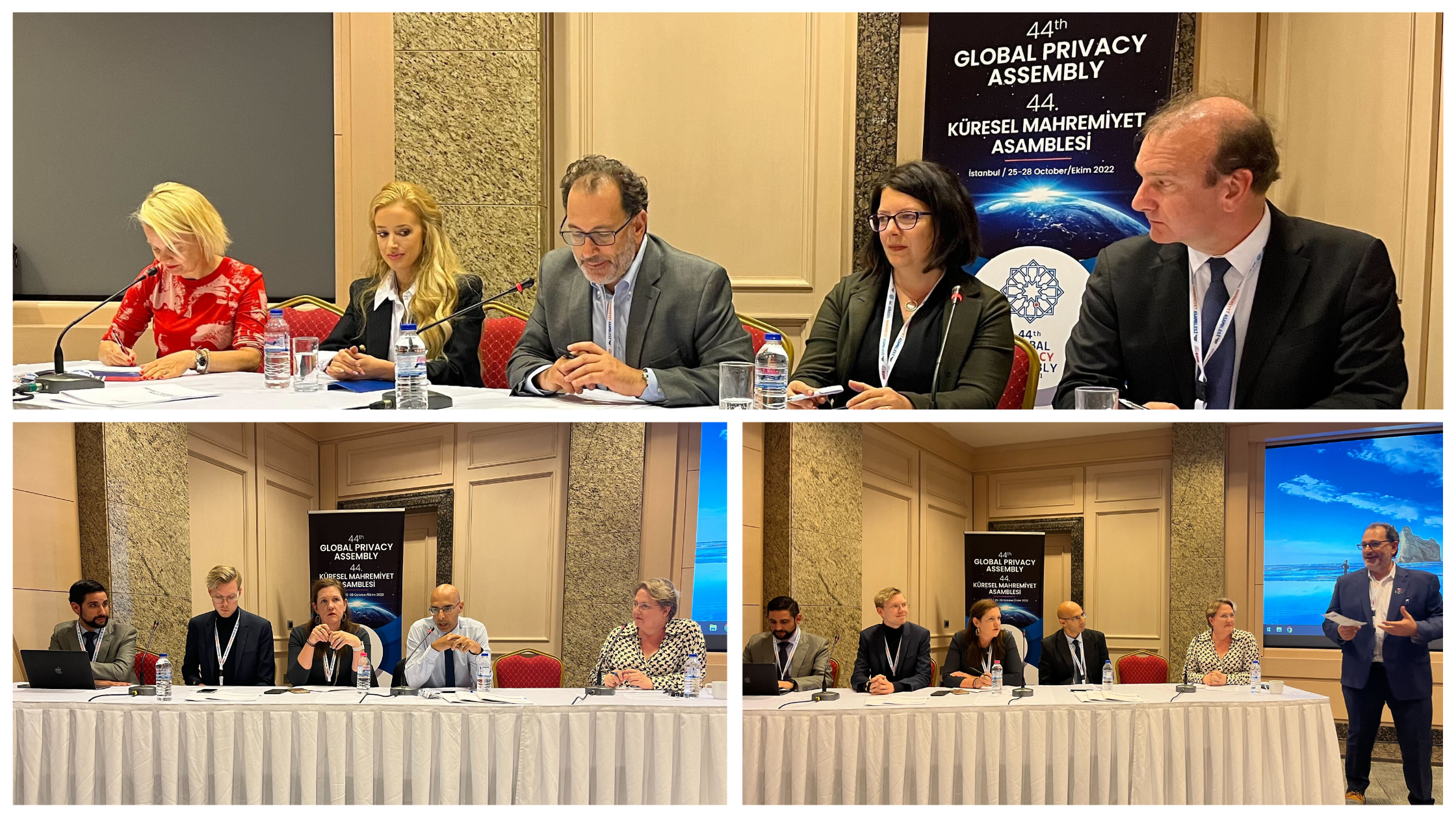
The 2022 Global Privacy Assembly (GPA) – which brings together most global data protection authorities (DPAs) every year since 1979, to share knowledge and establish common priorities among regulators – took place between October 25 and 28, in Istanbul (Türkiye). The Future of Privacy Forum (FPF) was invited by the organizers of the GPA (the […]

New Infographic Highlights XR Technology Data Flows and Privacy Risks
As businesses increasingly develop and adopt extended reality (XR) technologies, including virtual (VR), mixed (MR), and augmented (AR) reality, the urgency to consider potential privacy and data protection risks to users and bystanders grows. Lawmakers, regulators, and other experts are increasingly interested in how XR technologies work, what data protection risks they pose, and what […]

New Report on Limits of “Consent” in Vietnam’s Data Protection Law
Today, the Future of Privacy Forum (FPF) and the Asian Business Law Institute (ABLI), as part of their ongoing joint research project: “From Consent-Centric Data Protection Frameworks to Responsible Data Practices and Privacy Accountability in Asia Pacific,” are publishing the ninth in a series of detailed jurisdiction reports on the status of “consent” and alternatives […]

FPF Files Comments on White House Office of Science and Technology Policy Actions to Advance Privacy-Enhancing Technologies
FPF Files Comments on White House Office of Science and Technology Policy Actions to Advance Privacy-Enhancing Technologies On July 8, 2022, FPF filed comments with the White House Office of Science and Technology Policy (OSTP) regarding specific actions that would advance the adoption of privacy-enhancing technologies (PETs). As emerging technologies continue to offer increased speed, […]